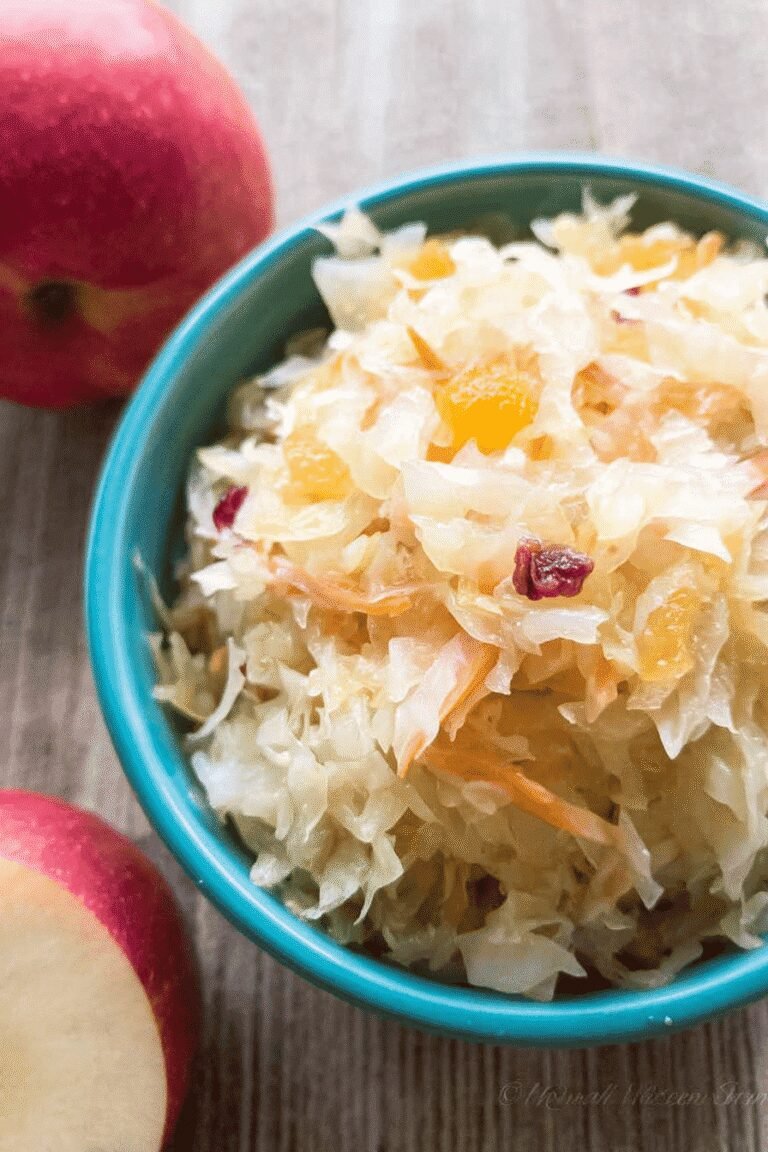
Ingredients
450 grams very fresh green cabbage
1 1/2 to 2 teaspoons sea salt or kosher salt per pound of cabbage
caraway seeds for optional flavor
red pepper flakes for optional spice
black pepper for optional seasoning
whole crushed juniper berries as a flavor enhancer
Instructions
1-Step 1: Prepare the Cabbage Begin by removing any damaged outer leaves from the very fresh green cabbage, then cut it in half and remove the core. Slice the cabbage very thinly, aiming for about 1/8 inch thick, using a sharp knife or mandoline. This step is crucial for even fermentation and better texture in your final product.
2-Step 2: Salt and Massage Place the sliced cabbage in a large bowl and toss it with the specified amount of sea salt or kosher salt 1 1/2 to 2 teaspoons per pound of cabbage. Let the salted cabbage sit for about 20 minutes to wilt and release its juices, which helps create the natural brine.
3-Step 3: Crush and Pack Use a tamper or pounder to crush the cabbage until it releases a significant amount of liquid. Transfer the cabbage and its juices into a clean glass or ceramic jar or crock, filling it to about two-thirds full. Press the cabbage down firmly to release more juice and eliminate air pockets, ensuring it is fully submerged in the brine.
4-Step 4: Submerge and Ferment If needed, prepare a 2% salt water solution by dissolving 1 teaspoon of salt per cup of water and add it to keep the cabbage submerged. Place a weight on top to prevent mold and secure the lid fingertip tight. For more advanced setups, follow airlock lid instructions to release pressure.
5-Step 5: Monitor Fermentation Store the jar in a dark place at 65-70 degrees Fahrenheit for at least two weeks. Taste daily after the fourth day until you achieve the desired tanginess and texture. Once ready, tighten the lid and move it to the refrigerator at 38-50 degrees Fahrenheit to slow fermentation. For a link to another fresh recipe idea, check out our berry trifle for a complementary dish.
Last Step:
Please leave a rating and comment letting us know how you liked this recipe! This helps our business to thrive and continue providing free, high-quality recipes for you.Notes
🥬 Use fresh cabbage for better juice extraction and texture.
🧂 Avoid iodized salt or salts with anti-caking agents to ensure proper fermentation.
⚠️ Keep cabbage fully submerged under brine to prevent mold; remove any surface mold promptly but discard batch if mold is black, pink, or orange.
- Prep Time: 20 minutes
- Fermentation Time: 14 days
- Category: Fermented Foods
- Method: Fermentation
- Cuisine: German
- Diet: Vegan, Gluten-Free, Probiotic
Nutrition
- Serving Size: 1/4 cup