Ingredients
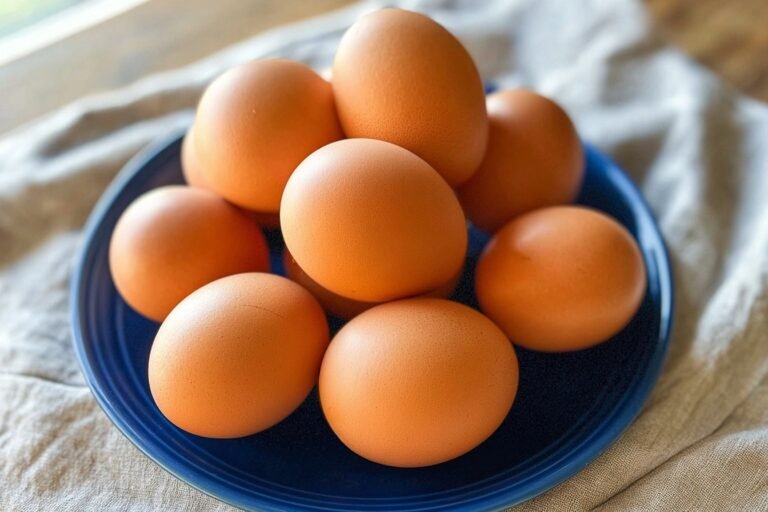
6 large eggs the main ingredient
enough water to cover eggs by about 1 inch (approximately 6 cups) for boiling or steaming
1 teaspoon salt added to the boiling water to help make peeling a bit easier and to season slightly
1 teaspoon baking soda to raise pH and help loosen shells
ice cubes about 2 cups for an ice bath to cool eggs rapidly after cooking
Instructions
1-First Step: Prep and choose the right eggs
First Step: Gather your ingredients and tools. Use eggs that are 7 to 14 days old if possible; slightly older eggs peel much easier because the membrane separates a little from the white. Place 6 large eggs in a single layer in a pot or prepare your steamer basket. Fill the pot with cold water to cover eggs by about 1 inch (about 6 cups for 6 eggs). Add 1 teaspoon salt or 1 teaspoon baking soda if you like; both are optional. Set a bowl with 2 cups of ice cubes and cold water nearby for an ice bath.
2-Second Step: Boil or steam carefully
Second Step: Heat the water. For boiling, bring the pot to a gentle boil over medium-high heat. Once boiling, lower the heat to maintain a gentle simmer and start timing. For a classic hard boiled egg with a fully set yolk, simmer for 12 minutes. If you prefer steaming (my go-to for cleaner peeling, especially with fresher eggs), bring about 1 inch of water to a rolling boil, place eggs in a steamer basket, cover, and steam for 12 to 15 minutes. Steaming gives more even heat and often yields smoother separation between shell and membrane.
3-Third Step: Shock in an ice bath
Third Step: Immediately transfer eggs to the ice bath using a slotted spoon and let them chill for 5 to 10 minutes. The ice cubes cool the eggs quickly and cause the egg white to contract slightly away from the shell. This step is a key to learning how to peel eggs cleanly; skipping it usually causes sticking and torn whites.
4-Fourth Step: Crack and roll to loosen shell
Fourth Step: Crack each egg by tapping it gently on the counter until you create a network of small cracks all over the shell. Roll the egg gently with your palm on the countertop to loosen the shell from the membrane. Start peeling from the wider, fat end where the air pocket sits; this is usually the easiest place to get under the membrane. If you prefer, peel under a gentle stream of cool running water to help slide bits of shell away.
5-Fifth Step: Use the spoon trick for stubborn eggs
Fifth Step: If shells cling, use a spoon. Slip a teaspoon under the cracked shell at the fat end and rotate the spoon around the curve to separate shell and membrane. This tool approach reduces damage to the white. Peel with short, gentle strokes; for neat halves, keep the egg chilled until just before slicing.
6-Final Step: Serve and store
Final Step: Rinse peeled eggs to remove small shell pieces, then pat dry. Serve immediately, slice for salads, or store in the refrigerator up to 5 days. For packing, place peeled eggs in a sealed container lined with a damp paper towel to prevent drying. Try pairing halved eggs with a light dressing or use in a shrimp salad for a protein boost. You can find a simple shrimp salad recipe here: shrimp salad recipe. For a simple dressing idea, pair with a tangy vinaigrette like this balsamic vinaigrette.
Last Step:
Please leave a rating and comment letting us know how you liked this recipe! This helps our business to thrive and continue providing free, high-quality recipes for you.Notes
🥄 Adding baking soda to the water raises the pH level and makes eggs easier to peel
❄️ The ice bath shock stops the cooking process and creates steam between the shell and membrane
🕐 Older eggs (1-2 weeks old) are easier to peel than very fresh eggs
- Prep Time: 5 minutes
- Cooling Time: 10 minutes
- Cook Time: 12 minutes
- Category: Technique
- Method: Boiling
- Cuisine: Universal
- Diet: Regular
Nutrition
- Serving Size: 1 egg
- Calories: 78
- Sugar: 0
- Sodium: 62
- Fat: 5
- Saturated Fat: 2
- Unsaturated Fat: 2
- Trans Fat: 0
- Carbohydrates: 1
- Fiber: 0
- Protein: 6
- Cholesterol: 187