Ingredients
1 (15-ounce) can chickpeas or 1 ½ cups cooked chickpeas (250g) for base and main source of protein and fiber
¼ cup fresh lemon juice (60ml) for brightness and acidity
¼ cup well-stirred tahini (60ml) for creamy, nutty backbone and sesame flavor
1 small garlic clove for sharp savory note
2 tablespoons extra-virgin olive oil (30ml) for richness and smooth mouthfeel
½ teaspoon ground cumin for warming and rounding out flavor profile
Salt for balancing and bringing forward flavors
2 to 3 tablespoons cold water or aquafaba (45ml) for creating light, fluffy texture
Dash of ground paprika, sumac, or Za’atar for garnish, color and finishing flavor
Instructions
1-First Step: Prep and mise en place Gather ingredients and equipment: a food processor (or high-speed blender), measuring cups, a small bowl for lemon juice, and a spatula. Drain a 15-ounce can of chickpeas or measure 1 1/2 cups cooked chickpeas (250g). Mince 1 small garlic clove and measure the tahini, lemon juice, olive oil, cumin, salt, and cold water or aquafaba.
2-Second Step: Whip the tahini and lemon Place 1/4 cup well-stirred tahini and 1/4 cup fresh lemon juice (60ml) into the food processor. Process for about 1 to 2 minutes until the mixture becomes thicker and paler. This aerates the tahini and creates a creamy base, which is a key trick for smooth hummus.
3-Third Step: Add garlic, oil, and seasoning Add 1 small garlic clove, minced, 1/2 teaspoon ground cumin, and salt to taste to the tahini-lemon mixture. With the processor running, stream in 2 tablespoons extra-virgin olive oil (30ml). Process for 30 seconds more so the flavors blend. This step helps build flavor depth before the chickpeas go in.
4-Fourth Step: Process chickpeas in batches Add half of the chickpeas (reserve the other half) and process until fairly smooth, about 30 to 60 seconds. Stop and scrape down the sides with a spatula. Add the remaining chickpeas and process again until thick and smooth. Processing in batches gives a more uniform result and reduces strain on the motor.
5-Fifth Step: Adjust texture with cold water or aquafaba With the processor running, add 2 to 3 tablespoons cold water or aquafaba (45ml) a tablespoon at a time until the hummus reaches a light, fluffy texture. The cold liquid is important: it loosens the mix without warming it, keeping the hummus bright and airy.
6-Sixth Step: Taste and season Taste and add more salt, lemon, or cumin as needed. If you want more creaminess, add another tablespoon of olive oil or a splash more cold water. For a sharper garlic note, add a small extra pinch of minced garlic and pulse briefly.
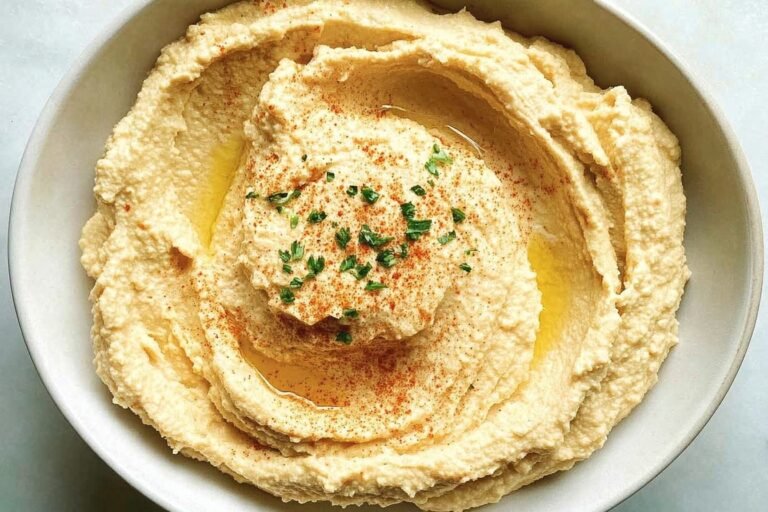
7-Final Step: Serve and garnish Spoon the hummus into a shallow bowl, use the back of a spoon to make a slight well in the center, and drizzle a little extra-virgin olive oil on top. Finish with a dash of ground paprika, sumac, or Za’atar, and a few whole chickpeas if you reserved some. Serve with warm pita, raw vegetables, or use as a spread in sandwiches.
Last Step:
Please leave a rating and comment letting us know how you liked this recipe! This helps our business to thrive and continue providing free, high-quality recipes for you.Notes
🥄 For the smoothest hummus, remove the skins from canned chickpeas by gently rubbing them between your hands – this takes extra time but makes a big difference in texture
🌿 Let the hummus rest in the refrigerator for at least 30 minutes before serving to allow flavors to meld together
💧 Use ice-cold water or aquafaba to achieve the creamiest consistency and help lighten the texture
- Prep Time: 15 minutes
- Cook Time: 0 minutes
- Category: Appetizer
- Method: No-cook
- Cuisine: Middle Eastern
- Diet: Vegan
Nutrition
- Serving Size: 2 tablespoons
- Calories: 80
- Sugar: 0g
- Sodium: 65mg
- Fat: 5g
- Saturated Fat: 1g
- Unsaturated Fat: 4g
- Trans Fat: 0g
- Carbohydrates: 6g
- Fiber: 2g
- Protein: 3g
- Cholesterol: 0mg