

Why You’ll Love This Homemade Pizza
Imagine pulling a hot, bubbly pizza straight from your oven, with a crust that’s just right and toppings that melt in your mouth. That’s what you’ll get with this homemade pizza recipe, and it’s simpler than you might think. (I remember my first attempt ended with a pizza that looked more like a flatbread, but hey, we all start somewhere!) Let’s dive into why this recipe will become your go-to for family dinners or solo nights in.
- Ease of preparation: This recipe takes just about 55 minutes from start to finish, including prep time of 15 minutes and cooking around 10 minutes after preheating. You’ll appreciate how straightforward it is, especially if you’re a busy parent juggling work and kids or a student with limited time. No fancy tools needed just basic kitchen items make it accessible for everyone.
- Health benefits: Each slice packs in nutrients like 18g of protein and vitamins such as Vitamin A at 670IU and Vitamin C at 4mg, which can support your daily intake without overloading on calories (just 315 per slice). For diet-conscious folks or seniors watching their intake, it’s a balanced option with low carbs at 5g and fiber at 1g, making it easier to enjoy pizza without the guilt. (Think of it as a tasty way to sneak in some potassium at 298mg!)
- Versatility: Adapt this pizza to suit different tastes, whether you’re a food enthusiast experimenting with flavors or newlyweds tailoring meals for two. You can swap toppings for veggies if you’re a traveler craving familiar tastes abroad, or go lighter for working professionals. It’s perfect for baking enthusiasts who love tweaking recipes to fit dietary needs.
- Distinctive flavor: The combination of sliced and shredded mozzarella creates that irresistible gooey cheese pull, while pepperoni adds a spicy kick balanced by the parmesan. (My family always fights over the last slice because it’s just that good!) This recipe stands out with its crispy crust from using a pizza stone, delivering a homemade taste that rivals your favorite pizzeria.
This easy homemade pizza recipe brings joy to cooking, letting you create memorable moments with minimal effort. Whether you’re making it for a quick weeknight meal or a fun gathering, it’s all about that fresh, from-scratch flavor. Now, let’s gather what you need to get started.
Essential Ingredients for Homemade Pizza
Getting the right ingredients is key to making a great homemade pizza, and I’ve listed them out clearly so you can shop and prep with ease. Each one plays a role in building that perfect pie, from the dough that forms the base to the toppings that add flavor. (I once forgot the olive oil and ended up with a dry crust lesson learned!)
Main Ingredients
- 1 ball pizza dough (12 to 16 ounces) – This forms the foundation of your pizza, giving you a chewy yet crispy crust that’s easy to work with and perfect for beginners.
- 1 tablespoon olive oil – Used to brush the dough, it helps prevent sogginess and adds a subtle richness that enhances the overall taste.
- 1 cup pizza sauce – Provides the flavorful base that ties everything together, offering a tangy contrast to the cheeses and toppings.
- 3 ounces thinly sliced mozzarella cheese – Melts smoothly for that classic stretchy texture, creating a creamy layer that makes every bite irresistible.
- 5 ounces shredded mozzarella cheese – Adds extra gooeyness when combined with sliced cheese, ensuring your pizza has the perfect melt without becoming watery.
- 2.5 ounces pepperoni – Brings a spicy, savory punch that elevates the pizza from ordinary to exciting, making it a hit with kids and adults alike.
- 2 tablespoons shredded parmesan cheese – Sprinkled on top, it adds a nutty, salty finish that boosts the flavor profile and helps with browning.
Special Dietary Options
If you’re looking to customize this recipe, here are some swaps to make it fit your needs. (Adapting recipes keeps things fun and inclusive, right?)
- Vegan: Swap the mozzarella and parmesan for plant-based alternatives like vegan cheese shreds (about 8 ounces total) to maintain that melty texture, and use a vegan pepperoni substitute to keep the flavors bold without animal products.
- Gluten-free: Opt for a gluten-free pizza dough ball (12 to 16 ounces) made from almond or rice flour blends, ensuring the base holds up just as well while accommodating those with gluten sensitivities.
- Low-calorie: Reduce cheese to 4 ounces total (split between sliced and shredded) and use turkey pepperoni instead of regular to cut down on fat, keeping the pizza under 250 calories per slice for a lighter option.
How to Prepare the Perfect Homemade Pizza: Step-by-Step Guide
Making homemade pizza at home is a rewarding process that turns your kitchen into a mini pizzeria. We’ll walk through each step so you can nail that perfect crust every time. With a total prep and cook time of about 55 minutes, it’s an easy pizza dough recipe that’s perfect for busy evenings. (I love how this method makes me feel like a pro, even on my off days!)
First Step: Preheat Your Oven
Start by placing a pizza stone in the oven and preheating it to 550°F (290°C) for at least 30 minutes. This step ensures your oven is hot enough for a crispy crust, mimicking a traditional pizza oven. If you don’t have a stone, an inverted baking sheet works, but it’ll change the texture a bit.
Second Step: Prepare the Dough
Prepare a work surface with a light dusting of oil or flour to prevent sticking. Roll the 12 to 16 ounces of pizza dough into a 12-inch circle on parchment paper for easy handling. This keeps things neat and helps with transferring to the oven later. (Rolling the dough is therapeutic give it a try!)
Third Step: Add the Initial Oil and Par Bake
Brush the surface of the dough with 1 tablespoon of olive oil, focusing on the edges to keep them from getting soggy. Par bake the dough for 1 2 minutes on the pizza stone. This quick step creates a barrier that prevents the toppings from making the crust mushy. Keep an eye on it to avoid over-browning.
Fourth Step: Add Your Toppings
Top the par-baked dough with 1 cup of pizza sauce, spreading it evenly. Layer on 3 ounces of thinly sliced mozzarella cheese, followed by 5 ounces of shredded mozzarella, 2.5 ounces of pepperoni, and 2 tablespoons of shredded parmesan cheese. Arrange them for even distribution so every slice gets a bit of everything. (This is where you can get creative think of it as your canvas!)
Fifth Step: Final Bake
Bake the pizza directly on the stone for 8 12 minutes until it’s golden and the cheese is bubbly. Watch closely as oven temps vary, and you want that perfect crisp without burning the edges. For the best results, remove any parchment paper before the final bake to enhance crispiness. (The aroma at this stage always makes my mouth water.)
Final Step: Cool and Serve
Once baked, cool the pizza on a wire rack for a few minutes to let the cheese set, making it easier to slice. Serve it hot for the ultimate experience, paired with your favorite sides. For more dessert ideas after your pizza night, check out our fruit pizza recipe for a sweet twist. Remember, this homemade pizza step by step guide ensures great results every time.
As a quick reference, here’s a table of the nutritional info per slice to help with your meal planning:
| Nutrient | Amount |
|---|---|
| Calories | 315 |
| Carbohydrates | 5g |
| Protein | 18g |
| Fat | 25g (Saturated: 11g) |
| More Details | Polyunsaturated: 1g, Monounsaturated: 10g, Trans: 1g, Cholesterol: 66mg, Potassium: 298mg, Fiber: 1g, Sugar: 3g, Vitamin A: 670IU, Vitamin C: 4mg, Calcium: 326mg, Iron: 1mg |

Dietary Substitutions to Customize Your Homemade Pizza
Protein and Main Component Alternatives
Swapping proteins can make this recipe fit your diet, whether you’re avoiding meat or just varying flavors. For instance, replace the pepperoni with grilled chicken or tofu for a lighter option that still packs protein. (I once tried turkey pepperoni for a low-fat version, and it was a game-changer for my fitness routine.) These changes keep the pizza satisfying while adapting to what’s in your fridge.
Vegetable, Sauce, and Seasoning Modifications
Feel free to mix up veggies like adding bell peppers or spinach for extra nutrients, or switch the pizza sauce for pesto if you’re in the mood for something herby. For seasonings, reduce salt if you’re watching your intake or add herbs like basil for a fresh twist. (Experimenting like this has helped me discover new favorites, especially during travel-inspired cooking nights.) These tweaks ensure your homemade pizza remains versatile and delicious.
Mastering Homemade Pizza: Advanced Tips and Variations
Once you’re comfortable with the basics, level up your pizza game with these pro tips. From achieving the best homemade pizza dough to trying new flavors, you’ll be impressing guests in no time. (I picked up these tricks after a few kitchen mishaps, and they’ve made all the difference!)
- Pro cooking techniques: Use a pizza stone for that crispy crust, and always preheat for at least 30 minutes. Par bake the crust to avoid sogginess, and oil the edges for extra protection tips that really make your pizza stand out.
- Flavor variations: Experiment with BBQ sauce instead of traditional pizza sauce, or add veggies like mushrooms for a different twist. For more ideas on desserts to pair, check out our pumpkin whoopie pies as a fun follow-up treat.
- Presentation tips: Slice neatly and garnish with fresh herbs for an appealing look that wows at parties. It’s all about that visual pop to make your homemade pizza the star.
- Make-ahead options: Prep the dough in advance and store it in the fridge, so you can have pizza ready for busy schedules. This is perfect for working professionals who need quick meals.
This simple pizza recipe can be your canvas for creativity just remember, less is more with toppings to keep it crispy. As one expert says, “The key to great pizza is in the details.”
How to Store Homemade Pizza: Best Practices
Storing your homemade pizza keeps it fresh for leftovers, which is great for meal prep. Let’s cover the basics so you can enjoy it later without losing that fresh-baked taste. (I’ve saved many slices this way for late-night snacks!)
- Refrigeration: Store slices in an airtight container for up to 3 days; this short-term option works well for busy parents grabbing quick meals.
- Freezing: Wrap individual slices in foil and freeze for up to 2 months; thaw in the fridge before reheating to maintain texture.
- Reheating: Use an oven at 350°F for 5-10 minutes to keep the crust crisp; avoid microwaves as they make it soggy. Always check for safety before eating.
- Meal prep considerations: Batch-cook pizzas and store them in portions for easy weeknight dinners, ideal for students or seniors.

FAQs: Frequently Asked Questions About Homemade Pizza
What temperature should you cook homemade pizza at?
Cook homemade pizza at the highest temperature your oven can reach, typically 450-550°F (230-290°C). Most home ovens max out at 550°F, while traditional pizza ovens reach 900-1000°F. Preheat your oven for at least 30 minutes with a pizza stone inside if using one. The high heat creates a crispy crust and perfectly melted cheese. Be prepared for some smoke, and keep towels handy near your smoke detector in case food particles burn on the oven floor.
What cheese works best for homemade pizza?
Mozzarella is the classic pizza cheese choice, but combining it with parmesan creates the best flavor and texture. Low-moisture mozzarella melts well without making your pizza soggy. For superior melting, shred your own cheese instead of using pre-shredded varieties, which contain anti-caking agents. Try a combination approach: place thin slices of mozzarella on the sauce first, then top with shredded cheese. This technique creates the perfect gooey, stretchy cheese layer that pizza lovers crave.
Do you really need a pizza stone to make good homemade pizza?
While not absolutely necessary, a pizza stone significantly improves homemade pizza by mimicking a brick oven. It absorbs and retains heat, creating a crispy bottom crust while preventing burning. Pizza stones are porous, drawing moisture away from the dough for better texture. If you don’t have a stone, alternatives include an inverted baking sheet, a cast iron skillet, or a pizza steel. These options range from $20-50 and are worth the investment if you make pizza regularly, as they solve the problem of home ovens not reaching traditional pizza cooking temperatures.
How do you keep homemade pizza from getting soggy?
Prevent soggy pizza by using several techniques. First, don’t overload your sauce—a thin layer works best. Pre-cook watery toppings like mushrooms or spinach to remove excess moisture. Use low-moisture cheese rather than fresh varieties. A pizza stone or steel helps by absorbing moisture from the crust. Bake at the highest temperature your oven allows to quickly evaporate moisture. Let your dough rise properly and avoid adding too many toppings. Finally, consider pre-baking the crust for 3-5 minutes before adding toppings to create a moisture barrier.
What are the best toppings for homemade pizza?
Classic pizza toppings include pepperoni, mushrooms, bell peppers, onions, and olives. For variety, try different cheese combinations like mozzarella, fontina, parmesan, and gorgonzola. Popular themed pizzas include Margherita (fresh mozzarella, basil, tomatoes), Meat Lovers (pepperoni, sausage, ham, bacon), Hawaiian (Canadian bacon, pineapple), and BBQ chicken (barbecue sauce, chicken, red onions, bacon). When experimenting, balance flavors and textures, and remember that less is often more—overloading toppings can lead to soggy pizza and uneven cooking.
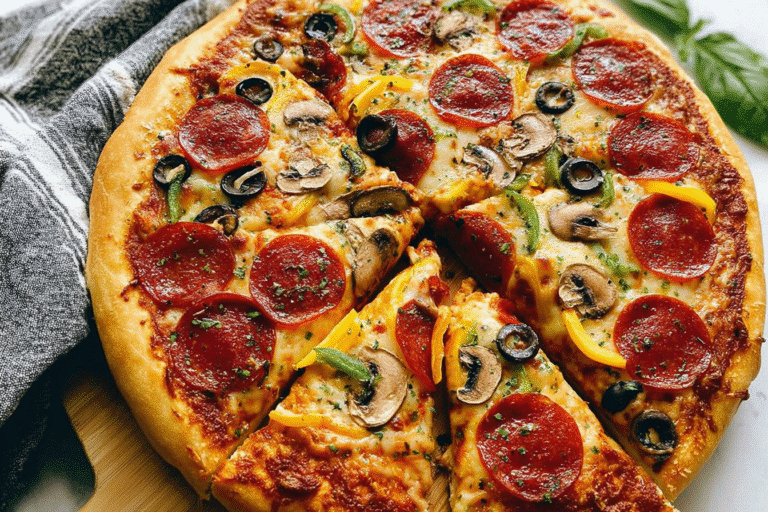
Homemade Pizza
🍕 This Homemade Pizza Recipe provides easy steps for creating a perfectly crispy crust every time, giving you a pizzeria-quality pizza at home.
🔥 With a quick prep and high-heat baking on a pizza stone, it achieves ideal golden results with melty cheese and flavorful toppings.
- Total Time: 55 minutes
- Yield: 8 slices 1x
Ingredients
1 ball pizza dough (12 to 16 ounces) This forms the foundation of your pizza, giving you a chewy yet crispy crust that’s easy to work with and perfect for beginners.
1 tablespoon olive oil Used to brush the dough, it helps prevent sogginess and adds a subtle richness that enhances the overall taste.
1 cup pizza sauce Provides the flavorful base that ties everything together, offering a tangy contrast to the cheeses and toppings.
3 ounces thinly sliced mozzarella cheese Melts smoothly for that classic stretchy texture, creating a creamy layer that makes every bite irresistible.
5 ounces shredded mozzarella cheese Adds extra gooeyness when combined with sliced cheese, ensuring your pizza has the perfect melt without becoming watery.
2.5 ounces pepperoni Brings a spicy, savory punch that elevates the pizza from ordinary to exciting, making it a hit with kids and adults alike.
2 tablespoons shredded parmesan cheese Sprinkled on top, it adds a nutty, salty finish that boosts the flavor profile and helps with browning.
Instructions
First Step: Preheat Your Oven: Start by placing a pizza stone in the oven and preheating it to 550°F (290°C) for at least 30 minutes. This step ensures your oven is hot enough for a crispy crust, mimicking a traditional pizza oven. If you don’t have a stone, an inverted baking sheet works, but it’ll change the texture a bit.
Second Step: Prepare the Dough: Prepare a work surface with a light dusting of oil or flour to prevent sticking. Roll the 12 to 16 ounces of pizza dough into a 12-inch circle on parchment paper for easy handling. This keeps things neat and helps with transferring to the oven later. (Rolling the dough is therapeutic give it a try!)
Third Step: Add the Initial Oil and Par Bake: Brush the surface of the dough with 1 tablespoon of olive oil, focusing on the edges to keep them from getting soggy. Par bake the dough for 1 2 minutes on the pizza stone. This quick step creates a barrier that prevents the toppings from making the crust mushy. Keep an eye on it to avoid over-browning.
Fourth Step: Add Your Toppings: Top the par-baked dough with 1 cup of pizza sauce, spreading it evenly. Layer on 3 ounces of thinly sliced mozzarella cheese, followed by 5 ounces of shredded mozzarella, 2.5 ounces of pepperoni, and 2 tablespoons of shredded parmesan cheese. Arrange them for even distribution so every slice gets a bit of everything. (This is where you can get creative think of it as your canvas!)
Fifth Step: Final Bake: Bake the pizza directly on the stone for 8 12 minutes until it’s golden and the cheese is bubbly. Watch closely as oven temps vary, and you want that perfect crisp without burning the edges. For the best results, remove any parchment paper before the final bake to enhance crispiness. (The aroma at this stage always makes my mouth water.)
Final Step: Cool and Serve: Once baked, cool the pizza on a wire rack for a few minutes to let the cheese set, making it easier to slice. Serve it hot for the ultimate experience, paired with your favorite sides. For more dessert ideas after your pizza night, check out our fruit pizza recipe for a sweet twist. Remember, this homemade pizza step by step guide ensures great results every time.
Last Step:
Please leave a rating and comment letting us know how you liked this recipe! This helps our business to thrive and continue providing free, high-quality recipes for you.Notes
🌟 Use a pizza stone to achieve a crispy and evenly cooked crust.
⏲️ Preheat your oven and pizza stone for at least 30 minutes before baking to get the best results.
🍽️ Par bake the crust to prevent sogginess in the center and maintain a perfect texture.
- Prep Time: 15 minutes
- Preheating time: 30 minutes
- Cook Time: 10 minutes
- Category: Main Dish
- Method: Baking
- Cuisine: Italian-American
- Diet: Vegetarian
Nutrition
- Serving Size: 1 slice
- Calories: 315 kcal
- Sugar: 3 g
- Sodium: 450 mg
- Fat: 25 g
- Saturated Fat: 11 g
- Unsaturated Fat: 11 g
- Trans Fat: 1 g
- Carbohydrates: 5 g
- Fiber: 1 g
- Protein: 18 g
- Cholesterol: 66 mg






Tried making this homemade pizza last night and it was a total hit with my family! 🍕 I added some fresh basil and a little chili flakes for extra kick. Quick question though: do you think using bread flour instead of all-purpose would make the crust chewier?