
Why You’ll Love This Baked Thai Coconut Shrimp
Imagine coming home after a long day and whipping up something delicious that’s ready in no time. This Baked Thai Coconut Shrimp recipe fits right into that picture with its straightforward steps and fresh flavors that bring a bit of Thai magic to your kitchen. You’ll find it’s a hit for busy parents or anyone looking for a meal that doesn’t take hours but still feels special, like when you want to treat yourself without much effort.
Health-wise, this dish packs in goodness from shrimp, which are full of protein and vitamins, and coconut, adding healthy fats that make it a smart choice for those keeping an eye on what they eat. Whether you’re a student juggling classes or a working professional, the mix of spices and textures offers something exciting that can brighten any meal. Plus, it’s versatile enough to tweak for different diets without losing that tasty edge.
Beyond ease and nutrition, the standout Thai-inspired flavors from the curry and coconut create a fun twist on dinner that feels like a little adventure. I often think about how recipes like this can turn an ordinary evening into a memorable one, especially when shared with friends or family. If you’re curious about more creative dessert ideas, check out our berry trifle for a sweet finish to your meal.
Let’s not forget how this recipe yields about 4 servings with around 575 calories each, making it a balanced option for diet-conscious folks. Total prep and cooking time is just about 25 minutes, so it’s perfect for those quick weeknight dinners. The baked shrimp give you that satisfying crunch without the oil from frying, paired with a fresh lemongrass guacamole that adds a fruity and spicy kick.
Key Benefits and Ease of Preparation
This baked Thai coconut shrimp is quick to make, with simple steps that anyone can follow, making it ideal for busy nights. The health benefits come from nutritious ingredients like shrimp and coconut, offering protein and healthy fats in every bite. You’ll love how easy it is to adapt for various needs, ensuring everyone at the table can enjoy it.
For instance, if you’re exploring more about shrimp’s advantages, head over to this guide on Shrimp Health Benefits. It’s a great resource for understanding why this seafood is a staple in healthy eating.
Essential Ingredients for Baked Thai Coconut Shrimp
Gathering the right ingredients is the first step to creating this delightful dish of Baked Thai Coconut Shrimp served with Lemongrass Guacamole. Each item plays a key role in building the flavors and textures that make this recipe so special. Let’s break it down so you can shop confidently and get cooking without any surprises.
Below is a complete list of everything you’ll need. I’ve pulled together the precise measurements to make it simple for you to follow along. This ensures your dish turns out just right every time, whether you’re making it for a quick family dinner or a small gathering.
Main Ingredients for the Shrimp
- 1 pound shrimp, peeled and deveined
- 2 tablespoons Thai red curry paste
- 1 tablespoon fish sauce
- 2 eggs
- 1 cup shredded coconut
- 3/4 cup panko breadcrumbs
Ingredients for the Lemongrass Guacamole
- 2 avocados, halved and pitted
- Juice from 1 lime
- 1 tablespoon finely chopped lemongrass or lemongrass paste
- 1/4 cup fresh basil, chopped
- A pinch of kosher salt
- 1 Fresno or jalapeño pepper, seeded and chopped
- 1/2 cup pomegranate arils
- 1/2 cup chopped strawberries
This structured list covers all the essentials, so you won’t miss a thing. Fresh ingredients like the basil and lemongrass bring that vibrant, exotic taste that pairs perfectly with the shrimp. If you want to try more fun recipes, our fruit pizza uses similar fresh elements for a sweet treat.
How to Prepare the Perfect Baked Thai Coconut Shrimp: Step-by-Step Guide
Getting started with this Baked Thai Coconut Shrimp recipe is as easy as turning on your oven. You’ll preheat it to 425°F and lightly grease a baking sheet to avoid any sticking later. This simple setup helps everything cook evenly and keeps cleanup quick, which is perfect if you’re a busy parent or student.
Mix the 2 tablespoons of Thai red curry paste with 1 tablespoon of fish sauce in a bowl, then coat the 1 pound of peeled and deveined shrimp evenly in this mixture. In another bowl, beat the 2 eggs, and in a third, combine 1 cup of shredded coconut with 3/4 cup of panko breadcrumbs. Dip each shrimp into the beaten eggs, letting any excess drip off before coating it in the coconut-panko mix, pressing gently to make sure it sticks.
Place the coated shrimp on your prepared baking sheet, spacing them out for crispiness, and season with a bit of salt and pepper. Lightly brush them with olive oil or cooking spray to help them golden up nicely. Pop them in the oven and bake for 10-12 minutes until they’re lightly golden and cooked through.
For the Lemongrass Guacamole, mash the 2 halved and pitted avocados and mix in the juice from 1 lime, 1 tablespoon of finely chopped lemongrass or lemongrass paste, 1/4 cup of chopped fresh basil, and a pinch of kosher salt. Top it off with 1 seeded and chopped Fresno or jalapeño pepper, 1/2 cup of pomegranate arils, and 1/2 cup of chopped strawberries just before serving. This adds a fresh, fruity contrast that makes the whole dish pop.
Detailed Steps for Best Results
First, preheat your oven as mentioned. Then, prepare the coating mixtures carefully. Make sure to dip and coat each shrimp one by one for even coverage. Finally, serve right away for the best texture and flavor.

Dietary Substitutions to Customize Your Baked Thai Coconut Shrimp
One of the best parts about this Baked Thai Coconut Shrimp is how flexible it is for different diets. If you’re vegan, swap the shrimp with tofu or tempeh to keep that protein punch without any animal products. It’s all about making the recipe work for you, so feel free to experiment based on what you have on hand.
For those avoiding gluten, use gluten-free panko breadcrumbs or even crushed gluten-free crackers instead. If you’re watching calories, go for light coconut milk or cut back on the shredded coconut to lighten things up. These changes let you enjoy the dish while fitting your lifestyle, like when I tweak recipes for my own meals.
You can also play with flavors by swapping Thai red curry paste for green or yellow curry if you want something different. Adding veggies like bell peppers or snap peas can make it even heartier, and using lemon juice instead of lime gives a fresh twist. Remember, the goal is to keep that signature Thai taste while making it your own.
More Ideas for Personalization
Try protein alternatives like chicken or fish, and adjust seasonings to taste. This way, the recipe stays exciting and adaptable for everyone from newlyweds to seniors.
Mastering Baked Thai Coconut Shrimp: Advanced Tips and Variations
Once you’ve nailed the basics, you can level up your Baked Thai Coconut Shrimp with a few pro tips. For a super crispy texture, toast the shredded coconut lightly before mixing it with the panko breadcrumbs it adds an extra crunch that makes each bite better. Using a wire rack on your baking sheet lets air circulate, helping everything cook evenly without getting soggy.
Flavor-wise, mix in fresh basil or kaffir lime leaves into the breadcrumb blend for a burst of aroma, or add chili flakes if you like it spicy. Presentation matters too, so serve the shrimp on jasmine rice or a simple salad, topped with sliced red chilies and herbs for that eye-catching look. If you’re prepping ahead, coat the shrimp earlier and store them; just bake fresh when you’re ready.
Coconut is not only tasty but also brings health perks like healthy fats, as noted in this resource on Coconut Benefits. It’s a great way to enhance your meal while staying nutritious. Experimenting with these variations keeps things fun and fits various tastes, whether you’re a food enthusiast or just trying something new.
Creative Serving Suggestions
Pair with sides like the lemongrass guacamole for a complete meal, and don’t hesitate to mix in new ingredients for variety.
How to Store Baked Thai Coconut Shrimp: Best Practices
Storing your Baked Thai Coconut Shrimp properly keeps it tasty for later. Put leftovers in an airtight container and chill in the fridge for up to 2 days to hold onto that fresh flavor. If you want to freeze them, lay the shrimp out on a baking sheet first, then bag them up for up to a month.
When reheating, use your oven or toaster oven at 350°F for 5-7 minutes to keep the crispiness intact. For meal prep, cook in batches, cool them down, and portion them out it’s a game-changer for busy weeks. This way, you can enjoy the dish without rushing, making it easier for working professionals or students.
Tips for Longevity
Always cool food before storing and label your containers for easy tracking.
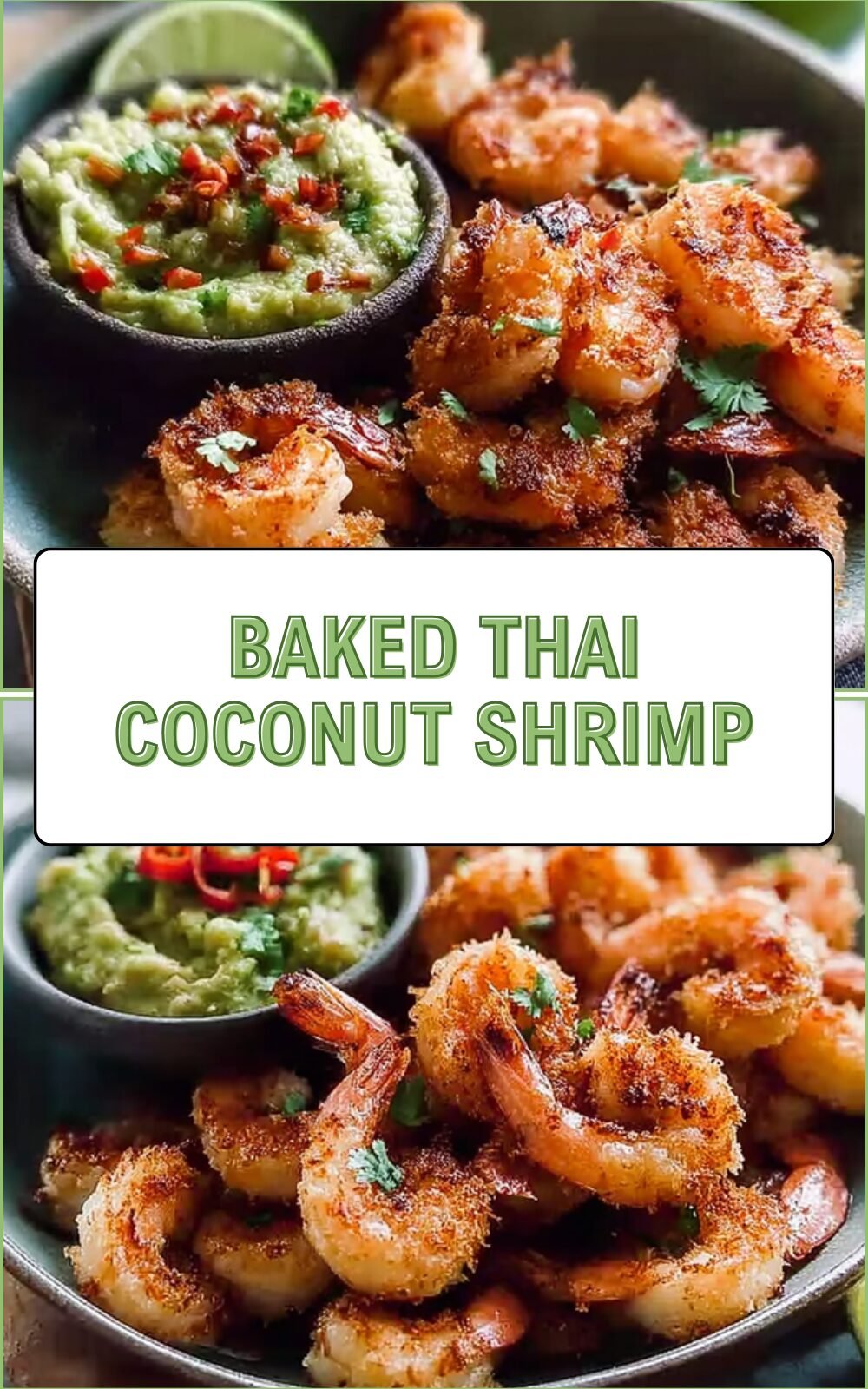
FAQs: Frequently Asked Questions About Baked Thai Coconut Shrimp
How do you bake Thai coconut shrimp to get a crispy crust?
To achieve a crispy crust when baking Thai coconut shrimp, coat the shrimp by first tossing them in Thai red curry paste mixed with fish sauce. Then dip each shrimp in beaten egg and dredge them in a mixture of shredded coconut and panko breadcrumbs. Place them on a baking sheet and bake at 425°F (220°C) for 10-12 minutes. Letting excess egg drip off before coating helps the crust stick better and stay crispy without frying.
What ingredients are used to make the coconut and curry coating for the shrimp?
The coating combines Thai red curry paste and fish sauce for flavor, eggs to bind the coating, and a crunchy mixture of shredded coconut and panko breadcrumbs. This blend gives the shrimp a savory, mildly spicy taste with a golden and crispy texture when baked.
Can I substitute the shrimp with vegetables like cauliflower for a similar baked coconut crunch?
While the original recipe uses shrimp, cauliflower florets can be a good substitute for a vegetarian option. Coat the cauliflower pieces the same way—with curry paste, egg wash, and coconut-panko mix—and bake at 425°F until crispy. Expect a slightly different texture, but this swap offers a tasty alternative with similar crunch and flavor.
What is special about the lemongrass guacamole served with baked Thai coconut shrimp?
The lemongrass guacamole adds a fresh, zesty twist by incorporating finely chopped lemongrass or lemongrass paste, basil, lime juice, and fresh peppers. It is topped with pomegranate arils and diced strawberries to introduce sweetness and balance the heat. This unique guacamole complements the shrimp’s flavors and adds a bright contrast.
Is it okay to use store-bought guacamole instead of making lemongrass guacamole?
Yes, you can use your favorite store-bought guacamole as a convenient alternative. While making lemongrass guacamole adds a fresh herbal note that enhances the dish, store-bought versions still pair well with the baked coconut shrimp and will not ruin the overall flavor.
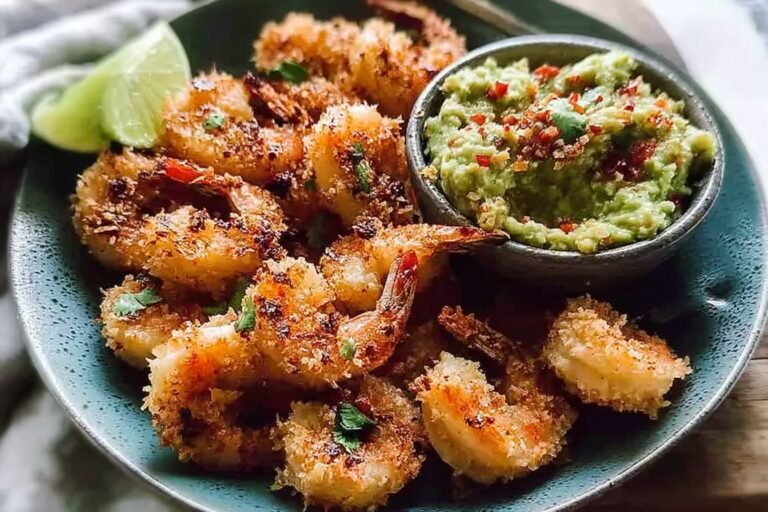
Baked Thai Coconut Shrimp
🍤 Crispy baked shrimp coated in Thai coconut and curry flavors that deliver restaurant-quality taste without the guilt of frying
🥥 Fresh lemongrass guacamole with pomegranate and strawberries creates a unique fusion that will impress your guests
- Total Time: 25 minutes
- Yield: 4 servings
Ingredients
– 1 pound shrimp, peeled and deveined
– 2 tablespoons Thai red curry paste
– 1 tablespoon fish sauce
– 2 eggs
– 1 cup shredded coconut
– 3/4 cup panko breadcrumbs
– 2 avocados, halved and pitted
– Juice from 1 lime
– 1 tablespoon finely chopped lemongrass or lemongrass paste
– 1/4 cup fresh basil, chopped
– A pinch of kosher salt
– 1 Fresno or jalapeño pepper, seeded and chopped
– 1/2 cup pomegranate arils
– 1/2 cup chopped strawberries
Instructions
1-Getting started with this Baked Thai Coconut Shrimp recipe is as easy as turning on your oven. You’ll preheat it to 425°F and lightly grease a baking sheet to avoid any sticking later. This simple setup helps everything cook evenly and keeps cleanup quick, which is perfect if you’re a busy parent or student.
2-Mix the 2 tablespoons of Thai red curry paste with 1 tablespoon of fish sauce in a bowl, then coat the 1 pound of peeled and deveined shrimp evenly in this mixture. In another bowl, beat the 2 eggs, and in a third, combine 1 cup of shredded coconut with 3/4 cup of panko breadcrumbs. Dip each shrimp into the beaten eggs, letting any excess drip off before coating it in the coconut-panko mix, pressing gently to make sure it sticks.
3-Place the coated shrimp on your prepared baking sheet, spacing them out for crispiness, and season with a bit of salt and pepper. Lightly brush them with olive oil or cooking spray to help them golden up nicely. Pop them in the oven and bake for 10-12 minutes until they’re lightly golden and cooked through.
4-For the Lemongrass Guacamole, mash the 2 halved and pitted avocados and mix in the juice from 1 lime, 1 tablespoon of finely chopped lemongrass or lemongrass paste, 1/4 cup of chopped fresh basil, and a pinch of kosher salt. Top it off with 1 seeded and chopped Fresno or jalapeño pepper, 1/2 cup of pomegranate arils, and 1/2 cup of chopped strawberries just before serving. This adds a fresh, fruity contrast that makes the whole dish pop.
5-Detailed Steps for Best Results First, preheat your oven as mentioned. Then, prepare the coating mixtures carefully. Make sure to dip and coat each shrimp one by one for even coverage. Finally, serve right away for the best texture and flavor.
Last Step:
Please leave a rating and comment letting us know how you liked this recipe! This helps our business to thrive and continue providing free, high-quality recipes for you.Notes
🥥 Press the coconut-panko mixture firmly onto the shrimp to ensure it stays on during baking for maximum crunch
🥑 Prepare the guacamole just before serving to prevent browning and maintain the fresh flavors of the lemongrass and basil
🍓 The pomegranate arils and strawberries add a sweet contrast that balances the spicy curry and savory shrimp perfectly
- Prep Time: 15 minutes
- Cook Time: 10 minutes
- Category: Main Dish
- Method: Baking
- Cuisine: Thai Fusion
Nutrition
- Serving Size: 1 serving
- Calories: 575
- Sugar: 12g
- Sodium: 680mg
- Fat: 32g
- Saturated Fat: 18g
- Unsaturated Fat: 12g
- Trans Fat: 0g
- Carbohydrates: 28g
- Fiber: 8g
- Protein: 35g
- Cholesterol: 280mg