

Why You’ll Love This Meatloaf
Meatloaf is one of those comforting dinners that feels like a warm hug on a plate. This classic meatloaf recipe balances simple prep, family-friendly flavors, and reliable results so weeknight cooks can put a satisfying meal on the table with confidence. Below are a few reasons this meatloaf will quickly become a staple in your rotation.
- Ease of preparation: This meatloaf recipe comes together in about 15 minutes of prep and roughly an hour of cooking. Minimal chopping and a single bowl make it approachable for busy parents and students who want a hearty meal without fuss.
- Health benefits: Using 80% to 85% lean ground beef gives the loaf enough fat for flavor while keeping calories reasonable. You can substitute half the beef with ground turkey or pork to reduce saturated fat or adjust protein for your dietary needs.
- Versatility: The recipe adapts well to dietary preferences: swap breadcrumbs for gluten-free alternatives, use leaner meats, or try different seasonings to suit picky eaters. This flexibility makes meatloaf great for families, seniors, and anyone counting calories.
- Distinctive flavor: Sauteed onions, fresh parsley, garlic, and a sweet-tangy ketchup glaze create a classic, well-balanced flavor profile that stands out at the dinner table. The glaze caramelizes on top for that signature meatloaf finish.
For more background on beef nutrition and how lean choices affect health, see + $(‘AI Agent’).item.json.output.Anchor1 +.
Byline
Author: Stella Romano
My blog shares my passion for cooking by offering a variety of recipes that are simple and accessible to everyone. My ambition is to inspire readers to cook with joy and create memorable moments around the table.
Essential Ingredients for Meatloaf
Below is a structured ingredient list with measurements and short notes so you’re never guessing why an item belongs in the mix. Each line begins with the exact quantity needed.
Main Ingredients:
- 2 lbs ground beef, 80% or 85% lean – The main protein; the fat content keeps the loaf moist and flavorful. You can substitute half with ground turkey, pork, or Italian sausage if desired.
- 1 medium onion, finely chopped (about 1 cup) – Sautéing the onion softens sharpness and adds sweetness and moisture.
- 1 teaspoon oil – For sautéing the onion until golden.
- 3 garlic cloves, minced – Adds aromatic savory depth to the loaf.
- 2 large eggs – Act as binders to hold the meatloaf together and add richness.
- 2 tablespoons ketchup – Adds moisture and mild tang to the interior; Worcestershire sauce can be substituted.
- 3 tablespoons fresh parsley, finely chopped – Brightens flavor and adds a fresh note.
- 3/4 cup Panko breadcrumbs – Help absorb juices and keep the texture tender; use gluten-free or Italian-style breadcrumbs if needed.
- 1/3 cup milk – Hydrates breadcrumbs and keeps the loaf soft.
- 1 teaspoon Italian seasoning – A blend of herbs that complements beef and garlic; adjust to taste.
- 1 teaspoon salt – Seasoning; add to taste.
- 1/2 teaspoon ground black pepper – For gentle heat and balance.
Meatloaf Glaze Ingredients:
- 3/4 cup ketchup – Base of the glaze for sweetness and tang.
- 1 1/2 teaspoons white vinegar – Adds acidity to balance sweetness.
- 2 tablespoons brown sugar – Sweetens and helps caramelize the topping.
- 1/2 teaspoon garlic powder – Boosts savory notes in the glaze.
- 1/2 teaspoon onion powder – Adds subtle onion flavor without texture.
Special Dietary Options
- Vegan: Use 2 cans of mashed lentils or 2 cups cooked lentils + 1 cup cooked quinoa as a base, replace eggs with 2 flax eggs (2 tbsp ground flaxseed + 6 tbsp water), and choose vegan breadcrumbs. Use a tomato-based glaze without sugar or use maple syrup.
- Gluten-free: Swap Panko breadcrumbs for certified gluten-free breadcrumbs or crushed gluten-free crackers. Ensure ketchup and other processed ingredients are labeled gluten-free.
- Low-calorie: Use 1 lb 90/10 ground beef mixed with 1 lb ground turkey, reduce brown sugar in glaze, and serve with low-calorie sides like steamed vegetables or cauliflower mash.
How to Prepare the Perfect Meatloaf: Step-by-Step Guide
This step-by-step walkthrough uses clear labels so you can follow along easily. Times and temperatures are included to help you cook with confidence.
First Step: Mise en place
Preheat the oven to 350°F. Line a rimmed baking sheet with parchment paper or foil for easy cleanup. Finely chop 1 medium onion to yield about 1 cup, measure the panko, and whisk the eggs and milk together in a small bowl. Preparing ingredients ahead saves time and keeps the process smooth.
Second Step: Saute the aromatics
Heat 1 teaspoon oil in a medium skillet over medium heat. Add the chopped onion and cook, stirring occasionally, until softened and golden, about 5 to 7 minutes. Remove from heat and set aside to cool slightly before adding to the meat mix. Sauteing the onion reduces sharpness and helps the loaf have a mellow, cooked-onion flavor.
Third Step: Combine the meat mixture
In a large bowl combine the following: 2 lbs ground beef, the cooled sautéed onion, 3 minced garlic cloves, 2 large eggs, 2 tablespoons ketchup, 3 tablespoons chopped fresh parsley, 3/4 cup Panko breadcrumbs, 1/3 cup milk, 1 teaspoon Italian seasoning, 1 teaspoon salt, and 1/2 teaspoon ground black pepper. Gently mix with your hands or a spoon just until ingredients are combined. Do not overmix; overworking the meat creates a dense loaf. If swapping in ground turkey or sausage for half the beef, fold those in gently at this stage.
Fourth Step: Shape the loaf
Shape the mixture into a free-form loaf approximately 8 inches long, 4 inches wide, and 3 inches tall on the prepared baking sheet. Press lightly to compact but avoid packing it tight. Free-form baking on the sheet gives crisp edges and cooks a bit faster than a loaf pan.
Fifth Step: Initial bake
Bake uncovered for 40 minutes at 350°F. This gives the interior a head start while the outside firms up. If using a loaf pan instead, line it with parchment, press the meat gently into the pan, increase oven temperature to 375°F, and adjust cooking time upward as noted in the tips below.
Sixth Step: Prepare and apply the glaze
While the loaf bakes, whisk together the glaze: 3/4 cup ketchup, 1 1/2 teaspoons white vinegar, 2 tablespoons brown sugar, 1/2 teaspoon garlic powder, and 1/2 teaspoon onion powder. After 40 minutes, spread the glaze evenly over the top of the meatloaf and return it to the oven.
Seventh Step: Finish baking
Bake an additional 20 minutes, or until the internal temperature reaches 160°F for beef (165°F if using poultry). Use an instant-read thermometer inserted into the center of the loaf to check doneness. Visual cues like clear juices and a firm surface can help when a thermometer is not available, but the thermometer is the safest check.
Final Step: Rest and serve
Let the meatloaf rest for 10 to 15 minutes before slicing. Resting allows juices to redistribute, making clean slices and a juicier bite. Slice with a sharp knife and serve with mashed potatoes, roasted vegetables, or a fresh salad.
Tip: Avoid overmixing and let the loaf rest after baking for the most tender slices.
Timing Summary
- Prep time: 15 minutes
- Cook time: 1 hour 5 minutes
- Total time: 1 hour 20 minutes
Protein and Main Component Alternatives
Not everyone has the same pantry or preferences, so here are reliable alternatives to the main protein and binding components that keep the loaf moist and tasty.
Ground meat substitutions
Mixing proteins gives you great flavor and texture options:
- Half ground turkey and half ground beef: Lightens the dish while maintaining moisture. If using mostly turkey, plan for a 165°F target internal temperature.
- Ground pork: Adds richness and extra juiciness; use up to half the total meat for best balance.
- Italian sausage: Brings seasoning and boldness reduce added herbs and salt to compensate.
- Venison or lean game: Combine with pork or beef to add fat and prevent dryness.
Binding and filler alternatives
If you need to swap the Panko or eggs:
- Gluten-free breadcrumbs or crushed gluten-free crackers: One-to-one replacement for Panko.
- Oats: Use old-fashioned oats as a wholesome binder; pulse to a coarse crumb for better texture.
- Mashed potatoes or cooked rice: Helps bind and stretch the mixture while keeping it tender.
- Flax eggs (for vegan versions): Mix 2 tablespoons ground flaxseed with 6 tablespoons water to replace two eggs.
These alternatives keep the loaf cohesive and moist while accommodating dietary needs or what’s on hand.
Vegetable, Sauce, and Seasoning Modifications
Small changes to vegetables, sauces, and herbs can shift the character of the meatloaf from classic comfort to something a little more adventurous. Below are options for seasonal changes, dietary swaps, and flavor twists.
Vegetable substitutions and additions
- Bell peppers: Finely diced and sautéed with onion for a sweet, colorful pop.
- Carrots or celery: Grated carrots or finely chopped celery add moisture and sweetness, especially useful when mixing leaner meats.
- Mushrooms: Finely chopped and cooked down, mushrooms add umami and reduce the need for extra fat.
- Zucchini: Grated and squeezed of excess moisture; pairs well with Italian seasoning and parsley.
Sauce and glaze variations
- BBQ glaze: Swap ketchup and brown sugar for your favorite BBQ sauce and a splash of apple cider vinegar for tang.
- Tomato-balsamic glaze: Replace white vinegar with balsamic and add a teaspoon of Dijon mustard.
- Maple mustard: Mix 1/2 cup ketchup with 2 tablespoons maple syrup and 1 tablespoon Dijon mustard for a sweet-savory finish.
Seasoning blends and herb swaps
- Smoky: Add 1 teaspoon smoked paprika and reduce the brown sugar in the glaze for a barbecue-style loaf.
- Herby: Swap Italian seasoning for 1 tablespoon each of fresh thyme and rosemary when you want a more aromatic loaf.
- Spicy: Add 1/4 to 1/2 teaspoon red pepper flakes or a tablespoon of chili paste for heat.
These tweaks help you craft a meatloaf that fits the season or satisfies a craving without losing the comfort that makes meatloaf a family favorite.
Mastering Meatloaf: Advanced Tips and Variations
Once you know the basics, these techniques and variations will help you perfect texture, flavors, and presentation useful for special dinners or batch cooking for the week.
Pro cooking techniques
- Use an instant-read thermometer to test the center temperature: 160°F for beef blends and 165°F for poultry blends. This is the most reliable way to avoid overcooking.
- Do not overwork the meat: Mix by hand just until combined. Overmixing makes the loaf dense and chewy instead of tender.
- Free-form vs. loaf pan: Free-form loaves on a baking sheet develop crispier edges. Loaf pans produce a neater shape and more uniform slices.
- Allow a proper rest: Resting for 10 to 15 minutes before slicing keeps juices inside the meat and makes cleaner cuts.
Flavor variations to try
- Italian-style: Add 1/2 cup grated Parmesan and swap parsley for basil, use Italian sausage for half the meat, and top with a marinara glaze.
- Cheesy center: Press a log of shredded cheese or mozzarella into the center before shaping for a melty surprise.
- Stuffed mushroom and spinach: Fold sautéed spinach and chopped cooked mushrooms into the mix for an earthy twist.
Presentation tips
Slice the rested loaf into even pieces and arrange on a warmed platter. Spoon extra glaze or pan juices over each slice, and garnish with a sprinkle of fresh parsley. Serve alongside colorful sides so the plate looks as good as it tastes. If serving guests, slice the loaf in the kitchen and present already plated portions to make serving simple.
Make-ahead and batch-cooking options
You can assemble the meatloaf 1 to 2 days ahead and refrigerate, covered, until baking. For longer storage, freeze a raw shaped loaf for up to 6 months; thaw in the refrigerator before baking. Cooked leftovers freeze well for up to 3 months when wrapped tightly. These strategies save time and are great for meal prep on busy weeks.
For dessert ideas that pair nicely with this comforting main, try a light fruit option like a berry trifle or a festive fruit pizza to finish the meal on a sweet, fresh note.
How to Store Meatloaf: Best Practices
Handling leftovers properly keeps the meatloaf safe and keeps quality high. Follow these storage and reheating tips for the best results.
Refrigeration
- Cool the meatloaf completely before storing to avoid condensation and sogginess.
- Store in an airtight container or wrap tightly with plastic wrap; refrigerate up to 3 to 4 days.
Freezing
- For cooked portions: Slice, wrap each portion tightly in plastic, then in foil, or use a vacuum sealer. Freeze up to 3 months.
- For raw shaped meatloaf: Wrap well and freeze for up to 6 months. Thaw in the refrigerator before baking; add 10 to 15 minutes to baking time if still slightly chilled.
Reheating
- Oven: Place slices in a baking dish, cover with foil, and warm at 350°F for about 15 to 20 minutes until heated through.
- Microwave: Heat single slices on medium power for 1 to 2 minutes, watching to avoid drying out.
- Stovetop: Warm slices in a skillet with a splash of broth or sauce over low heat until warmed through.
Label frozen portions with dates to track freshness and reduce waste.

FAQs: Frequently Asked Questions About Meatloaf
What type of ground beef is best for meatloaf?
For the best meatloaf, choose 80% or 85% lean ground beef. This balance of fat (20-15%) keeps the loaf moist and juicy during baking, preventing it from drying out. Very lean beef (90-95%) lacks enough fat, leading to a tough, dry texture. If using a mix, combine 80/20 with a bit of 90/10 for flavor without excess grease. Test doneness at 160°F internal temperature. Always pat the meat dry before mixing to avoid a soggy loaf. This simple choice makes a big difference in tenderness and taste—pair it with breadcrumbs, eggs, and sautéed onions for perfect results every time. (87 words)
Can I substitute other meats for ground beef in meatloaf?
Yes, substitute up to half the ground beef with ground turkey, pork, or Italian sausage for variety. Turkey lightens it up (cook to 165°F), pork adds richness, and sausage brings bold flavor—adjust seasonings to balance. For example, mix 1 lb beef with 1 lb pork. Avoid full turkey swaps without added fat like olive oil to prevent dryness. Sauté veggies first and use the same 375°F bake time, checking temp early. These swaps work well for allergies or preferences, keeping the loaf tender. Experiment with venison too, adding bacon bits for moisture. (92 words)
How do I know when meatloaf is done cooking?
Use an instant-read thermometer for accuracy—meatloaf with beef is done at 160°F internal temperature; turkey or chicken versions need 165°F. Insert into the center, avoiding edges. Visual cues include a firm loaf pulling from pan sides and clear juices. Baking typically takes 60-75 minutes at 375°F, but time varies by size. If no thermometer, cut a small center slit—no pink remains. Rest 10-15 minutes post-bake for juicy slices. This method beats guessing, ensuring food safety and perfect texture every time. (89 words)
How do I store and freeze meatloaf?
Cool meatloaf completely, then store in an airtight container in the fridge for 3-4 days. For freezing, portion into slices, wrap tightly in plastic and foil, or use freezer bags—lasts up to 3 months cooked. Freeze raw shaped loaves for 6 months: wrap well, thaw in fridge 24 hours before baking at 375°F (add 10-15 minutes). Reheat slices in microwave (1-2 minutes), oven (350°F, 20 minutes covered), or stovetop in sauce. Label with dates to track freshness and avoid waste. (85 words)
What are good side dishes for meatloaf?
Pair meatloaf with mashed potatoes topped with gravy, creamy mashed cauliflower for low-carb, or baked potatoes loaded with butter and chives. Veggies like green beans almondine, roasted broccoli with garlic, or glazed carrots add color and crunch. Fresh salad with vinaigrette cuts richness, while buttered noodles or mac and cheese comfort it up. For holidays, serve with cornbread and peas. These classics balance flavors—starchy sides soak up juices, veggies provide freshness. Prep sides while loaf rests for a complete meal in under 90 minutes total. (92 words)
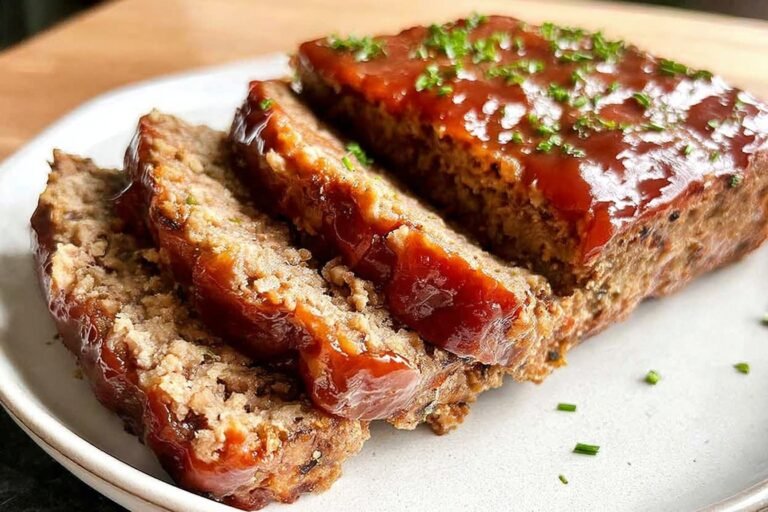
Meatloaf
🥩 A comforting, juicy meatloaf that brings families together around the dinner table with classic flavors
👨👩👧👦 This foolproof recipe creates tender, flavorful meatloaf that even picky eaters will love asking for seconds
- Total Time: 1 hour 20 minutes
- Yield: 8 servings
Ingredients
– 2 lbs ground beef, 80% or 85% lean for main protein
– 1 medium onion, finely chopped (about 1 cup) for sweetness and moisture
– 1 teaspoon oil for sautéing the onion
– 3 garlic cloves, minced for aromatic savory depth
– 2 large eggs as binders
– 2 tablespoons ketchup for moisture and mild tang
– 3 tablespoons fresh parsley, finely chopped to brighten flavor
– 3/4 cup Panko breadcrumbs to absorb juices
– 1/3 cup milk to hydrate breadcrumbs
– 1 teaspoon Italian seasoning for flavor
– 1 teaspoon salt for seasoning
– 1/2 teaspoon ground black pepper for heat and balance
– 3/4 cup ketchup for glaze base
– 1 1/2 teaspoons white vinegar for acidity
– 2 tablespoons brown sugar for sweetness
– 1/2 teaspoon garlic powder for savory notes
– 1/2 teaspoon onion powder for flavor
Instructions
1-First Step: Mise en place Preheat the oven to 350°F. Line a rimmed baking sheet with parchment paper or foil for easy cleanup. Finely chop 1 medium onion to yield about 1 cup, measure the panko, and whisk the eggs and milk together in a small bowl. Preparing ingredients ahead saves time and keeps the process smooth.
2-Second Step: Saute the aromatics Heat 1 teaspoon oil in a medium skillet over medium heat. Add the chopped onion and cook, stirring occasionally, until softened and golden, about 5 to 7 minutes. Remove from heat and set aside to cool slightly before adding to the meat mix. Sauteing the onion reduces sharpness and helps the loaf have a mellow, cooked-onion flavor.
3-Third Step: Combine the meat mixture In a large bowl combine the following: 2 lbs ground beef, the cooled sautéed onion, 3 minced garlic cloves, 2 large eggs, 2 tablespoons ketchup, 3 tablespoons chopped fresh parsley, 3/4 cup Panko breadcrumbs, 1/3 cup milk, 1 teaspoon Italian seasoning, 1 teaspoon salt, and 1/2 teaspoon ground black pepper. Gently mix with your hands or a spoon just until ingredients are combined. Do not overmix; overworking the meat creates a dense loaf. If swapping in ground turkey or sausage for half the beef, fold those in gently at this stage.
4-Fourth Step: Shape the loaf Shape the mixture into a free-form loaf approximately 8 inches long, 4 inches wide, and 3 inches tall on the prepared baking sheet. Press lightly to compact but avoid packing it tight. Free-form baking on the sheet gives crisp edges and cooks a bit faster than a loaf pan.
5-Fifth Step: Initial bake Bake uncovered for 40 minutes at 350°F. This gives the interior a head start while the outside firms up. If using a loaf pan instead, line it with parchment, press the meat gently into the pan, increase oven temperature to 375°F, and adjust cooking time upward as noted in the tips below.
6-Sixth Step: Prepare and apply the glaze While the loaf bakes, whisk together the glaze: 3/4 cup ketchup, 1 1/2 teaspoons white vinegar, 2 tablespoons brown sugar, 1/2 teaspoon garlic powder, and 1/2 teaspoon onion powder. After 40 minutes, spread the glaze evenly over the top of the meatloaf and return it to the oven.
7-Seventh Step: Finish baking Bake an additional 20 minutes, or until the internal temperature reaches 160°F for beef (165°F if using poultry). Use an instant-read thermometer inserted into the center of the loaf to check doneness. Visual cues like clear juices and a firm surface can help when a thermometer is not available, but the thermometer is the safest check.
8-Final Step: Rest and serve Let the meatloaf rest for 10 to 15 minutes before slicing. Resting allows juices to redistribute, making clean slices and a juicier bite. Slice with a sharp knife and serve with mashed potatoes, roasted vegetables, or a fresh salad.
Last Step:
Please leave a rating and comment letting us know how you liked this recipe! This helps our business to thrive and continue providing free, high-quality recipes for you.Notes
🌡️ Use a meat thermometer for perfect doneness – 160°F for beef, 165°F for poultry
🕐 Let the meatloaf rest for 10-15 minutes before slicing for juicy, tender results
🥘 Don’t overmix the meat mixture to keep the texture tender and moist
- Prep Time: 15 minutes
- Resting time: 15 minutes
- Cook Time: 1 hour 5 minutes
- Category: Main Dish
- Method: Baking
- Cuisine: American
- Diet: Non-Vegetarian
Nutrition
- Serving Size: 1 serving
- Calories: 338
- Sugar: 10g
- Sodium: 667mg
- Fat: 19g
- Saturated Fat: 7g
- Unsaturated Fat: 9g
- Trans Fat: 0g
- Carbohydrates: 17g
- Fiber: 1g
- Protein: 24g
- Cholesterol: 119mg