

Why You’ll Love This Calamari
Calamari is a versatile seafood staple that appears across global cuisines, from the United States and Italy to Spain, Greece, and several Asian nations. Home cooks appreciate it for predictable cooking times and adaptable preparations, making it suitable for quick weeknight meals or shareable appetizers. This section outlines the main benefits of cooking calamari and why it fits different kitchens and diets.
- Ease of preparation: Calamari cleans and cuts quickly; basic frying or grilling takes minutes, and total prep often requires only 10-15 minutes. For quick-fry recipes, rings cook in under 2 minutes at high heat, so the overall time from mise en place to serving is short.
- Health benefits: Squid is high in protein (67.5 80.7%) and low in fat (2.22 8.48%), and provides phosphorus, trace calcium, thiamine, riboflavin, and omega-3s such as DHA and EPA. When prepared with minimal oil, calamari is a nutrient-dense option for diet-conscious individuals.
- Versatility: Calamari accepts many treatments: quick deep frying, grilling after a short marinade, slow stewing in ink sauces, baking, stuffing, or serving raw sushi-style. Asian versions stir-fry squid with vegetables and strong spices, while Mediterranean recipes may use squid ink for color and flavor.
- Distinctive flavor: Fresh calamari has a mild, slightly sweet taste and a tender, firm texture when cooked properly. Served with lemon wedges or a simple aioli, it becomes a balanced and memorable appetizer or snack.
Essential Ingredients for Calamari
The list below presents a full, structured ingredient list for a classic fried calamari recipe that serves four. All items mentioned in the source material are included with clear measurements and a brief note on their role.
- 1 pound fresh squid (body, arms, and tentacles) – main protein; clean, remove head and translucent pen, slice tube into rings or leave whole for smaller squid
- 1 1/2 cups all-purpose flour – coating for quick frying that produces a light crust
- 1 teaspoon salt – seasoning for flour and final seasoning
- 1/2 teaspoon ground black pepper – seasoning for flour
- 1 teaspoon paprika – optional seasoning to add mild color and flavor
- 1/2 inch vegetable oil (for pan) or 6 cups neutral oil for deep frying – frying medium; heat to about 375°F for quick fry
- 2 lemon wedges per serving – to finish and brighten the dish
- 1/2 cup buttermilk or milk (optional) – for marinating or tenderizing before frying
- 2 tablespoons soy sauce (optional, for marinades) – used in Asian-style marinades to add umami
- 2 cloves garlic, minced (optional, for marinades and sauces) – aromatic used in marinades and dips
- 1 teaspoon chili flakes or 1 fresh chili, chopped (optional, for marinades or spicy versions) – adds heat in Asian or Latin variations
- 1 teaspoon barbecue spices (optional, for marinades) – for smoky-grilled versions
- 1/2 cup marinara sauce (optional, for serving) – classic Mediterranean dip option
- 1/4 cup aioli or mayonnaise (optional, for serving) – creamy dip that pairs well with fried calamari
- 1/4 cup chili sauce or local hot sauce (optional, for serving) – spicy dipping option
- 2 tablespoons olive oil (optional, for sauteing or olive oil-based sauces) – used in sautés and dressings
Special Dietary Options
- Vegan: Replace squid with 1 pound king oyster mushrooms or banana blossom, sliced into rings and prepared with the same coating for similar texture.
- Gluten-free: Use 1 1/2 cups rice flour or a certified gluten-free flour blend instead of all-purpose flour for coating.
- Low-calorie: Air-fry battered rings at 400°F for 8-10 minutes, flipping halfway; use minimal oil and serve with lemon instead of creamy dips.
How to Prepare the Perfect Calamari: Step-by-Step Guide
This step-by-step section walks through cleaning, marinating, and cooking calamari with timing and temperature details. The instructions focus on a quick-fry method with notes on grilling and stewing as alternatives.
First Step: Clean and prepare the squid
Rinse 1 pound of fresh squid under cold water. Pull the head and tentacles away from the body to remove the internal organs, ink sac, and translucent pen. Trim just above the eyes to remove the beak, then rinse again. Peel off the purple or pink-tinted skin if a cleaner white appearance is desired. Pat the tubes and tentacles dry with paper towels.
Second Step: Cut and portion
Slice the mantle (tube) into 1/2-inch rings for classic fried calamari. For small squid, leave the tube whole and score the surface for grilling. Set tentacles aside for frying or include them in marinades for grilling.
Third Step: Tenderize and marinate (optional)
For grilling or to add tenderness, soak the cut rings in 1/2 cup buttermilk or milk for 30 minutes. For an Asian-style marinade, combine 2 tablespoons soy sauce, 2 cloves minced garlic, and 1 teaspoon chili flakes; marinate for 15-30 minutes. Avoid long marinades with acid if you plan to quick-fry, because strong acid can begin to change texture.
Fourth Step: Prepare the coating
In a wide bowl, mix 1 1/2 cups all-purpose flour, 1 teaspoon salt, 1/2 teaspoon ground black pepper, and 1 teaspoon paprika. Pat squid dry again; dredge rings and tentacles in the seasoned flour until evenly coated. Shake off excess flour before frying so the crust is light.
Fifth Step: Heat the oil and fry
For shallow frying, pour oil into a skillet to a depth of 1/2 inch; for deep frying, heat roughly 6 cups neutral oil in a heavy pot. Bring oil to 375°F. Test with a small piece of coated squid: it should sizzle immediately. Fry rings in small batches to keep oil temperature steady. Cook 1-2 minutes, until golden and crisp. Do not crowd the pan.
Sixth Step: Drain and season
Remove cooked calamari with a slotted spoon and immediately drain on paper towels. While hot, season with a pinch of salt or seasoned salt and serve with lemon wedges. Offer dips such as marinara, aioli, mayonnaise, or chili sauce on the side.
Final Step: Alternative cooking methods
Grilling: Marinate rings and tentacles in olive oil, garlic, lemon juice, and herbs for 30 minutes. Grill quickly over high heat, about 1 minute per side, until firm and lightly charred. Stewing: For stews or ink sauces, braise whole squid or larger pieces for 10-30 minutes at a gentle simmer until tender. Baking: Stuff tubes and bake at 375°F for 20-25 minutes for a filled main course. Sushi-style: Use cleaned raw tubes and tentacles for sushi or sashimi-grade preparations when fresh and handled under strict cold-chain conditions.
Tip: Cook calamari very quickly at high heat or for an extended time at low heat. Both approaches keep texture tender; mid-length cooking causes toughness.
Protein and Main Component Alternatives
This section suggests suitable substitutes for squid when dietary restrictions or availability require alternatives. Two subsections follow to separate seafood and non-seafood options.
Seafood alternatives
When fresh squid is unavailable or if you prefer a different seafood profile, these substitutions provide similar textures or cooking behavior:
- Octopus: A chewier option with a distinct texture. Octopus benefits from long, slow braising to become tender; not ideal for quick frying unless pre-tenderized.
- Calf or cuttlefish: Cuttlefish cooks like squid and can be substituted in Mediterranean recipes; it also produces usable ink for sauces.
- Firm fish fillets: Thick, firm fish like halibut or monkfish can be cut into strips and fried or grilled as a lower-risk substitute for frying recipes.
Non-seafood alternatives
For vegetarian or vegan diets, ingredients that replicate the bite or vessel qualities of squid work well:
- King oyster mushrooms: Sliced into rings, the dense stem produces a satisfying chew and browns well when fried or grilled.
- Banana blossom: When shredded and marinated, it offers a flaked texture suitable for battered preparations.
- Hearts of palm: For a mild-flavored substitute, hearts of palm maintain structure when battered and fried, providing a neutral base for dipping sauces.
Vegetable, Sauce, and Seasoning Modifications
Calamari pairs with many vegetables and sauces. This section lists seasonal and dietary-friendly swaps for side vegetables, sauce choices, and seasoning profiles. Two subheadings break content by categories for readability.
Vegetable pairing ideas
Vegetables can accompany calamari as a complete plate or as part of a stir-fry. Consider these options based on season and preference:
- Quick saute: Bell peppers, thinly sliced zucchini, and shallots tossed quickly in olive oil and finished with lemon.
- Grilled sides: Charred asparagus or eggplant slices bring smoky notes to grilled calamari.
- Stir-fry companions: Snow peas, carrots, and bok choy pair well with Asian-style calamari marinades of soy and garlic.
Sauces and seasonings
Pick sauces according to the cooking method and regional style. Below are options mentioned in the source text and practical notes for pairing:
- Marinara sauce: Classic Mediterranean accompaniment for fried rings.
- Aioli or mayonnaise: Creamy, garlic-forward dips for fried calamari.
- Chili sauce or local hot sauces: Spicy contrast for fried or grilled presentations.
- Olive oil-based sauces: Herb, lemon, and olive oil dressings complement grilled or baked calamari.
- Asian sauces: Soy-based marinades with garlic and chili for stir-fried or grilled interpretations.
Mastering Calamari: Advanced Tips and Variations
This section gathers advanced cooking techniques and creative variations to expand your calamari repertoire. It is organized into distinct subsections for technique, flavor, presentation, and make-ahead strategies.
Pro cooking techniques
- Temperature control: Maintain oil at 375°F for quick frying. Use small batches so temperature does not drop and the crust forms fast.
- Two cooking windows: Remember that squid is tender when cooked either very briefly at high heat or for extended periods at low simmer; both approaches work. Avoid medium-time cooking.
- Scoring for grilling: Lightly score tubes in a crosshatch pattern for grilled preparations; this helps seasonings penetrate and prevents curling.
Flavor variations
- Mediterranean style: Light batter, fried, and finished with lemon, sea salt, and a drizzle of olive oil. Optional squid ink in stews adds savory depth and color.
- Asian stir-fry: Quick stir-fry with soy sauce, garlic, chili, and mixed vegetables; finish with a splash of rice vinegar.
- Smoky barbecue: Marinate with barbecue spices and grill quickly over high heat for a smoky finish.
Presentation tips
- Serve fried rings on a shallow bowl lined with paper to drain oil, with lemon wedges and small dipping bowls for marinara and aioli.
- Garnish grilled calamari with chopped parsley, lemon zest, and a light olive oil drizzle.
- Use squid ink sauces sparingly; their strong color and flavor are dramatic on white plates.
Make-ahead options
- Clean and slice squid up to 48 hours ahead; store in an airtight container in the refrigerator.
- Prepare dry coating mix in advance and keep chilled. Dredge and fry at service time to preserve crispness.
- Marinated grilled versions can be marinated up to 24 hours in the refrigerator for deeper flavor.
How to Store Calamari: Best Practices
Proper storage preserves quality and safety. This section covers refrigeration, freezing, reheating, and meal-prep considerations in concise subsections.
Refrigeration
Place cleaned squid in an airtight container or tightly wrapped in plastic. Keep refrigerated at 32-39°F and use within 2 days for best quality. If pre-cooked, consume within 2 days as well.
Freezing
For longer storage, freeze cleaned squid in a single layer on a tray until firm, then transfer to sealed freezer bags. Frozen squid keeps up to 3 months. Thaw in the refrigerator overnight before use to preserve texture.
Reheating
Reheat fried calamari briefly in a hot oven at 400°F for 5-7 minutes or in a 400°F air fryer for 3-4 minutes to regain crispness. Avoid long microwave reheats that make squid rubbery.
Meal prep considerations
For batch cooking, keep fried rings and sauces separate. Pack cooled calamari in shallow containers to avoid steam build-up that softens the crust. Use lemon wedges at service to refresh flavors.
| Nutrient | Amount |
|---|---|
| Calories | Approximately 150 (varies with cooking method) |
| Protein | About 25 grams |
| Fat | 2.2 to 8.5 percent (raw); higher when fried |
| Key micronutrients | Phosphorus, trace calcium, thiamine, riboflavin, selenium, DHA and EPA |

FAQs: Frequently Asked Questions About Calamari
What is calamari made of?
Calamari is made from squid, specifically the body (mantle or tube) and tentacles. It’s not octopus, though the two are often confused due to similar textures when cooked. Fresh calamari has a mild, slightly sweet flavor and firm texture. In restaurants, it’s typically cut into rings or strips, battered, and deep-fried until golden and crispy. At home, you can buy it fresh, frozen, or pre-cleaned from seafood markets. Look for squid that’s translucent white with a purple or pinkish tint on the skin—avoid any with a strong fishy smell. A 3-ounce serving provides about 150 calories, 25 grams of protein, and is low in fat, making it a healthy seafood choice when not deep-fried. (98 words)
Is calamari the same as squid?
Yes, calamari is simply squid— the word “calamari” comes from the Italian term for squid. Both refer to the same cephalopod mollusk, but calamari usually describes the prepared dish, like fried rings, while squid is the raw ingredient. Octopus, however, is different: it has eight arms, suckers on all tentacles, and a chewier texture. Squid has ten appendages (eight arms, two longer tentacles) and cooks faster. To tell them apart at the store, squid tubes are longer and more cylindrical. For best results, cook calamari quickly—under 2 minutes—to keep it tender, or braise it low and slow for 30-45 minutes. This prevents the rubbery chew many people dislike. (112 words)
How do you cook calamari at home?
For tender calamari at home, slice cleaned tubes into ½-inch rings and pat dry. Quick-fry method: Heat ½ inch vegetable oil to 375°F, coat rings in flour-seasoned with salt, pepper, and paprika—then fry 1-2 minutes until golden. Drain on paper towels. Grill alternative: Marinate in olive oil, garlic, lemon juice, and herbs for 30 minutes, then grill 1 minute per side. Avoid overcooking to prevent toughness. Serve with marinara sauce or aioli. Pro tip: Tenderize by soaking in milk or buttermilk for 30 minutes before cooking. This simple recipe serves 4 and takes under 20 minutes total. Pair with lemon wedges for brightness. (104 words)
How many calories are in fried calamari?
A typical 3-ounce serving of fried calamari rings has about 175-220 calories, depending on batter and oil absorption. It includes 15-20g protein, 10g fat (mostly from frying), and 12-15g carbs from coating. Restaurant portions (often 8-12 oz) can hit 500-700 calories with sauce. For a lighter version, air-fry battered rings at 400°F for 8-10 minutes, flipping halfway—this cuts calories by 50-70% to around 120 per serving. Track nutrition using apps like MyFitnessPal. It’s rich in vitamin B12, selenium, and copper but watch sodium from breading. Opt for grilled or sautéed to stay under 150 calories per serving. (108 words)
How do you clean fresh calamari?
To clean fresh calamari: Rinse the whole squid under cold water. Pull the tentacles away from the tube—this removes the beak, ink sac, and plastic-like quill (discard these). Peel off the skin by sliding fingers along the tube. Cut off the tentacles just above the eyes, then slice the tube into rings or score for grilling. For babies or whole, leave smaller ones intact. Takes 5 minutes per pound. Dry thoroughly with paper towels before cooking. Store cleaned calamari in an airtight container in the fridge up to 2 days or freeze for 3 months. Wear gloves if ink stains worry you. This keeps it fresh and ready for your recipe. (102 words)
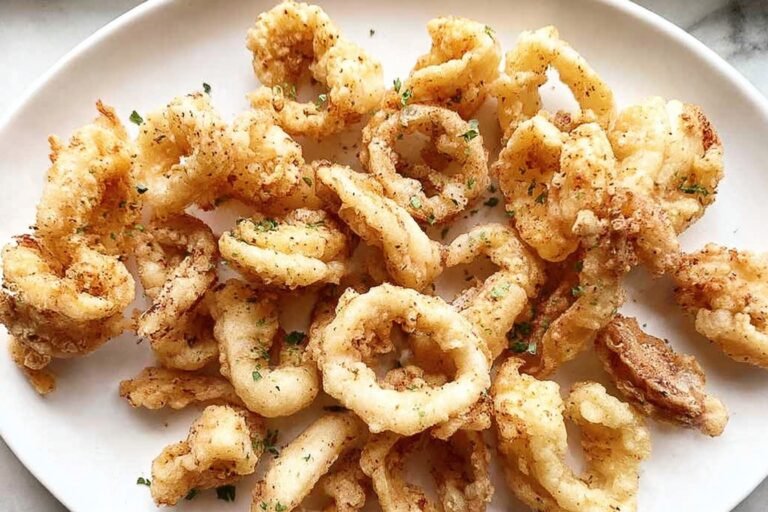
Calamari
🦑 Crispy golden fried calamari that’s tender on the inside and perfect as an appetizer or snack
- Total Time: 25 minutes
- Yield: 4–6 servings as appetizer 1x
Ingredients
1 pound fresh squid main protein
1 1/2 cups all-purpose flour coating for frying
1 teaspoon salt seasoning
1/2 teaspoon ground black pepper seasoning
1 teaspoon paprika seasoning
1/2 inch vegetable oil or 6 cups neutral oil frying medium
2 lemon wedges per serving finishing
1/2 cup buttermilk or milk tenderizing
2 tablespoons soy sauce marinades
2 cloves garlic, minced aromatic
1 teaspoon chili flakes or 1 fresh chili, chopped heat
1 teaspoon barbecue spices smoky flavor
1/2 cup marinara sauce dip
1/4 cup aioli or mayonnaise dip
1/4 cup chili sauce or local hot sauce dip
2 tablespoons olive oil sautés and dressings
Instructions
1-First Step: Clean and prepare the squid Rinse 1 pound of fresh squid under cold water. Pull the head and tentacles away from the body to remove the internal organs, ink sac, and translucent pen. Trim just above the eyes to remove the beak, then rinse again. Peel off the purple or pink-tinted skin if a cleaner white appearance is desired. Pat the tubes and tentacles dry with paper towels.
2-Second Step: Cut and portion Slice the mantle (tube) into 1/2-inch rings for classic fried calamari. For small squid, leave the tube whole and score the surface for grilling. Set tentacles aside for frying or include them in marinades for grilling.
3-Third Step: Tenderize and marinate (optional) For grilling or to add tenderness, soak the cut rings in 1/2 cup buttermilk or milk for 30 minutes. For an Asian-style marinade, combine 2 tablespoons soy sauce, 2 cloves minced garlic, and 1 teaspoon chili flakes; marinate for 15-30 minutes. Avoid long marinades with acid if you plan to quick-fry, because strong acid can begin to change texture.
4-Fourth Step: Prepare the coating In a wide bowl, mix 1 1/2 cups all-purpose flour, 1 teaspoon salt, 1/2 teaspoon ground black pepper, and 1 teaspoon paprika. Pat squid dry again; dredge rings and tentacles in the seasoned flour until evenly coated. Shake off excess flour before frying so the crust is light.
5-Fifth Step: Heat the oil and fry For shallow frying, pour oil into a skillet to a depth of 1/2 inch; for deep frying, heat roughly 6 cups neutral oil in a heavy pot. Bring oil to 375°F. Test with a small piece of coated squid: it should sizzle immediately. Fry rings in small batches to keep oil temperature steady. Cook 1-2 minutes, until golden and crisp. Do not crowd the pan.
6-Sixth Step: Drain and season Remove cooked calamari with a slotted spoon and immediately drain on paper towels. While hot, season with a pinch of salt or seasoned salt and serve with lemon wedges. Offer dips such as marinara, aioli, mayonnaise, or chili sauce on the side.
7-Final Step: Alternative cooking methods Grilling: Marinate rings and tentacles in olive oil, garlic, lemon juice, and herbs for 30 minutes. Grill quickly over high heat, about 1 minute per side, until firm and lightly charred. Stewing: For stews or ink sauces, braise whole squid or larger pieces for 10-30 minutes at a gentle simmer until tender. Baking: Stuff tubes and bake at 375°F for 20-25 minutes for a filled main course. Sushi-style: Use cleaned raw tubes and tentacles for sushi or sashimi-grade preparations when fresh and handled under strict cold-chain conditions.
Last Step:
Please leave a rating and comment letting us know how you liked this recipe! This helps our business to thrive and continue providing free, high-quality recipes for you.Notes
🦑 Clean squid thoroughly and pat completely dry before coating to ensure crispy results
- Prep Time: 15 minutes
- Cook Time: 10 minutes
- Category: Appetizer
- Method: Deep frying
- Cuisine: Mediterranean
- Diet: Non-vegetarian
Nutrition
- Serving Size: 1/4 of recipe
- Calories: 220
- Sugar: 1g
- Sodium: 480mg
- Fat: 8g
- Saturated Fat: 1g
- Unsaturated Fat: 7g
- Trans Fat: 0g
- Carbohydrates: 25g
- Fiber: 1g
- Protein: 15g
- Cholesterol: 185mg