
Why You’ll Love This Coconut Chicken Curry
By Stella Romano
My blog shares my passion for cooking by offering a variety of recipes that are simple and accessible to everyone. My ambition is to inspire readers to try new flavors, cook with joy, and create memorable moments around the table.
- Ease of preparation: Coconut Chicken Curry is a flavorful one-pot meal ready in 30 minutes, ideal for weeknight dinners. The short prep time (15 minutes) and quick cook time (15 minutes) make this coconut chicken curry an excellent option when you want a hearty dinner without fuss.
- Health benefits: This coconut chicken curry offers balanced nutrition: moderate protein from chicken, healthy fats from full-fat coconut milk and coconut oil, and vegetables for vitamins and fiber. It supplies vitamin A and vitamin C while keeping carbohydrates reasonable for many meal plans.
- Versatility: The recipe adapts easily to what you have on hand. Use chicken breasts or thighs, add carrots or spinach, or swap for plant-based proteins for a vegan version. The coconut curry base is forgiving and easy to tailor to different diets.
- Distinctive flavor: A blend of yellow curry powder, red curry paste, ginger, garlic, and lime juice gives this coconut chicken curry a bright, aromatic profile. The coconut milk softens spice and adds creamy sweetness so the dish tastes comforting and layered.
Quick, cozy, and full of flavor: this coconut chicken curry proves you can have restaurant-style comfort on a busy weeknight.
Essential Ingredients for Coconut Chicken Curry
Below is a complete, structured list of every ingredient you need for 4 servings. Each item is shown with its precise measurement and a short note about why it matters.
- 2 tablespoons coconut oil (divided) – for sautéing and building a lightly coconut-forward flavor
- 1 medium yellow onion (diced) – adds sweetness and body to the sauce when browned
- 3 cloves garlic (minced) – aromatic depth and savory bite
- 1 tablespoon fresh ginger (minced) – bright warmth and a touch of spice
- 3 tablespoons yellow curry powder – base curry flavor and color
- 2 tablespoons red curry paste – concentrated spice and umami
- 1 teaspoon ground coriander – citrusy, floral undertone
- 1 large red bell pepper (sliced) – crunch, color, and vitamin C
- 1.5 pounds boneless skinless chicken breasts or thighs (cut into bite-sized pieces) – main protein; thighs give more juiciness while breasts are leaner
- 2 (13.5-ounce) cans full-fat coconut milk – creamy sauce base (use full-fat for thickness)
- Juice of 1 lime – acidity to brighten the curry
- 1 tablespoon brown sugar – balances heat and acidity with a touch of sweetness
- 1-2 tablespoons fish sauce (optional) – salty, savory depth (omit or replace for vegetarian/vegan)
- Fresh cilantro or basil (chopped, for garnish) – fresh herb finish
- Optional chopped peanuts or cashews (for garnish) – crunchy texture and nutty flavor
- Salt and pepper to taste (season chicken with salt and pepper) – basic seasoning to lift flavors
Special Dietary Options
- Vegan: Replace chicken with firm tofu or chickpeas; use 1.5 pounds of tofu (pressed and cubed) or two 15-ounce cans of chickpeas (drained). Replace fish sauce with soy sauce or tamari.
- Gluten-free: This recipe is naturally gluten-free if you use gluten-free curry powder and tamari for any soy substitutions. Double-check labels on curry paste if store-bought.
- Low-calorie: Use chicken breasts, reduce coconut milk by mixing half full-fat and half unsweetened almond milk, and reduce oil to 1 tablespoon. Note the sauce will be lighter and may not be as thick.
How to Prepare the Perfect Coconut Chicken Curry: Step-by-Step Guide
This step-by-step section follows a clear sequence so you can cook confidently. Each step has timing and small tips to adapt for different diets or tastes.
First Step: Prep and mise en place (15 minutes)
- Dice 1 medium yellow onion, mince 3 cloves garlic and 1 tablespoon fresh ginger, and slice 1 large red bell pepper.
- Cut 1.5 pounds boneless skinless chicken breasts or thighs into bite-sized pieces and season lightly with salt and pepper.
- Open 2 (13.5-ounce) cans full-fat coconut milk and shake well. Measure out curry powder, curry paste, ground coriander, brown sugar, lime, and oil.
Second Step: Sauté the aromatics (medium-high heat)
In a large skillet, heat 1.5 tablespoons of the coconut oil over medium-high heat. Add the diced onion and sauté until golden, about 3 to 4 minutes. This browning builds sweet depth in the curry.
Third Step: Toast the spices (short)
Add minced garlic and ginger to the skillet, then stir in 3 tablespoons yellow curry powder, 2 tablespoons red curry paste, and 1 teaspoon ground coriander. Toast for 1 minute while stirring constantly so the spices bloom but do not burn. Toasting releases oils and lifts the aroma of the curry base.
Fourth Step: Brown the chicken and vegetables (about 5 minutes)
Add the remaining 1/2 tablespoon coconut oil, sliced red bell pepper, and the seasoned chicken pieces. Cook, stirring occasionally, until the chicken is browned on all sides but not fully cooked, about 5 minutes. Browning locks in flavor and texture.
Fifth Step: Add coconut milk and finish cooking (simmer 5-7 minutes)
Stir in the 2 cans of full-fat coconut milk, juice of 1 lime, 1 tablespoon brown sugar, and 1-2 tablespoons fish sauce if using. Bring the mixture to a gentle simmer, then reduce heat to medium-low. Simmer until the chicken is cooked through and the sauce thickens slightly, about 5 to 7 minutes. Taste and adjust salt, pepper, or sugar.
Final Step: Serve and garnish
- Serve the coconut chicken curry over steamed rice or with warm naan. Garnish with chopped cilantro or basil and optional chopped peanuts or cashews for crunch.
- If you want a thicker sauce: mix 1 tablespoon cornstarch with 2 tablespoons of sauce in a small bowl, then stir back into the skillet and simmer 1-2 minutes until thickened.
Quick adaptation tips in the steps
- For a vegetarian curry, brown tofu or vegetables in the same step as the chicken and proceed with the same simmer time.
- To reduce heat, use only 1 tablespoon red curry paste or pick a mild brand; add chili in small amounts to taste.
- To convert this recipe for a slow cooker, brown the chicken and aromatics, then transfer everything to the slow cooker and cook on low for 4 to 6 hours. Add delicate greens like spinach in the last 15 minutes.

Dietary Substitutions to Customize Your Coconut Chicken Curry
Protein and Main Component Alternatives
If you want to swap the chicken or make the dish vegan or pescatarian, here are reliable options and how to adjust cook times.
- Tofu: Use 1.5 pounds firm or extra-firm tofu, pressed and cubed. Brown gently for 4 to 6 minutes before adding coconut milk. Pressing reduces water and helps the tofu hold its shape.
- Chickpeas: Two 15-ounce cans drained make an easy plant-based protein. Add them with the coconut milk and simmer until warmed through.
- Prawns or shrimp: Use 1.5 pounds peeled and deveined shrimp; add during the last 3-4 minutes of simmering until opaque to avoid overcooking.
- Beef or pork: Use small cubes and brown well, but increase simmer time until meat is tender. Consider cutting meat into slightly smaller pieces for faster cooking.
Vegetable, Sauce, and Seasoning Modifications
You can swap or add vegetables, and tweak sauces to match what’s in season or your pantry.
- Vegetables: Add 2 medium carrots (sliced) early so they soften, 2 cups spinach stirred in at the end, or 1 pound baby potatoes cooked until tender. Frozen peas work well too stir them in at the end.
- Sauce swaps: Replace fish sauce with soy sauce or tamari for a vegetarian version. If you want less fat, try mixing full-fat coconut milk with unsweetened almond milk at a 1:1 ratio, keeping in mind the sauce will be thinner.
- Spice tweaks: For extra warmth, add a pinch of cayenne or sliced fresh chilies. For a smokier note, use a smoky paprika in small amounts.
Mastering Coconut Chicken Curry: Advanced Tips and Variations
Pro cooking techniques
- Caramelize onions slowly for deeper sweetness: lower the heat to medium and cook onions 6 to 8 minutes for a richer base.
- Bloom spices in oil: toast curry powder and paste in oil to release essential oils and deepen flavor.
- Control separation: if the coconut milk starts to separate, lower heat and stir gently; adding a small splash of cold water or an acid like lime juice often helps bring it back together.
Flavor variations
- Thai-style: add fresh kaffir lime leaves and a handful of chopped Thai basil at the end for an herbal lift.
- Peanut curry: stir in 2 tablespoons of peanut butter with the coconut milk for a nutty twist and top with chopped peanuts.
- Citrus-forward: increase lime to 2 limes for a tangier finish, balancing the richness of coconut milk.
Presentation tips
- Serve in shallow bowls with a ring of rice in the center and spoon curry around it for a restaurant look.
- Garnish with fresh cilantro or basil, a lime wedge, and chopped peanuts or cashews for texture and color contrast.
Make-ahead options
- Prep the aromatics and chop vegetables up to 24 hours ahead and refrigerate in sealed containers.
- Cook the curry fully, cool, and refrigerate for up to 3 days, which actually helps the flavors meld.
- For frozen meals, portion into airtight containers and freeze up to 3 months. Thaw overnight before reheating gently on the stove.
For inspiration on other comfort-soup and curry variations, browse this collection of iconic chicken curry recipes for technique ideas: Iconic chicken curry recipes.
How to Store Coconut Chicken Curry: Best Practices
Refrigeration
Cool the curry to room temperature (no more than 2 hours out) and transfer to airtight containers. Refrigerate up to 3 days. Flavors often deepen after a day in the fridge.
Freezing
Portion into meal-sized containers and freeze up to 3 months. Leave a small space at the top of the container for expansion. Thaw in the refrigerator overnight before reheating.
Reheating
Warm gently on the stove over low heat with a splash of water to loosen the sauce if it has thickened or separated. Stir frequently. Microwave reheating works in short bursts at medium power, stirring between intervals.
Meal prep considerations
- Portion rice separately to avoid soggy grains when reheating.
- Pack garnishes like herbs and nuts separately to keep them fresh and crunchy.
Nutrition Information
| Nutrient (per serving) | Amount |
|---|---|
| Calories | 464 |
| Carbohydrates | 13 g |
| Protein | 27 g |
| Total fat | 35 g (28 g saturated) |
| Cholesterol | 73 mg |
| Sodium | 149 mg |
| Potassium | 788 mg |
| Fiber | 2 g |
| Sugar | 6 g |
| Vitamin A | 3090 IU |
| Vitamin C | 59 mg |
| Calcium | 61 mg |
| Iron | 5 mg |
FAQs: Frequently Asked Questions About Coconut Chicken Curry
What makes coconut chicken curry sweet?
Coconut chicken curry gets its sweetness from several key elements. Slow-cooking onions until they caramelize releases natural sugars for a deeper, sweeter taste. Full-fat coconut milk adds creamy richness with subtle sweetness, unlike heavier creams. A touch of brown sugar balances spices without overpowering. Coriander seeds bring a mild, sweet note, and many curry powders include sweeter spices like cinnamon or fenugreek. To control sweetness, taste midway and add sugar sparingly—start with 1 teaspoon per 4 servings. This keeps the dish savory yet approachable for all ages. (78 words)
What does curry powder taste like in coconut chicken curry?
Curry powder in coconut chicken curry blends earthy savoriness with hints of sweetness. Core spices like cumin and turmeric provide a warm, grounding depth, while bay leaves add subtle herbal notes. Sweeter elements such as cinnamon, cloves, and sometimes fenugreek bring brightness and balance against the coconut milk’s creaminess. The result is aromatic, mildly tangy, and versatile—not too spicy unless you add fresh chilies. Use 1-2 tablespoons per pound of chicken for authentic flavor. Store in an airtight container away from light to preserve taste. (92 words)
What’s the difference between coconut milk and coconut cream for chicken curry?
Coconut milk is thinner, like regular milk, made by blending shredded coconut with more water—ideal for coconut chicken curry as it creates a smooth, pourable sauce. Coconut cream uses less water, resulting in a thick, rich texture better for desserts or whipping. Avoid cream of coconut, which is sweetened for drinks and too sugary for savory dishes. Always shake canned coconut milk before use to mix the fat layer. Opt for full-fat versions (around 60% coconut extract) for best thickness without separating. (89 words)
Can I use coconut cream instead of coconut milk in coconut chicken curry?
Stick to full-fat coconut milk for coconut chicken curry—it’s the right consistency for a silky sauce that coats chicken evenly. Coconut cream is denser and can make the dish too heavy or oily, overpowering other flavors. Lite coconut milk lacks body and may result in a watery curry. If substituting, dilute coconut cream with equal parts water, but test a small batch first. For 4 servings, use one 14-oz can of full-fat milk. Simmer gently to prevent curdling. This keeps the recipe balanced and restaurant-quality. (96 words)
How do I store leftover coconut chicken curry?
Store coconut chicken curry in an airtight container in the fridge for up to 4 days—it reheats well as flavors meld. For longer storage, freeze in portions up to 3 months; thaw overnight in the fridge before reheating. Gently warm on the stove over low heat with a splash of water to loosen the sauce, stirring to avoid separation. Microwave in short bursts if needed. Always check for spoilage before eating. Pro tip: Portion into single servings for quick weeknight meals. Pairs great with rice or naan. (85 words)
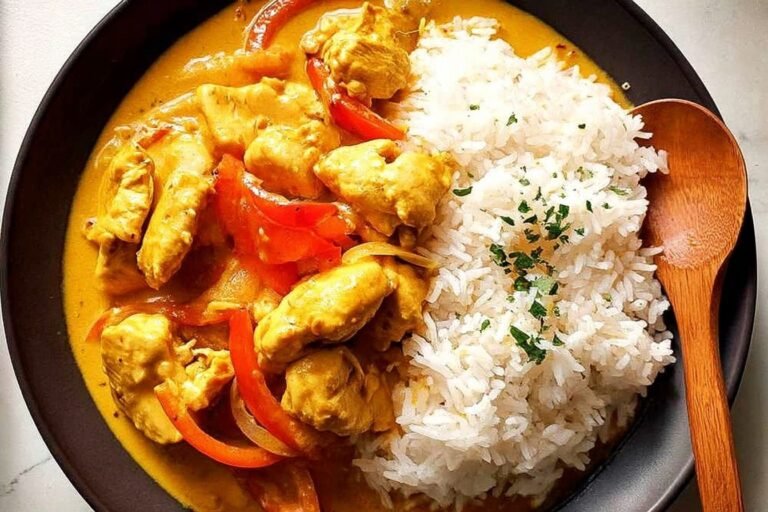
Coconut Chicken Curry
🥥 Enjoy a rich, creamy curry that brings the exotic flavors of coconut and aromatic spices to your dinner table
🍛 Create a restaurant-quality one-pot meal that’s perfect for busy weeknights and impresses everyone at the dinner table
- Total Time: 30 minutes
- Yield: 4 servings
Ingredients
– 2 tablespoons coconut oil for sautéing and building a lightly coconut-forward flavor
– 1 medium yellow onion adds sweetness and body to the sauce when browned
– 3 cloves garlic aromatic depth and savory bite
– 1 tablespoon fresh ginger bright warmth and a touch of spice
– 3 tablespoons yellow curry powder base curry flavor and color
– 2 tablespoons red curry paste concentrated spice and umami
– 1 teaspoon ground coriander citrusy, floral undertone
– 1 large red bell pepper crunch, color, and vitamin C
– 1.5 pounds boneless skinless chicken breasts or thighs main protein; thighs give more juiciness while breasts are leaner
– 2 (13.5-ounce) cans full-fat coconut milk creamy sauce base (use full-fat for thickness)
– Juice of 1 lime acidity to brighten the curry
– 1 tablespoon brown sugar balances heat and acidity with a touch of sweetness
– 1-2 tablespoons fish sauce salty, savory depth (omit or replace for vegetarian/vegan)
– Fresh cilantro or basil fresh herb finish
– chopped peanuts or cashews crunchy texture and nutty flavor
– Salt and pepper to taste basic seasoning to lift flavors
Instructions
1-First Step: Prep and mise en place (15 minutes)* Dice 1 medium yellow onion, mince 3 cloves garlic and 1 tablespoon fresh ginger, and slice 1 large red bell pepper.* Cut 1.5 pounds boneless skinless chicken breasts or thighs into bite-sized pieces and season lightly with salt and pepper.* Open 2 (13.5-ounce) cans full-fat coconut milk and shake well. Measure out curry powder, curry paste, ground coriander, brown sugar, lime, and oil.
2-Second Step: Sauté the aromatics (medium-high heat) In a large skillet, heat 1.5 tablespoons of the coconut oil over medium-high heat. Add the diced onion and sauté until golden, about 3 to 4 minutes. This browning builds sweet depth in the curry.
3-Third Step: Toast the spices (short) Add minced garlic and ginger to the skillet, then stir in 3 tablespoons yellow curry powder, 2 tablespoons red curry paste, and 1 teaspoon ground coriander. Toast for 1 minute while stirring constantly so the spices bloom but do not burn. Toasting releases oils and lifts the aroma of the curry base.
4-Fourth Step: Brown the chicken and vegetables (about 5 minutes) Add the remaining 1/2 tablespoon coconut oil, sliced red bell pepper, and the seasoned chicken pieces. Cook, stirring occasionally, until the chicken is browned on all sides but not fully cooked, about 5 minutes. Browning locks in flavor and texture.
5-Fifth Step: Add coconut milk and finish cooking (simmer 5-7 minutes) Stir in the 2 cans of full-fat coconut milk, juice of 1 lime, 1 tablespoon brown sugar, and 1-2 tablespoons fish sauce if using. Bring the mixture to a gentle simmer, then reduce heat to medium-low. Simmer until the chicken is cooked through and the sauce thickens slightly, about 5 to 7 minutes. Taste and adjust salt, pepper, or sugar.
6-Final Step: Serve and garnish* Serve the coconut chicken curry over steamed rice or with warm naan. Garnish with chopped cilantro or basil and optional chopped peanuts or cashews for crunch.* If you want a thicker sauce: mix 1 tablespoon cornstarch with 2 tablespoons of sauce in a small bowl, then stir back into the skillet and simmer 1-2 minutes until thickened.
Last Step:
Please leave a rating and comment letting us know how you liked this recipe! This helps our business to thrive and continue providing free, high-quality recipes for you.Notes
🥥 Use full-fat coconut milk for creaminess (lite versions won’t thicken well); avoid sweetened cream of coconut
🌶️ For thicker sauce, mix 1 tablespoon cornstarch with 2 tablespoons sauce, then stir back into the curry
🥢 Fresh lime squeeze, herbs, and nuts at the end boost the overall flavor profile significantly
- Prep Time: 15 minutes
- Cook Time: 15 minutes
- Category: Main Course
- Method: Skillet Cooking
- Cuisine: Thai
- Diet: Gluten-Free
Nutrition
- Serving Size: 1 serving
- Calories: 464
- Sugar: 6g
- Sodium: 149mg
- Fat: 35g
- Saturated Fat: 28g
- Unsaturated Fat: 7g
- Trans Fat: 0g
- Carbohydrates: 13g
- Fiber: 2g
- Protein: 27g
- Cholesterol: 73mg