
Why You’ll Love This Beef Tenderloin
This beef tenderloin recipe is a go-to when you want a special meal with minimal stress. The method is straightforward, the flavors are classic, and the result is reliably tender and elegant. Whether you are cooking for a holiday, a date night, or a celebratory dinner, this roast delivers.
- Ease of preparation: This roast uses simple steps dry-brining overnight, a low-temperature roast, then a high-heat finish. The slow start and quick blast of heat give consistent medium-rare results with little hands-on time, which makes this beef tenderloin recipe approachable for home cooks and busy families.
- Health benefits: Beef tenderloin is a lean cut high in protein and naturally gluten free. Using moderate amounts of olive oil and butter keeps the flavor rounded without heavy fat; herbs add fragrance without extra calories. This roast fits well for those watching calories while still enjoying a protein-rich meal.
- Versatility: This roast pairs easily with many sides and sauces. Serve it with mashed potatoes, Boursin mashed cauliflower, roasted vegetables, or a fresh green salad. Leftovers work beautifully in sandwiches or salads, which makes this roast great for meal prep too.
- Distinctive flavor: Fresh rosemary and thyme build a fragrant herb crust, and dotting cold butter on top adds a glossy finish and subtle richness. The low-and-high roasting approach yields a tender interior and a crisp, herb-forward exterior that really stands out.
Don’t worry if this roast feels intimidating at first just follow each step closely, and soon you’ll have a perfectly tender, golden-crusted beef tenderloin that has everyone at the table asking for seconds.
Essential Ingredients for Beef Tenderloin
The ingredients below are written as a clear, structured list with precise measurements for easy shopping and prep.
Main Ingredients
- One 3 to 3 1/2 pound whole beef tenderloin, trimmed and tied – the main protein; choose a center-cut or chateaubriand for even cooking
- 1 tablespoon olive oil – helps herbs and salt adhere and promotes browning
- 1 tablespoon finely chopped fresh rosemary (approx. 2 sprigs or 1 teaspoon dried rosemary) – adds piney, aromatic flavor
- 1 tablespoon finely chopped fresh thyme leaves (approx. 16 20 sprigs or 1 teaspoon dried thyme) – bright herbal note that pairs with rosemary
- 2 tablespoons cold unsalted butter, diced into small cubes – scattered on top to baste the roast and add richness
- Kosher salt and ground black pepper to season – salt draws flavor out and back in when dry-brined; pepper for bite
Special Dietary Options
- Vegan: This is a beef-based recipe; for a plant-based roast, try a large portobello or a seasoned seitan roast as an alternative, keeping herb and roasting techniques similar.
- Gluten-free: The recipe is naturally gluten free. Confirm that any prepared sauces or condiments you use, like horseradish sauce, are labeled gluten free.
- Low-calorie: Reduce the butter to 1 tablespoon and serve with lighter sides like steamed vegetables or a mixed green salad with a simple vinaigrette.
How to Prepare the Perfect Beef Tenderloin: Step-by-Step Guide
This section walks you through the full process using the provided method: dry-brine overnight, roast low, then finish hot. Follow timing and temperature exactly for reliable medium-rare results. Notes about adaptations are included in each step.
First Step: Prep and Season the Day Before
- Pat the beef tenderloin dry with paper towels. Drying the surface helps browning and crust formation.
- Tie the roast with butcher’s twine every 2 to 3 inches along its length for even cooking and a uniform shape. If using a whole tenderloin, trim silver skin and excess fat before tying.
- Drizzle 1 tablespoon olive oil over the surface and rub to coat evenly.
- Season generously with kosher salt and ground black pepper. Use roughly 1 teaspoon salt per pound as a guideline (about 1 to 1 1/4 teaspoons per 3-pound roast).
- Sprinkle 1 tablespoon finely chopped fresh rosemary and 1 tablespoon finely chopped fresh thyme leaves evenly over the roast.
- Place the seasoned tenderloin on a foil-lined baking sheet set on a wire rack. Refrigerate uncovered overnight. This step creates a drier surface for a better crust and concentrates flavor.
Second Step: Bring to Room Temperature and Preheat
- Remove the roast from the refrigerator and let it sit on the counter for about 2 hours to come to room temperature. This helps the roast cook evenly.
- Preheat your oven to 225 degrees F with a rack in the center position.
Third Step: Butter and Start Roasting Low
- Dot the top of the tenderloin with 2 tablespoons cold unsalted butter, cut into small cubes. Set the roast in the preheated oven.
- Roast at 225 degrees F for about 60 to 70 minutes, or until the internal temperature reaches 115 to 120 degrees F. Insert a probe thermometer into the thickest part without opening the oven to monitor temperature accurately.
Fourth Step: High-Heat Finish
- Increase oven temperature to 450 degrees F. Continue roasting at this high heat for 10 to 15 minutes until the internal temperature reaches about 130 degrees F for medium-rare doneness.
- Pull the tenderloin from the oven and tent loosely with foil. Rest for 10 minutes to allow juices to redistribute while residual heat carries the roast up a few degrees.
Final Step: Slice and Serve
- After resting, remove the butcher’s twine and slice the roast into 1 1/2-inch thick steaks. Arrange on a warm platter.
- Serve with a creamy horseradish sauce (mix sour cream, prepared horseradish, and Dijon mustard) and your choice of sides like creamy mashed potatoes, Boursin mashed cauliflower, roasted vegetables, or a mixed green salad with red wine vinaigrette.
Quick Timing Summary
| Task | Time | Temperature |
|---|---|---|
| Overnight seasoning and refrigeration | ~12 hours | Refrigerator |
| Bring to room temperature | ~2 hours | Room temp |
| Low-temperature roast | 60-70 minutes | 225°F |
| High-temperature finish | 10-15 minutes | 450°F |
| Rest | 10 minutes | Tent with foil |
Prep time: 25 minutes active (plus overnight seasoning and chilling). Cook time: ~1 hour 30 minutes. Total time including chill and rest: approximately 14 hours (mostly hands-off overnight chill).

Dietary Substitutions to Customize Your Beef Tenderloin
Here are sensible swaps for different needs or ingredient availability. This section is split into two subsections for clarity.
Protein and Main Component Alternatives
If you want to change the main protein while keeping similar methods and flavors, consider these options.
- Center-cut alternatives: If you cannot find a beef tenderloin, a boneless ribeye roast or top sirloin roast can work with adjusted time and temperatures. These cuts have more fat and flavor but will require thermometers and slightly shorter low-roast times.
- Smaller portions: For fewer people, cut a smaller center section or buy a trimmed chateaubriand (2-3 pounds). Cooking time will be shorter; rely on internal temperature rather than clock time.
- Plant-based option: Use a dense seitan roast or a large portobello roast for a vegetarian approach. Keep herb rub and roasting temperature similar, but monitor carefully as plant-based proteins cook faster.
Vegetable, Sauce, and Seasoning Modifications
Adjust sides and sauces to match diets, seasons, and flavor preferences.
- Sauce swaps: Replace the horseradish sauce with a red wine reduction, chimichurri, or a simple pan jus made from roast drippings and beef stock.
- Vegetable sides: Roast root vegetables, sautéed green beans with almonds, or cauliflower mash are all great options. For lighter plates, serve the roast over a bed of arugula with shaved parmesan.
- Herb variations: Swap part of the rosemary or thyme for sage, parsley, or tarragon to change the flavor profile without altering technique.
Mastering Beef Tenderloin: Advanced Tips and Variations
This part offers pro-level pointers and creative twists that keep the recipe fresh and adaptable for special menus.
Pro Cooking Techniques
- Probe placement: Insert the probe thermometer into the center of the thickest section, avoiding contact with fat or bone. A leave-in probe provides continuous readings so you never open the oven to check.
- Reverse sear rationale: Starting low allows even doneness from edge to center; the final high-heat blast creates the browned crust without overcooking the interior. This method is especially good for lean cuts like beef tenderloin.
- Carryover heat: Remove the roast a few degrees below your target temperature (pull at about 130°F for medium-rare final temperature around 135°F after resting). This prevents overcooking during the rest.
Flavor Variations
- Garlic-butter crust: Mix minced garlic with butter and herbs, rub over the tenderloin before the high-heat finish for extra savory notes.
- Mustard-herb coat: Spread a thin layer of Dijon mustard before sprinkling the chopped herbs to help them adhere and add tang.
- Smoky twist: Add a small pinch of smoked paprika or finish briefly under a broiler for a touch of smoke.
Presentation Tips
- Slice into uniform 1 1/2-inch steaks and arrange slightly overlapping on a warmed platter. Add a spoonful of horseradish sauce on the side.
- Garnish with reserved sprigs of rosemary and thyme or scatter microgreens for contrast.
Make-Ahead Options
- Season and refrigerate the roast uncovered up to 24 hours ahead to deepen flavor. Bring to room temperature before roasting.
- Cook fully, cool, and slice for chilled platters or sandwiches. Reheat gently in a low oven when serving warm.
How to Store Beef Tenderloin: Best Practices
Follow safe storage methods to preserve texture and flavor for leftovers or meal prep. This section covers refrigeration, freezing, reheating, and batch cooking tips.
Refrigeration
Allow the roast to cool to room temperature no longer than two hours, then wrap tightly in plastic wrap and place in an airtight container. Refrigerate for up to 3 to 4 days. Keep juices or au jus in a separate container for repurposing.
Freezing
Slice the roast before freezing for easier portioning. Wrap individual portions tightly in plastic wrap, then place in a freezer bag. Freeze for up to 3 months. Thaw overnight in the refrigerator before reheating.
Reheating
Reheat gently in a 250 degrees F oven wrapped in foil, adding a splash of beef broth to keep meat moist, until internal temperature reaches about 110 to 120 degrees F. Avoid microwaving to prevent dried-out texture.
Meal Prep Considerations
Use sliced leftover beef tenderloin cold in salads and sandwiches for quick lunches. Label packages with dates to manage freezing rotation and reduce waste.
Nutritional Snapshot
Beef tenderloin is a lean, protein-rich cut. The simple ingredients here add flavor while keeping fat moderate. This dish is naturally gluten free.
| Nutrient | Notes |
|---|---|
| Protein | High; tenderloin is a lean source |
| Fat | Moderate from olive oil and butter; trim excess fat to reduce calories |
| Gluten | None; recipe is gluten free |
For more detailed nutrition data, check a trusted resource such as the USDA food database to compare cuts and serving sizes.
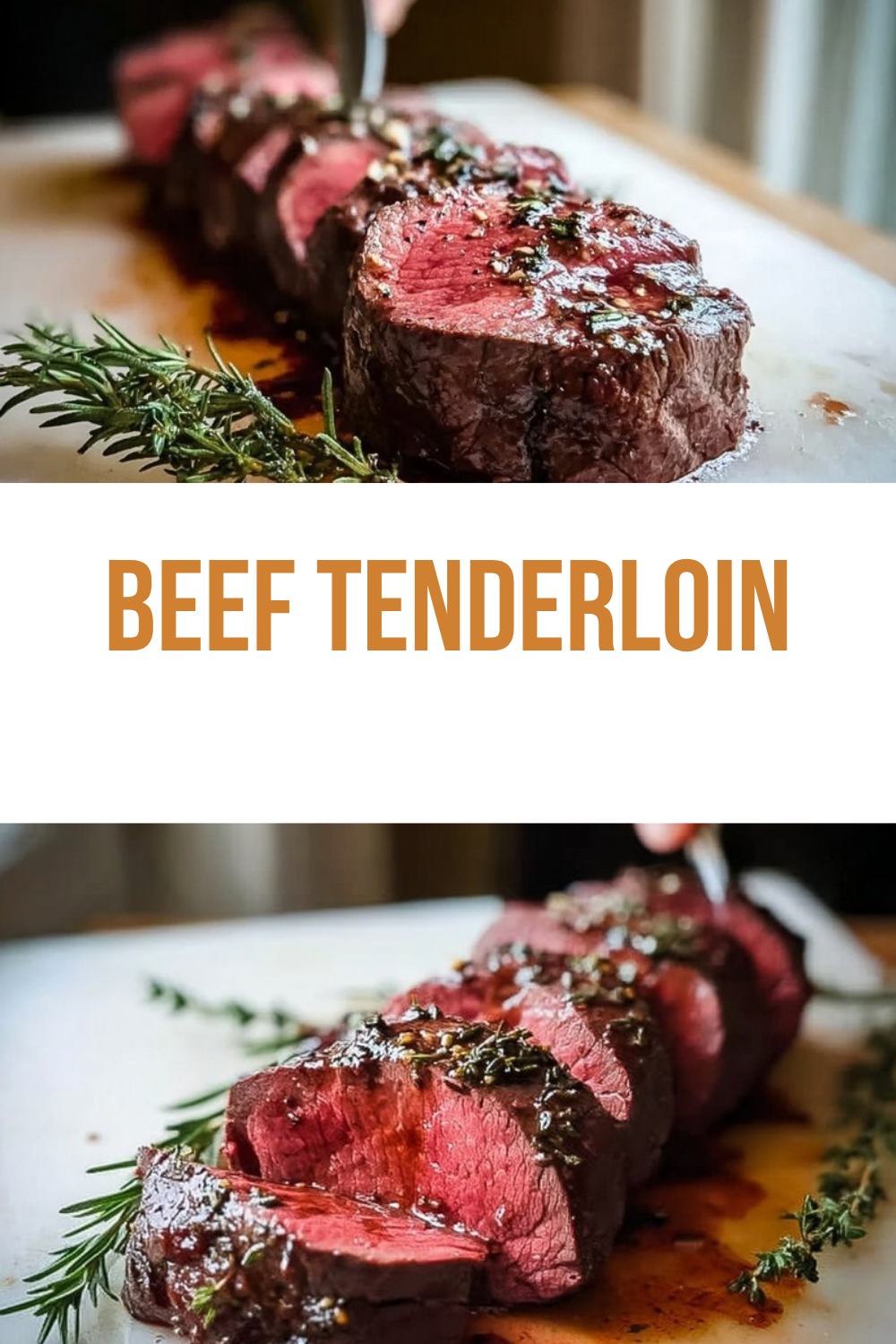
FAQs: Frequently Asked Questions About Beef Tenderloin
What is the best cut of beef tenderloin for roasting?
The center-cut beef tenderloin, also known as chateaubriand, is the top choice for roasting. It offers a uniform thickness without tail ends that can dry out during cooking, leading to even results every time. This cut typically weighs 2-3 pounds and serves 4-6 people. Avoid whole tenderloins unless you’re trimming them yourself, as the tapered ends cook faster and unevenly. Look for bright red meat with good marbling and minimal silver skin at your butcher or grocery store. For best flavor, source grass-fed or prime-grade beef. This uniform shape simplifies seasoning, tying, and roasting at low then high heat for a juicy interior and crisp exterior. Plan to trim any excess fat cap to about 1/4-inch thick before starting.
How do you prepare beef tenderloin for roasting the day before?
Start by patting the beef tenderloin dry with paper towels to remove moisture for better browning. Tie it every 2-3 inches with butcher’s twine to maintain a round, even shape—this prevents uneven cooking. Season generously with kosher salt (about 1 tablespoon per 3 pounds) and fresh herbs like rosemary and thyme. Place it uncovered on a wire rack over a baking sheet in the fridge overnight. This dry-brining draws out moisture then reabsorbs it for deeper flavor and a firmer crust. The next day, let it sit at room temperature for 1-2 hours before roasting. If using a whole untrimmed tenderloin, first remove silver skin and excess fat, then fold and tie the thin tail end for uniformity. This method takes 15-20 minutes of active prep.
What temperature and method roasts beef tenderloin to medium-rare?
For perfect medium-rare beef tenderloin (130°F internal), use a reverse sear: preheat oven to 225°F, insert a probe thermometer into the thickest part, and roast until 115-120°F (about 45-60 minutes for a 3-pound center-cut). Then crank to 450°F for 10-15 minutes to develop a golden crust, pulling at 130°F to account for 5-10°F carryover during rest. Avoid opening the oven door to maintain steady heat. Season simply with salt, pepper, and herbs; no need for oil. This low-slow then high-hot approach keeps the lean meat juicy without drying out. Total time is 1-1.5 hours plus 10-15 minute rest tented in foil. Always use an instant-read or leave-in digital thermometer for accuracy—guessing leads to overcooking.
How much beef tenderloin do you need per person?
Plan for 6-8 ounces of raw beef tenderloin per person, accounting for about 25-30% shrinkage from cooking and trimming. A 3-pound center-cut roast serves 6-8 guests generously, while a full 5-6 pound tenderloin handles 10-12. This lean cut has little waste once silver skin and fat are removed. For holidays or buffets, lean toward 8 ounces to cover hearty appetites. Calculate based on bone-in sides or rich pairings like horseradish sauce that fill plates. Buy from a trusted butcher for precise weights; pre-trimmed saves time but costs more (around $20-40 per pound for prime). Slice into 1.5-inch steaks post-rest for elegant serving—thinner for lighter meals.
How do you store leftover roasted beef tenderloin?
Cool roasted beef tenderloin completely, then wrap tightly in plastic wrap followed by foil or place in an airtight container. Refrigerate for up to 3-4 days; it stays tender if reheated gently in a 250°F oven to 110°F internal, wrapped in foil with a splash of broth to prevent drying. For longer storage, slice into portions, wrap individually, and freeze in a freezer bag for up to 3 months—thaw overnight in the fridge. Avoid microwaving to preserve texture. Repurpose cold slices in sandwiches, salads, or stir-fries. Resting juices can be saved for au jus. Proper storage minimizes waste from this pricey cut; always check for off smells before eating. Label with dates for safety.
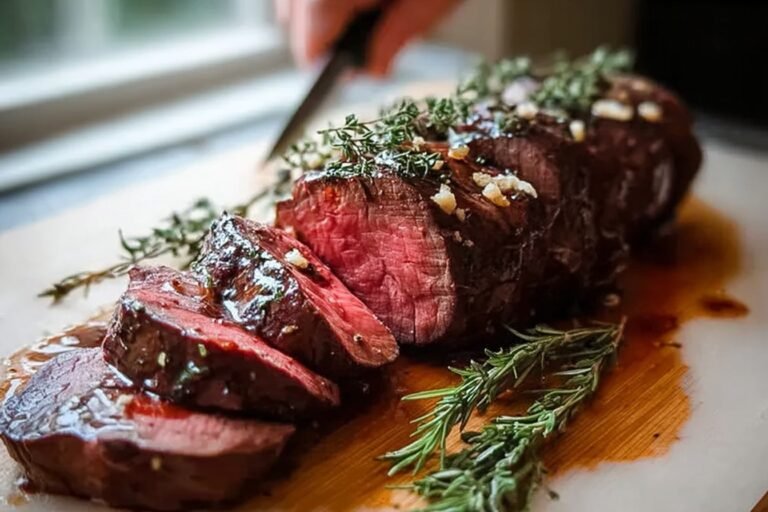
Beef Tenderloin
🥩 Perfectly tender and juicy beef tenderloin with aromatic herbs that impresses every time
🌿 Foolproof roasting method ensures restaurant-quality results in your own kitchen
- Total Time: 14 hours
- Yield: 6-8 servings
Ingredients
– 3 to 3 1/2 pound whole beef tenderloin the main protein
– 1 tablespoon olive oil helps herbs and salt adhere and promotes browning
– 1 tablespoon finely chopped fresh rosemary adds piney, aromatic flavor
– 1 tablespoon finely chopped fresh thyme leaves bright herbal note that pairs with rosemary
– 2 tablespoons cold unsalted butter scattered on top to baste the roast and add richness
– Kosher salt and ground black pepper to season
Instructions
1-First Step: Prep and Season the Day Before* Pat the beef tenderloin dry with paper towels. Drying the surface helps browning and crust formation.* Tie the roast with butcher’s twine every 2 to 3 inches along its length for even cooking and a uniform shape. If using a whole tenderloin, trim silver skin and excess fat before tying.* Drizzle 1 tablespoon olive oil over the surface and rub to coat evenly.* Season generously with kosher salt and ground black pepper. Use roughly 1 teaspoon salt per pound as a guideline (about 1 to 1 1/4 teaspoons per 3-pound roast).* Sprinkle 1 tablespoon finely chopped fresh rosemary and 1 tablespoon finely chopped fresh thyme leaves evenly over the roast.* Place the seasoned tenderloin on a foil-lined baking sheet set on a wire rack. Refrigerate uncovered overnight. This step creates a drier surface for a better crust and concentrates flavor.
2-Second Step: Bring to Room Temperature and Preheat* Remove the roast from the refrigerator and let it sit on the counter for about 2 hours to come to room temperature. This helps the roast cook evenly.* Preheat your oven to 225 degrees F with a rack in the center position.
3-Third Step: Butter and Start Roasting Low* Dot the top of the tenderloin with 2 tablespoons cold unsalted butter, cut into small cubes. Set the roast in the preheated oven.* Roast at 225 degrees F for about 60 to 70 minutes, or until the internal temperature reaches 115 to 120 degrees F. Insert a probe thermometer into the thickest part without opening the oven to monitor temperature accurately.
4-Fourth Step: High-Heat Finish* Increase oven temperature to 450 degrees F. Continue roasting at this high heat for 10 to 15 minutes until the internal temperature reaches about 130 degrees F for medium-rare doneness.* Pull the tenderloin from the oven and tent loosely with foil. Rest for 10 minutes to allow juices to redistribute while residual heat carries the roast up a few degrees.
5-Final Step: Slice and Serve* After resting, remove the butcher’s twine and slice the roast into 1 1/2-inch thick steaks. Arrange on a warm platter.* Serve with a creamy horseradish sauce (mix sour cream, prepared horseradish, and Dijon mustard) and your choice of sides like creamy mashed potatoes, Boursin mashed cauliflower, roasted vegetables, or a mixed green salad with red wine vinaigrette.
Last Step:
Please leave a rating and comment letting us know how you liked this recipe! This helps our business to thrive and continue providing free, high-quality recipes for you.Notes
🌡️ Use a probe thermometer for precise temperature control to avoid overcooking this premium cut
🕐 Season overnight and bring to room temperature for maximum flavor penetration and even cooking
🔪 Always let the beef rest before slicing to keep juices inside for tender, moist results
- Prep Time: 25 minutes
- Overnight seasoning: 12 hours
- Cook Time: 1 hour 30 minutes
- Category: Main Course
- Method: Oven Roasting
- Cuisine: American/European
- Diet: Gluten-Free
Nutrition
- Serving Size: 6-8 oz per person
- Calories: 285
- Sugar: 0.5
- Sodium: 450
- Fat: 18
- Saturated Fat: 7
- Unsaturated Fat: 10
- Trans Fat: 0
- Carbohydrates: 1
- Fiber: 0.2
- Protein: 28
- Cholesterol: 95