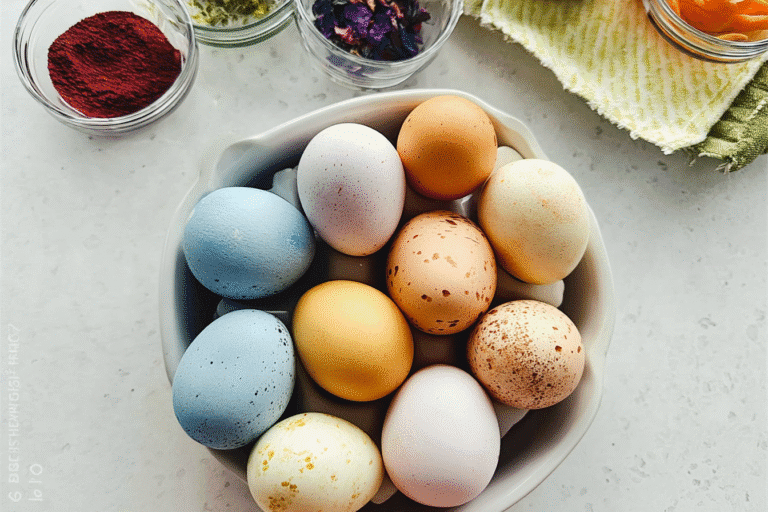
Ingredients
– 2 cups of water Used as the base for the dye solution
– 1-2 tablespoons of white vinegar Added to fix the dye on the eggs
– 1-2 tablespoons turmeric for yellow dye
– Lemon peels from 2-3 lemons for yellow dye
– 2 cups chopped beets for pink or red dye
– 2 cups cranberries fresh or frozen for pink or red dye
– 2 cups chopped red cabbage for blue dye
– 2 cups blueberries fresh or frozen for purple dye
– 1 teaspoon baking soda for purple dye modification
– 2-4 tablespoons coffee or black tea grounds or leaves for brown dye
– 6-12 hard-boiled eggs
Instructions
First Step: Gather and Prepare Materials Begin by assembling all ingredients and tools, ensuring eggs are hard-boiled for safety and ease. Place the 6-12 hard-boiled eggs in a bowl, while measuring out the 2 cups of water and 1-2 tablespoons of white vinegar for each dye batch. This initial phase sets the foundation for effective Easter Eggs creation, allowing customization based on available dietary options such as vegan substitutes.
Second Step: Create the Dye Solutions Boil the dye mixtures in separate pots, using ingredients like 1-2 tablespoons of turmeric for yellow or 2 cups of chopped beets for red. Each solution requires simmering for about 15 minutes with the water and vinegar, after which the liquid is strained and cooled. This step adapts to preferences, such as using lemon peels for a milder yellow, ensuring Easter Eggs remain versatile for different tastes.
Third Step: Soak the Eggs Submerge the hard-boiled eggs into the cooled dye solutions, allowing them to sit for at least 30 minutes or overnight for deeper colors. Monitor the process to achieve desired shades, adjusting based on dietary needs like low-calorie options by limiting additional ingredients. This method highlights Easter Eggs as both functional and artistic, drawing from traditions of hidden messages in media.
Fourth Step: Decorate and Dry Once removed from the dye, pat the eggs dry and add creative elements such as patterns from washi tape or drawings with markers, as alternative decoration methods. Ensure decorations align with Easter Eggs themes, considering how elements like natural dyes relate to historical practices in video games and films. For adaptations, use plant-based materials if preparing vegan versions, enhancing the eggs’ appeal for various audiences.
Final Step: Finish and Store Allow the decorated eggs to dry completely on a rack, then display or store them as needed for Easter activities. Incorporate final touches like arranging for an egg hunt, while ensuring all items are food-safe if consumption is planned. This completes the Easter Eggs process, linking back to the concept of hidden features in broader cultural contexts, such as those found in software from the 1970s. Here, the earliest known video game Easter egg from 1973 can inspire creative hiding spots. For more ideas, consider visiting our related content with a link to simple seasonal recipes that complement holiday traditions.
Last Step:
Please leave a rating and comment letting us know how you liked this recipe! This helps our business to thrive and continue providing free, high-quality recipes for you.Notes
🔍 Look closely and explore menus, corners, or codes to find unexpected hidden elements.
🎮 Research behind-the-scenes trivia for your favorite games or movies to uncover known Easter eggs.
📚 Keep up with fan communities online, which often share discoveries and interpretations of hidden secrets.
- Category: Media Insight
- Method: Research and Exploration
- Cuisine: N/A
- Diet: N/A