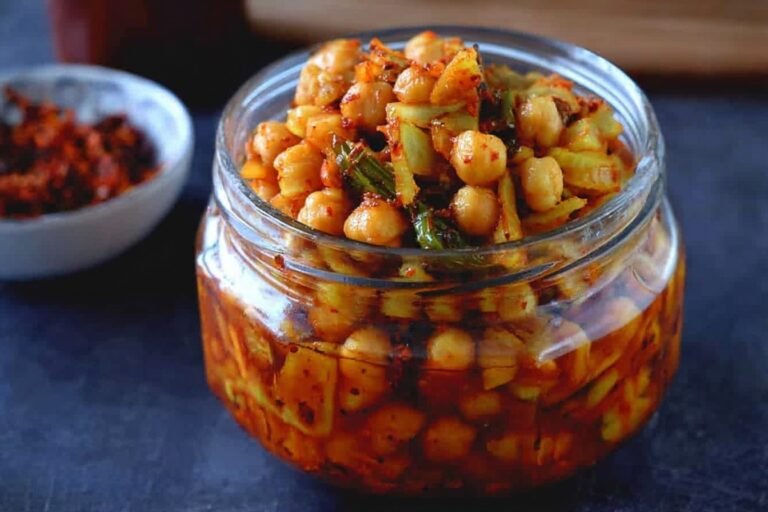
Ingredients
– 3 cups raw mango, grated without peeling for sourness and releases juice to help soften the chickpeas
– 1 cup raw white chickpeas (chole) for protein, texture, and the classic bite
– 2 tablespoons salt, adjust to taste for drawing out moisture and preservation
– 2 tablespoons fenugreek seeds (methi dana), coarsely ground for slightly bitter, earthy note that deepens flavor
– 2 tablespoons fennel seeds (saunf) for sweet, warm spice
– 1 teaspoon nigella seeds (kalonji) for sharp, peppery aroma
– 1/8 cup red chilli powder (lal mirch), adjust to taste for heat and color
– 1 teaspoon turmeric powder (haldi) for color and warm earthy taste
– 1 1/4 cups mustard oil, add more if omitting vinegar for preservative and carries the spice flavor
– 1/4 cup vinegar, optional if mangoes are not sour enough for if mangoes are not sour enough
Instructions
1-First Step: Clean and prep the ingredients Wash the raw chickpeas very well and dry them completely. Then wash the mangoes, clean them, and grate them without peeling. The peel stays on because it adds texture and helps keep the pickle traditional. Make sure your hands, bowl, spoon, and jar are fully dry before you start. Any water left behind can spoil the pickle. If you want to make cooking time easier, you can grate the mangoes ahead of time and keep them covered for a short while, but do not let them sit too long before mixing with salt. This first step is quick, but it matters a lot for the final taste and shelf life.
2-Second Step: Mix mango, chickpeas, and salt In a large bowl, combine the raw chickpeas, grated mango, and salt. Mix everything well so the salt touches the mango and chickpeas evenly. Cover the bowl and set it in sunlight for 6 to 8 hours. This resting time helps the mango release water, and that moisture starts softening the raw chickpeas. Do not rush this part. The Mango Chickpea Pickle depends on this natural softening step. If you use canned chickpeas, they will not work the same way. Raw dry chickpeas absorb the mango juice and salt much better, and that is what gives the pickle its special bite.
3-Third Step: Prepare the spice mix While the mango and chickpeas are resting, combine the spices in another bowl. Add the coarsely ground fenugreek seeds, fennel seeds, nigella seeds, red chilli powder, and turmeric powder. Mix them together evenly so the flavor spreads throughout the pickle. If you like it spicier, use the full amount of red chilli powder. If you prefer a milder pickle, reduce it a little. Fenugreek gives a warm bitter note, fennel adds sweetness, nigella adds a punchy aroma, and turmeric gives that familiar golden color. This spice mix is what makes the jar smell amazing from the first day.
4-Fourth Step: Add oil and vinegar Pour the mustard oil into the spice mixture and mix well. If your mangoes are not sour enough, add the vinegar too. Vinegar is optional, but it can help brighten the flavor and support preservation. If you leave out the vinegar, add a little extra mustard oil so the pickle stays fully covered. Mustard oil is a big part of the flavor here. It gives the pickle its classic sharp taste and also helps the jar last longer. For the best result, use good-quality mustard oil and make sure it is clean and ready to use.
5-Fifth Step: Pack the pickle into a clean jar Transfer the mango, chickpea, and spice mixture into a clean, dry glass bottle or glass jar. Press the mixture down with a clean spoon so it sits compactly inside the jar. Then pour in enough oil so the top is covered. That oil layer is important because it helps keep air away from the pickle. After a few days, the oil may rise a little more on top, which is normal. The main thing is to keep the pickle submerged as much as possible. If needed, add a bit more mustard oil later. Use a jar with a tight lid so the flavor stays in and moisture stays out.
6-Sixth Step: Let it rest in sunlight Seal the jar airtight and place it in sunlight for 2 to 3 weeks. Stir it with a clean, dry spoon every 2 to 3 days. This is where the flavor deepens and the chickpeas slowly soften even more. The sunlight helps the spices blend, the mango mature, and the pickle develop that classic homemade taste. Try to keep the jar in a stable spot where it will not be disturbed too much. Some families like to place homemade pickles on a balcony or near a sunny window. If you are making this with kids, let them help with the mango mixing, but handle the spices and jar filling yourself.
7-Final Step: Store and enjoy After the resting period, move the jar to a cool, dry place. The pickle is ready to eat, but it often tastes even better after a little more time. Serve a small spoonful with roti, paratha, dal chawal, curd rice, or any simple meal that needs a sharp little kick. Homemade Mango Chickpea Pickle takes patience, but the steps are easy. Once you make it one time, the process becomes second nature.
Last Step:
Please leave a rating and comment letting us know how you liked this recipe! This helps our business to thrive and continue providing free, high-quality recipes for you.Notes
🫘 Use only raw, dry chickpeas (never canned) to properly absorb juices and soften.
🫙 Store in glass jars fully submerged in oil for shelf stability up to years.
💧 Keep jars, hands, and tools bone-dry to avoid spoilage and mold.
- Prep Time: 30 minutes
- Fermentation Time: 15 days
- Category: Condiments
- Method: Fermenting
- Cuisine: Indian
- Diet: Vegan, Gluten-Free, Vegetarian
Nutrition
- Serving Size: 1 tablespoon
- Calories: 45 kcal
- Sugar: 1 g
- Sodium: 350 mg
- Fat: 4 g
- Saturated Fat: 0.5 g
- Unsaturated Fat: 3.5 g
- Trans Fat: 0 g
- Carbohydrates: 2 g
- Fiber: 0.5 g
- Protein: 0.5 g
- Cholesterol: 0 mg