
Why You’ll Love This Mango Chickpea Pickle
If you love bold, tangy Indian flavors, this Mango Chickpea Pickle is going to win you over fast. It is a homemade pickle recipe that turns simple raw mangoes and raw white chickpeas into a spicy, sour, deeply satisfying jar of goodness. This is the kind of recipe that feels old-fashioned in the best way, but it is still easy enough for busy home cooks.
- Easy to make: The prep is simple, and most of the magic happens while the jar rests in sunlight. You only need about 30 minutes of active work, then the pickle develops flavor over about 15 days.
- Good for everyday meals: This Mango Chickpea Pickle pairs beautifully with roti, paratha, rice, khichdi, or even a simple sandwich. It adds instant punch to boring meals.
- Nutritious and filling: Chickpeas bring protein and fiber, while raw mango adds bright flavor and a dose of vitamin C. For more on mango nutrition, see this guide to mango benefits.
- Great for vegan and gluten-free diets: This pickle fits many eating styles, and chickpeas are naturally gluten-free. It is also a nice fit for people who enjoy fermented foods and homemade pantry staples.
This pickle is so tasty and simple to make, perfect for turning extra mangoes into a tangy treat everyone will love!
It also has that lovely homemade taste that store-bought pickles often miss. The oil, spices, salt, and slow resting time create a strong flavor that gets better day by day. If you enjoy Indian pickles with a sharp kick, this one is for you.
Essential Ingredients for Mango Chickpea Pickle
Here is the full ingredient list for this Mango Chickpea Pickle recipe. Every item matters because the balance of sour, salty, spicy, and oily is what gives the pickle its long shelf life and classic taste.
- 3 cups raw mango, grated without peeling
- 1 cup raw white chickpeas (chole)
- 2 tablespoons salt, adjust to taste
- 2 tablespoons fenugreek seeds (methi dana), coarsely ground
- 2 tablespoons fennel seeds (saunf)
- 1 teaspoon nigella seeds (kalonji)
- 1/8 cup red chilli powder (lal mirch), adjust to taste
- 1 teaspoon turmeric powder (haldi)
- 1 1/4 cups mustard oil, add more if omitting vinegar
- 1/4 cup vinegar, optional if mangoes are not sour enough
What each ingredient does
| Ingredient | Purpose in the pickle |
|---|---|
| Raw mango | Gives sourness and releases juice to help soften the chickpeas |
| Raw white chickpeas | Bring protein, texture, and the classic bite |
| Salt | Draws out moisture and helps preserve the pickle |
| Fenugreek seeds | Add a slightly bitter, earthy note that deepens flavor |
| Fennel seeds | Bring sweet, warm spice |
| Nigella seeds | Add a sharp, peppery aroma |
| Red chilli powder | Gives heat and color |
| Turmeric powder | Adds color and a warm earthy taste |
| Mustard oil | Acts as the preservative and carries the spice flavor |
| Vinegar | Helpful if the mangoes are not sour enough |
Special dietary options
- Vegan: This recipe is already vegan as written.
- Gluten-free: Chickpeas are naturally gluten-free, so this pickle works well for gluten-free meals.
- Low-calorie: Use smaller portions of oil when serving, but keep enough oil in the jar for safe storage.
How to Prepare the Perfect Mango Chickpea Pickle: Step-by-Step Guide
First Step: Clean and prep the ingredients
Wash the raw chickpeas very well and dry them completely. Then wash the mangoes, clean them, and grate them without peeling. The peel stays on because it adds texture and helps keep the pickle traditional. Make sure your hands, bowl, spoon, and jar are fully dry before you start. Any water left behind can spoil the pickle.
If you want to make cooking time easier, you can grate the mangoes ahead of time and keep them covered for a short while, but do not let them sit too long before mixing with salt. This first step is quick, but it matters a lot for the final taste and shelf life.
Second Step: Mix mango, chickpeas, and salt
In a large bowl, combine the raw chickpeas, grated mango, and salt. Mix everything well so the salt touches the mango and chickpeas evenly. Cover the bowl and set it in sunlight for 6 to 8 hours. This resting time helps the mango release water, and that moisture starts softening the raw chickpeas.
Do not rush this part. The Mango Chickpea Pickle depends on this natural softening step. If you use canned chickpeas, they will not work the same way. Raw dry chickpeas absorb the mango juice and salt much better, and that is what gives the pickle its special bite.
Third Step: Prepare the spice mix
While the mango and chickpeas are resting, combine the spices in another bowl. Add the coarsely ground fenugreek seeds, fennel seeds, nigella seeds, red chilli powder, and turmeric powder. Mix them together evenly so the flavor spreads throughout the pickle. If you like it spicier, use the full amount of red chilli powder. If you prefer a milder pickle, reduce it a little.
Fenugreek gives a warm bitter note, fennel adds sweetness, nigella adds a punchy aroma, and turmeric gives that familiar golden color. This spice mix is what makes the jar smell amazing from the first day.
Fourth Step: Add oil and vinegar
Pour the mustard oil into the spice mixture and mix well. If your mangoes are not sour enough, add the vinegar too. Vinegar is optional, but it can help brighten the flavor and support preservation. If you leave out the vinegar, add a little extra mustard oil so the pickle stays fully covered.
Mustard oil is a big part of the flavor here. It gives the pickle its classic sharp taste and also helps the jar last longer. For the best result, use good-quality mustard oil and make sure it is clean and ready to use.
Fifth Step: Pack the pickle into a clean jar
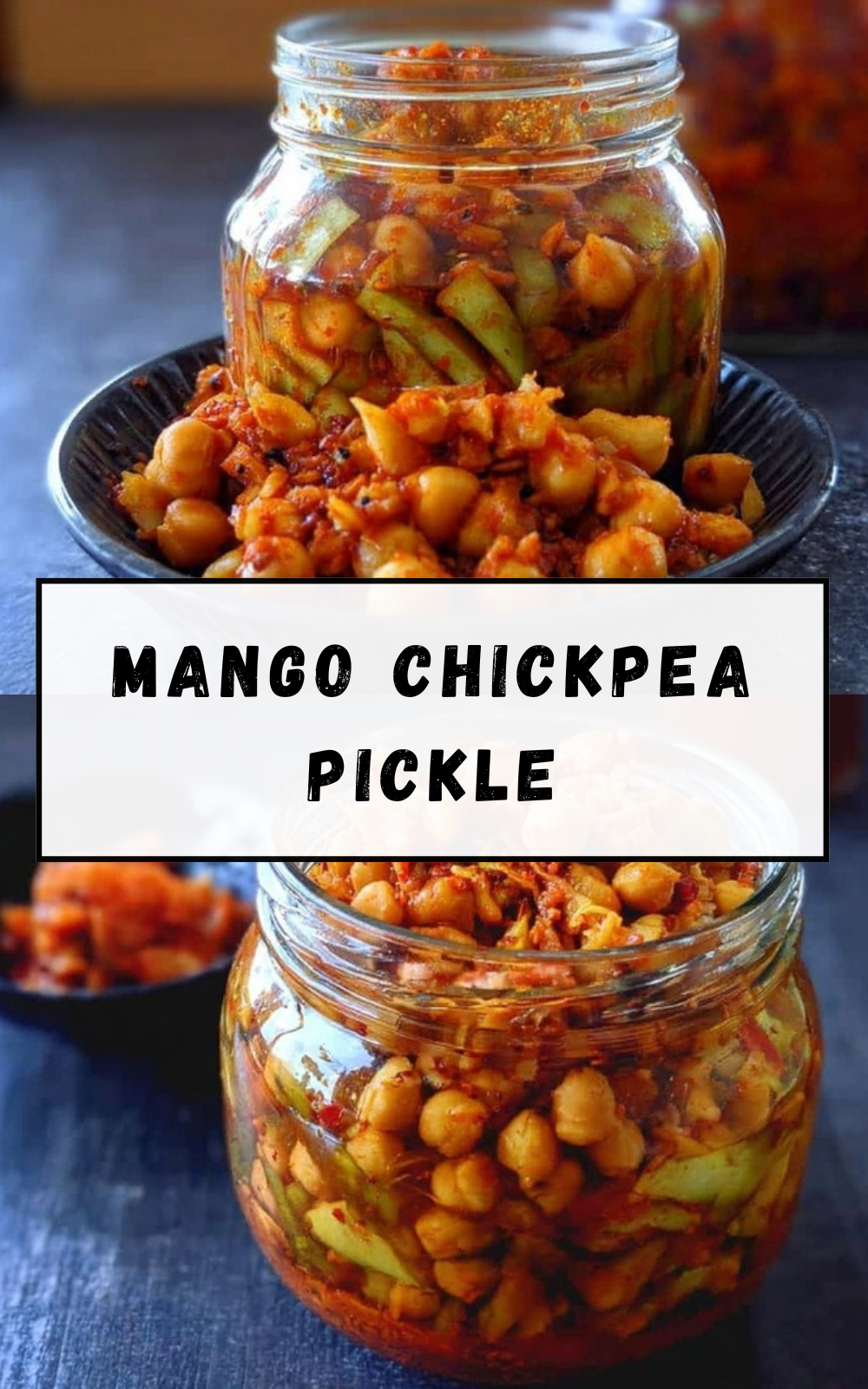
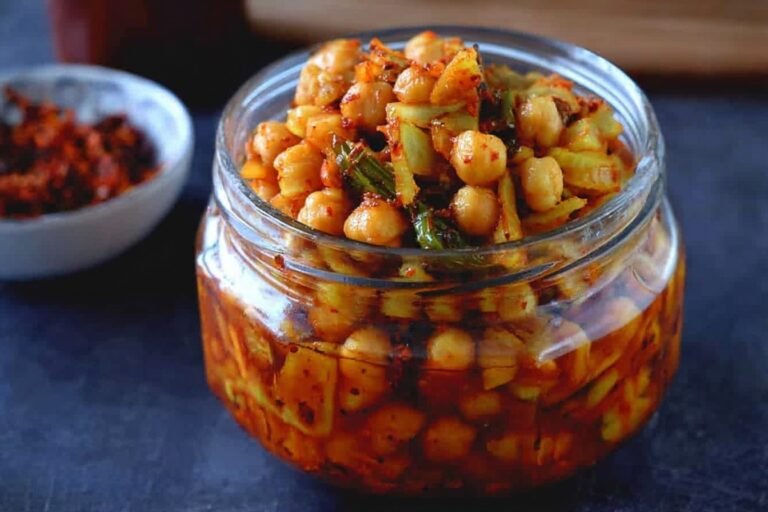
Transfer the mango, chickpea, and spice mixture into a clean, dry glass bottle or glass jar. Press the mixture down with a clean spoon so it sits compactly inside the jar. Then pour in enough oil so the top is covered. That oil layer is important because it helps keep air away from the pickle.
After a few days, the oil may rise a little more on top, which is normal. The main thing is to keep the pickle submerged as much as possible. If needed, add a bit more mustard oil later. Use a jar with a tight lid so the flavor stays in and moisture stays out.
Sixth Step: Let it rest in sunlight
Seal the jar airtight and place it in sunlight for 2 to 3 weeks. Stir it with a clean, dry spoon every 2 to 3 days. This is where the flavor deepens and the chickpeas slowly soften even more. The sunlight helps the spices blend, the mango mature, and the pickle develop that classic homemade taste.
Try to keep the jar in a stable spot where it will not be disturbed too much. Some families like to place homemade pickles on a balcony or near a sunny window. If you are making this with kids, let them help with the mango mixing, but handle the spices and jar filling yourself.
Final Step: Store and enjoy
After the resting period, move the jar to a cool, dry place. The pickle is ready to eat, but it often tastes even better after a little more time. Serve a small spoonful with roti, paratha, dal chawal, curd rice, or any simple meal that needs a sharp little kick.
Homemade Mango Chickpea Pickle takes patience, but the steps are easy. Once you make it one time, the process becomes second nature.

Dietary Substitutions to Customize Your Mango Chickpea Pickle
Protein and main ingredient alternatives
The best version of Mango Chickpea Pickle uses raw white chickpeas because they soften slowly in the mango juices. That said, if you are trying to change the flavor or work with what you have, there are a few practical options.
- No chickpeas: You can make a simple raw mango pickle using only mango, spices, salt, and oil, but the texture will be different.
- Different chickpeas: Small white chickpeas are best, but other dry chickpeas can work if they are raw and soaked properly.
- No vinegar: Skip it if the mangoes are already very sour. Just add a little extra mustard oil to keep the pickle well coated.
Vegetable, sauce, and seasoning modifications
For a milder pickle, reduce the red chilli powder a little. For a stronger aroma, keep the fennel and nigella seeds at the full amount. If you like a more tangy result, the vinegar can stay in the recipe, especially when the mangoes are not very sour.
You can also adjust the salt to taste, but do not reduce it too much, because salt helps preserve the pickle. This recipe works well for busy parents, students, and working professionals because it can be made in batches and stored for a long time. For another easy savory meal idea that fits into a busy week, you may also like this simple pesto pasta recipe from Kitchen Coast.
Mastering Mango Chickpea Pickle: Advanced Tips and Variations
Pro cooking techniques
Use only raw, dry chickpeas, not canned ones. That is one of the most important tips for this recipe. Raw chickpeas absorb the mango juice and salt, which helps them soften naturally over time. If the chickpeas are wet, the pickle may spoil faster, so dry everything properly before mixing.
Always use a clean spoon when checking or stirring the jar. Keep the jar, your hands, and every tool completely dry. This small habit makes a huge difference in pickle safety. If you want to serve the pickle over many months, store it in glass jars and keep the chickpeas submerged in oil.
Clean tools, dry jars, and enough oil are the real secrets behind a long-lasting homemade pickle.
Flavor variations
If you like stronger heat, increase the red chilli powder a little. If you prefer a softer flavor, lower the chilli and let the fennel shine more. You can also add a touch more vinegar if the mangoes taste too mild. The spices should feel bold, but they should not overpower the mango.
This recipe is also a nice way to introduce kids to homemade cooking. Let them help wash mangoes or mix the salt with the fruit, but keep the spice handling with the adult. That way, the process stays fun and safe.
Presentation tips
Serve the pickle in a small ceramic bowl alongside a meal, or spoon it into a tiny serving jar for a rustic look. The bright red spice oil looks beautiful beside plain rice, flatbreads, or lentils. A little goes a long way, so even a small spoonful adds a lot of character to the plate.
Make-ahead options
This is a great make-ahead recipe for meal prep lovers. Because it rests for 2 to 3 weeks, it actually fits well into a relaxed weekend cooking routine. Make a full batch, divide it into clean jars, and keep one jar ready for everyday meals. If you enjoy meal prep dishes that travel well, you might also like these grilled chicken breasts for easy lunches.
How to Store Mango Chickpea Pickle: Best Practices
Refrigeration
You can keep Mango Chickpea Pickle in a cool, dry place after it has rested in sunlight. If your kitchen is warm or humid, refrigeration can help after the first fermentation period. Always use a clean, dry spoon when serving, and make sure the chickpeas stay covered with oil.
Freezing
Freezing is not usually needed for this type of pickle. The oil, salt, and sunlight method already helps it last a long time. For best taste and texture, keep it in glass jars instead of freezing it.
Reheating
This pickle does not need reheating. Serve it at room temperature or straight from the jar with dry utensils. If the oil becomes cloudy in cooler weather, let the jar sit at room temperature for a short while before serving.
Meal prep considerations
Properly stored homemade pickle can last for years when kept submerged in oil and handled with dry spoons. The key is to keep moisture out. For a recipe like this, the storage method is part of the recipe itself, not just an afterthought.
FAQs: Frequently Asked Questions About Mango Chickpea Pickle
Do I need to cook chickpeas before adding them to mango chickpea pickle?
No, you don’t need to cook chickpeas for mango chickpea pickle. Start with dry, raw chickpeas—ideally small white ones like kabuli chana. Soak them overnight in water to rehydrate slightly, then drain and mix directly into the mango mixture with salt and mango juice. The natural acidity from raw green mangoes and salt draws out moisture from the chickpeas, softening them over 2-3 days. Place the jar in direct sunlight for 4-5 hours daily to speed up this process and kickstart fermentation. Stir once a day. After a week, the chickpeas will be tender yet crunchy, ready to eat. This no-cook method keeps the pickle’s tangy flavor intact and preserves nutrients. Always use clean, dry jars to avoid spoilage. (92 words)
How do raw chickpeas soften in mango chickpea pickle?
Raw chickpeas soften naturally in mango chickpea pickle through osmosis and fermentation. After soaking overnight and draining, toss them with grated raw green mango, salt (about 2-3 tablespoons per kg), and spices like chili powder and turmeric. The mango’s high acidity and salt pull water from the chickpeas’ cells, breaking down their tough outer skin over 3-5 days. Sun exposure (4-6 hours daily) generates heat that activates enzymes and lactic acid bacteria, further tenderizing them without cooking. Stir daily and check texture—aim for a firm bite. By day 7-10, chickpeas are soft and pickle-ready. Store in sunlight initially, then shade. This traditional method ensures even softening and long shelf life. (108 words)
Is mango chickpea pickle good for health?
Yes, mango chickpea pickle offers health benefits, especially from its fermentation process. Traditional Indian-style preparation uses raw green mangoes and chickpeas, fostering probiotic bacteria like lactobacillus during sun-drying. These gut-friendly microbes aid digestion, boost immunity, and improve nutrient absorption from chickpeas’ protein and fiber. Mango provides vitamin C and antioxidants, while spices like fenugreek add anti-inflammatory effects. A small serving (1-2 tablespoons daily) supports gut health without excess salt if homemade. It’s low-calorie at about 50 calories per 100g. Consume in moderation to avoid high sodium intake. Pair with meals for better results. Studies show fermented pickles enhance microbiome diversity, similar to yogurt. (112 words)
How long does homemade mango chickpea pickle last?
Homemade mango chickpea pickle lasts 6-12 months if stored properly. After initial sun-drying for 7-10 days (4-6 hours daily), move to a cool, dry, dark place. Use sterilized glass jars with airtight lids—always use a clean, dry spoon to serve. Oil on top acts as a preservative, preventing air exposure. Refrigerate after 3 months for extra longevity, where it stays fresh up to a year. Signs of spoilage: foul smell, mold, or sliminess—discard immediately. Factors affecting shelf life include quality mangoes (unripe, firm), correct salt ratio (10-15% by weight), and minimal water content. Check monthly; remix if needed. Proper prep ensures tangy flavor holds. (104 words)
Can I make mango chickpea pickle without sunlight?
Yes, you can make mango chickpea pickle without direct sunlight using an oven or room fermentation. Prep as usual: soak raw chickpeas overnight, mix with grated green mango, 10-12% salt, mustard oil, and spices (chili, fennel, nigella seeds). For no-sun method, preheat oven to 50-60°C (120-140°F), place jar inside for 4-6 hours daily with door ajar, mimicking sun heat. Alternatively, leave at room temperature (25-30°C) for 10-14 days, stirring twice daily. This slower process still softens chickpeas via acidity and builds probiotics. Taste-test after a week; add lemon juice if tangy flavor lags. Store in fridge post-fermentation. Results match sun-dried version with careful temp control. (109 words)
Mango Chickpea Pickle
🥭🫘 Craft tangy, probiotic-packed mango chickpea pickle at home – easy, oil-preserved for months of flavor!
🥭🫘 Vegan, gluten-free gut booster with protein-rich chickpeas, perfect Indian side for any meal.
- Total Time: 15 days 30 minutes
- Yield: 2-3 jars (about 40 servings)
Ingredients
– 3 cups raw mango, grated without peeling for sourness and releases juice to help soften the chickpeas
– 1 cup raw white chickpeas (chole) for protein, texture, and the classic bite
– 2 tablespoons salt, adjust to taste for drawing out moisture and preservation
– 2 tablespoons fenugreek seeds (methi dana), coarsely ground for slightly bitter, earthy note that deepens flavor
– 2 tablespoons fennel seeds (saunf) for sweet, warm spice
– 1 teaspoon nigella seeds (kalonji) for sharp, peppery aroma
– 1/8 cup red chilli powder (lal mirch), adjust to taste for heat and color
– 1 teaspoon turmeric powder (haldi) for color and warm earthy taste
– 1 1/4 cups mustard oil, add more if omitting vinegar for preservative and carries the spice flavor
– 1/4 cup vinegar, optional if mangoes are not sour enough for if mangoes are not sour enough
Instructions
1-First Step: Clean and prep the ingredients Wash the raw chickpeas very well and dry them completely. Then wash the mangoes, clean them, and grate them without peeling. The peel stays on because it adds texture and helps keep the pickle traditional. Make sure your hands, bowl, spoon, and jar are fully dry before you start. Any water left behind can spoil the pickle. If you want to make cooking time easier, you can grate the mangoes ahead of time and keep them covered for a short while, but do not let them sit too long before mixing with salt. This first step is quick, but it matters a lot for the final taste and shelf life.
2-Second Step: Mix mango, chickpeas, and salt In a large bowl, combine the raw chickpeas, grated mango, and salt. Mix everything well so the salt touches the mango and chickpeas evenly. Cover the bowl and set it in sunlight for 6 to 8 hours. This resting time helps the mango release water, and that moisture starts softening the raw chickpeas. Do not rush this part. The Mango Chickpea Pickle depends on this natural softening step. If you use canned chickpeas, they will not work the same way. Raw dry chickpeas absorb the mango juice and salt much better, and that is what gives the pickle its special bite.
3-Third Step: Prepare the spice mix While the mango and chickpeas are resting, combine the spices in another bowl. Add the coarsely ground fenugreek seeds, fennel seeds, nigella seeds, red chilli powder, and turmeric powder. Mix them together evenly so the flavor spreads throughout the pickle. If you like it spicier, use the full amount of red chilli powder. If you prefer a milder pickle, reduce it a little. Fenugreek gives a warm bitter note, fennel adds sweetness, nigella adds a punchy aroma, and turmeric gives that familiar golden color. This spice mix is what makes the jar smell amazing from the first day.
4-Fourth Step: Add oil and vinegar Pour the mustard oil into the spice mixture and mix well. If your mangoes are not sour enough, add the vinegar too. Vinegar is optional, but it can help brighten the flavor and support preservation. If you leave out the vinegar, add a little extra mustard oil so the pickle stays fully covered. Mustard oil is a big part of the flavor here. It gives the pickle its classic sharp taste and also helps the jar last longer. For the best result, use good-quality mustard oil and make sure it is clean and ready to use.
5-Fifth Step: Pack the pickle into a clean jar Transfer the mango, chickpea, and spice mixture into a clean, dry glass bottle or glass jar. Press the mixture down with a clean spoon so it sits compactly inside the jar. Then pour in enough oil so the top is covered. That oil layer is important because it helps keep air away from the pickle. After a few days, the oil may rise a little more on top, which is normal. The main thing is to keep the pickle submerged as much as possible. If needed, add a bit more mustard oil later. Use a jar with a tight lid so the flavor stays in and moisture stays out.
6-Sixth Step: Let it rest in sunlight Seal the jar airtight and place it in sunlight for 2 to 3 weeks. Stir it with a clean, dry spoon every 2 to 3 days. This is where the flavor deepens and the chickpeas slowly soften even more. The sunlight helps the spices blend, the mango mature, and the pickle develop that classic homemade taste. Try to keep the jar in a stable spot where it will not be disturbed too much. Some families like to place homemade pickles on a balcony or near a sunny window. If you are making this with kids, let them help with the mango mixing, but handle the spices and jar filling yourself.
7-Final Step: Store and enjoy After the resting period, move the jar to a cool, dry place. The pickle is ready to eat, but it often tastes even better after a little more time. Serve a small spoonful with roti, paratha, dal chawal, curd rice, or any simple meal that needs a sharp little kick. Homemade Mango Chickpea Pickle takes patience, but the steps are easy. Once you make it one time, the process becomes second nature.
Last Step:
Please leave a rating and comment letting us know how you liked this recipe! This helps our business to thrive and continue providing free, high-quality recipes for you.Notes
🫘 Use only raw, dry chickpeas (never canned) to properly absorb juices and soften.
🫙 Store in glass jars fully submerged in oil for shelf stability up to years.
💧 Keep jars, hands, and tools bone-dry to avoid spoilage and mold.
- Prep Time: 30 minutes
- Fermentation Time: 15 days
- Category: Condiments
- Method: Fermenting
- Cuisine: Indian
- Diet: Vegan, Gluten-Free, Vegetarian
Nutrition
- Serving Size: 1 tablespoon
- Calories: 45 kcal
- Sugar: 1 g
- Sodium: 350 mg
- Fat: 4 g
- Saturated Fat: 0.5 g
- Unsaturated Fat: 3.5 g
- Trans Fat: 0 g
- Carbohydrates: 2 g
- Fiber: 0.5 g
- Protein: 0.5 g
- Cholesterol: 0 mg