
Why You’ll Love This Chicken Noodle Stir Fry
Let’s be honest, some nights you just need dinner on the table fast without sacrificing flavor or nutrition. That’s exactly why this chicken noodle stir fry has become a weeknight favorite in so many homes. It hits that sweet spot between convenience and satisfaction that busy cooks dream about.
Here’s why this recipe deserves a permanent spot in your cooking rotation:
- Quick and Easy Preparation: With just 15 minutes of prep time and 10 minutes of cooking, you can have a complete meal ready in 25 minutes flat. The steps are straightforward enough for beginners, yet the results taste like something from a restaurant.
- Packed with Nutrients: Each serving delivers nearly 16g of protein, plenty of vitamin A (2050 IU), and a boost of vitamin C (54.5mg) from the colorful vegetables. At only 253 calories per serving, it’s a guilt-free dinner option that keeps you satisfied.
- Incredibly Versatile: This recipe adapts beautifully to whatever vegetables you have in your fridge. Don’t have mangetout? Use snap peas. Want more protein? Add extra chicken. The sauce base works with countless variations.
- Bold, Authentic Flavors: The combination of dark soy sauce, oyster sauce, fresh lime juice, and aromatics creates that restaurant-quality taste you crave. Plus, the toasted sesame oil adds a nutty depth that makes every bite memorable.
This chicken noodle stir fry brings together tender chicken, crisp vegetables, and chewy noodles all coated in a savory sauce that soaks into every bite.
Whether you’re cooking for picky eaters, trying to eat healthier, or simply looking for new flavors to spice up your dinner routine, this stir fry delivers on every front. It’s also worth mentioning that chicken is an excellent source of lean protein according to the nutritional benefits of chicken, making this dish both delicious and nourishing.
Essential Ingredients for Chicken Noodle Stir Fry
Getting your ingredients ready before you start cooking is the secret to a successful stir fry. Since everything moves quickly once the wok heats up, having everything prepped and measured makes the process smooth and stress-free.
Here’s your complete ingredient list with precise measurements:
Main Protein and Aromatics:
- 250g / 9oz Chicken Breast, sliced into thin strips
- Salt, as needed
- 1-2 tbsp Vegetable Oil
- 1 Red Chilli, deseeded and finely diced
- 1 tsp Ginger, finely diced or grated
- 1 large clove Garlic, finely diced (approximately)
Sauce Ingredients:
- 2 tbsp Dark Soy Sauce
- 1 tbsp Oyster Sauce
- 1/2 Fresh Lime, juice only
- 1 tsp Brown Sugar
- 1/8 – 1/4 tsp White Pepper
Noodles and Vegetables:
- 150g / 5oz Dried Noodles
- Approx 1 tbsp Toasted Sesame Oil
- 2 small or 1 large Carrots, sliced into thin matchsticks
- 1 Red Pepper, sliced into strips
- 3-4 Spring Onions, sliced into 1 inch pieces then divided into green part and firm/white part
- 4-6 Chestnut Mushrooms, sliced
- 75g / 2.6oz Mangetout
For Garnish:
- Crushed Toasted Peanuts
- Sesame Seeds
Special Dietary Options:
- Vegan: Replace chicken with firm tofu or tempeh, swap oyster sauce for mushroom sauce, and use rice noodles instead of egg noodles.
- Gluten-free: Use gluten-free soy sauce (tamari), gluten-free oyster sauce, and rice noodles. Check all packaged ingredients carefully.
- Low-calorie: Reduce oil to 1 tbsp, use less noodles, and increase the vegetable portion for more volume with fewer calories.
Having everything measured and arranged in the order you’ll add them to the wok saves precious minutes and prevents any last-minute scrambling. This technique, often called mise en place, is what professional chefs use to stay organized.
How to Prepare the Perfect Chicken Noodle Stir Fry: Step-by-Step Guide
Now that all your ingredients are prepped, it’s time to bring this chicken noodle stir fry to life. The key to a great stir fry is high heat and quick cooking, so having everything ready before you turn on the stove is essential.
Step 1: Make the Sauce
Start by whisking together all your sauce ingredients in a small bowl. Combine the dark soy sauce (2 tbsp), oyster sauce (1 tbsp), fresh lime juice from half a lime, brown sugar (1 tsp), and white pepper (1/8 to 1/4 tsp). Mix until the sugar dissolves completely, then set this aside. Having your sauce ready means you can pour it in at exactly the right moment without fumbling with bottles and spoons.
Step 2: Prep Your Vegetables
Organization makes all the difference here. Arrange your vegetables in three separate groups based on cooking time:
- First group: carrots and red pepper (they need the most time)
- Second group: mushrooms and white parts of spring onions
- Third group: mangetout and green parts of spring onions (these cook fastest)
This staging ensures each vegetable cooks perfectly without turning mushy or staying too raw.
Step 3: Cook the Noodles
Bring a pot of water to a boil and cook your dried noodles (150g/5oz) according to the package directions. Most medium egg noodles take about 4-6 minutes to reach al dente. Drain them well, then immediately toss with approximately 1 tablespoon of toasted sesame oil. This step is crucial because it prevents the noodles from sticking together and adds a lovely nutty flavor. Set them aside while you tackle the stir fry.
Step 4: Cook the Chicken
Heat 1 tablespoon of vegetable oil in your wok or large pan over high heat. You want that oil shimmering hot. Season your sliced chicken breast (250g/9oz) with a pinch of salt, then add it to the wok in a single layer. Let it sear without moving it too much, this helps develop that golden color. Fry until the chicken is sealed and almost cooked through, about 2-3 minutes depending on thickness.
Now add the aromatics: your diced red chilli (1), minced garlic (approximately 1 large clove), and grated ginger (1 tsp). Stir these into the chicken and cook briefly until the chicken is fully cooked and the aromatics have taken on some color. That smell wafting up is exactly what you want. Remove everything from the wok and set aside on a plate.
Pro tip: Cooking the chicken to only 80-90% done before removing it prevents toughness. You’ll finish cooking it at the end when everything comes together.
Step 5: Stir-Fry the Vegetables
Add a little more vegetable oil to your wok if needed, keeping the heat high. Toss in your carrots and red pepper strips, stir-frying until they just begin to soften. These dense vegetables need a head start. Next, add your sliced mushrooms (4-6) and the white parts of your spring onions. Cook these for 1-2 minutes, letting the mushrooms release their moisture and brown slightly.
Finally, add the mangetout (75g/2.6oz) and the green parts of the spring onions. These delicate vegetables only need about a minute. They should stay bright green and crisp, not limp and sad.
Step 6: Bring It All Together
Time for the magic moment. Return your chicken and aromatics to the wok. Add your sesame-coated noodles. Pour that beautiful sauce over everything. Now toss, flip, and stir like you mean it. The sauce should bubble and reduce slightly, coating every noodle and piece of chicken. Keep everything moving so nothing sticks and all ingredients are well distributed.
Step 7: Serve and Garnish
Transfer your chicken noodle stir fry to plates or bowls immediately. Top with crushed toasted peanuts and a sprinkle of sesame seeds for that extra crunch and visual appeal. These finishing touches add texture and a subtle nutty flavor that elevates the entire dish.
Here’s a quick timing reference for the entire cooking process:
| Component | Cooking Time | Heat Level |
|---|---|---|
| Chicken | 2-3 minutes | High |
| Aromatics with chicken | 30-60 seconds | High |
| Carrots and peppers | 2-3 minutes | High |
| Mushrooms and white onions | 1-2 minutes | High |
| Mangetout and green onions | 1 minute | High |
| Final toss with sauce | 1-2 minutes | High |
Protein and Main Component Alternatives
While chicken breast works beautifully in this recipe, you might want to switch things up based on what’s in your fridge or your dietary preferences. Here are some fantastic alternatives that work just as well.
Chicken Thighs: Many stir fry enthusiasts actually prefer thighs over breast. They stay juicier and are more forgiving if you accidentally cook them a little longer. Slice them the same way, thin strips for quick cooking. The slightly higher fat content adds richness to the final dish.
Beef: Flank steak or sirloin, sliced thinly against the grain, makes a delicious variation. Cook it the same way as the chicken, but you can skip the initial browning step and flash fry it for just 1-2 minutes since beef cooks so quickly.
Shrimp: Large shrimp work wonderfully in stir fries. They cook in about 2-3 minutes total. Add them after the vegetables since they need less time than chicken. Look for that pink color and curled shape to know they’re done.
Tofu: For a vegetarian option, use firm or extra firm tofu. Press it for 15-20 minutes to remove excess moisture, then cut into cubes. Fry it separately until golden on all sides before setting aside. The tofu will soak up that amazing sauce beautifully.
Vegetable, Sauce, and Seasoning Modifications
The beauty of stir fry lies in its adaptability. Once you understand the cooking order principle (hard vegetables first, soft ones last), you can use almost any vegetable in your chicken noodle stir fry.
Vegetable Swaps:
- Broccoli: Cut into small florets and add with carrots; they need similar cooking time
- Snow Peas: Use instead of mangetout for a similar crunch
- Baby Corn: Halve lengthwise and add with the harder vegetables
- Bok Choy: Separate stems and leaves; add stems early and leaves at the end
- Bean Sprouts: Toss in during the last 30 seconds for fresh crunch
- Zucchini: Slice into half-moons and add with mushrooms
Sauce Variations:
Feel like changing up the flavor profile? The base sauce is incredibly adaptable. For a spicy kick, add a teaspoon of sriracha or chili paste. Want more depth? A splash of Chinese cooking wine (Shaoxing) adds complexity. Prefer sweetness? Increase the brown sugar or add a drizzle of honey. For a gluten-free version, simply swap dark soy sauce for tamari and make sure your oyster sauce is certified gluten-free.
The aromatics can also change the character of your dish entirely. Garlic provides a savory depth, and according to research on the proven health benefits of garlic, it also supports immune function. Ginger adds warmth and helps cut through any richness. Experiment with these ratios to find your perfect balance.
Mastering Chicken Noodle Stir Fry: Advanced Tips and Variations
Ready to take your chicken noodle stir fry from good to absolutely outstanding? These professional techniques will help you achieve restaurant-quality results every single time.
Wok Hei (Breath of the Wok):
That smoky, slightly charred flavor you get at restaurants comes from cooking at extremely high temperatures. Home stoves don’t get as hot, but you can approximate it. Heat your wok until it’s smoking slightly before adding oil. Never add cold oil to a cold wok. Keep the heat on high throughout cooking and don’t overcrowd the pan, which drops the temperature and creates steam instead of that gorgeous sear.
Chicken Preparation Secrets:
Thin slicing is non-negotiable for quick, even cooking. But here’s a trick many home cooks miss: let your chicken come to room temperature for 20-30 minutes before cooking. Cold chicken releases moisture when it hits the hot wok, which creates steam and prevents browning. Room temperature chicken sears beautifully. Also, pat the chicken dry with paper towels before seasoning. Dry chicken equals golden chicken.
Noodle Handling:
That toasted sesame oil toss isn’t just about preventing sticking. It infuses the noodles with flavor before they even meet the sauce. Use your fingers to gently separate the noodles after draining, making sure each strand gets coated. For the best results, use medium-thickness egg noodles. They hold their shape and absorb sauce beautifully. Looking for more recipe inspiration? Check out these delicious dessert ideas to round out your meal.
Flavor Variations to Try:
- Thai-Style: Add a tablespoon of fish sauce and extra lime juice, skip the oyster sauce
- Korean-Inspired: Stir in a tablespoon of gochujang for sweet-spicy heat
- Sesame Forward: Double the sesame oil and add tahini to the sauce for a creamy element
- Extra Garlicky: Double the garlic and add it in two stages, some with the chicken and some with the vegetables
Presentation Matters:
We eat with our eyes first. Use a large platter rather than individual bowls for a dramatic presentation. Garnish generously with those crushed peanuts and sesame seeds. A sprig of fresh cilantro or Thai basil adds a pop of green. Serve with lime wedges on the side for squeezing over just before eating.
Make-Ahead Strategy:
Busy weeknights call for smart prep. You can slice all vegetables and chicken the night before, storing them separately in airtight containers. The sauce can be mixed up to three days ahead and kept in the refrigerator. The actual cooking will still take just 10 minutes, but all your prep work is done. This makes a fantastic quick weeknight dinner when time is tight.
How to Store Chicken Noodle Stir Fry: Best Practices
Life happens, and sometimes you end up with leftovers. The good news? Chicken noodle stir fry stores surprisingly well when you follow a few simple guidelines.
Refrigeration:
Let your stir fry cool completely before storing. Transfer to an airtight container and refrigerate within two hours of cooking. Properly stored, it will keep for 3-4 days in the refrigerator. The vegetables will soften over time, but the flavors continue to develop, making day-two stir fry often even more delicious.
Freezing:
You can freeze chicken noodle stir fry, though the texture changes slightly. Noodles may become softer and vegetables lose some of their crunch. If you plan to freeze, slightly undercook the vegetables. Portion into freezer-safe containers, leaving some room for expansion. Label with the date and use within 2-3 months for best quality. Thaw overnight in the refrigerator before reheating.
Reheating:
The best method for reheating is in a hot wok or skillet. Add a splash of water or extra sauce, heat the pan over medium-high, and toss until everything is heated through. This takes about 3-4 minutes and helps restore some texture. Microwaving works in a pinch but can make the noodles rubbery. If using a microwave, heat in 30-second intervals, stirring between each.
Meal Prep Considerations:
If you’re planning this for meal prep, consider keeping some components separate. Store the sauce separately and add it when reheating. This prevents the noodles from becoming soggy. Alternatively, prep all ingredients raw and cook fresh each night, the cooking time is so short that it’s manageable even on busy evenings.

FAQs: Frequently Asked Questions About Chicken Noodle Stir Fry
What noodles are best for chicken noodle stir fry?
Medium-thickness dried egg noodles work best for chicken noodle stir fry because they hold their shape, absorb sauce well, and provide the perfect chewy texture without becoming mushy. Fresh egg noodles are a quick alternative if you’re short on time, but dried ones offer better control over cooking. Boil them according to package instructions until al dente—usually 4-6 minutes—then drain and rinse briefly under cold water to stop cooking. Immediately toss with 1 teaspoon of toasted sesame oil per 200g of noodles. This prevents sticking and infuses a nutty flavor that pairs perfectly with the dish. Avoid thin rice noodles, as they can break down during stir-frying. For gluten-free options, use rice noodles but cook them separately and add at the end to maintain texture. (98 words)
What vegetables go best in chicken noodle stir fry?
For chicken noodle stir fry, choose vegetables that add color, crunch, and quick-cooking balance: bell peppers, carrots, broccoli florets, snap peas (mangetout), mushrooms, and bok choy. Start with aromatics—2 minced garlic cloves, 1-inch grated ginger, and 1-2 sliced red chilies—for a flavorful base. Slice carrots and peppers thinly for fast cooking, and add softer veggies like mushrooms and snap peas later to keep them crisp. Aim for 4-5 cups total veggies per 400g chicken to avoid overcrowding the wok. Prep everything in advance (mise en place) since stir-frying happens fast. This mix provides vitamins A and C, plus fiber—about 20% of daily needs per serving—while keeping the dish vibrant and nutritious. Wash and dry veggies thoroughly for better browning. (112 words)
How do you prepare chicken for stir fry noodles?
Thinly slice 400-500g boneless chicken breast or thigh into 1/4-inch strips for even, quick cooking in chicken noodle stir fry. Pat dry with paper towels and let it reach room temperature for 20-30 minutes—this ensures juicy results. Marinate optionally with 1 tsp cornstarch, 1 tbsp soy sauce, and a pinch of white pepper for 15 minutes to tenderize. Heat 2 tbsp neutral oil (like vegetable or peanut) in a wok over high heat, then stir-fry chicken in batches for 2-3 minutes until 80-90% cooked (opaque but slightly pink inside). Remove and set aside; finish cooking with sauce at the end to prevent toughness. Thighs stay moister than breast. Avoid overcooking—internal temp should hit 165°F (75°C) total. This method yields tender chicken every time. (118 words)
What’s a good sauce recipe for chicken noodle stir fry?
A balanced stir fry sauce for chicken noodle stir fry combines sweet, salty, sour, and spicy notes. Mix 3 tbsp oyster sauce, 2 tbsp dark soy sauce, 1 tbsp light soy sauce, 1 tbsp brown sugar, 1 tbsp fresh lime juice (or rice vinegar), 1 tsp sesame oil, and 1/2 tsp white pepper. Add 1/4 cup chicken stock or water to thin it. Taste and adjust—more sugar for sweetness, lime for tang. For heat, stir in 1 tsp chili paste. This makes enough for 4 servings. Pour over cooked noodles, chicken, and veggies in the wok, tossing for 1-2 minutes on high heat to coat evenly and thicken slightly. Store extra sauce in the fridge for up to a week. It clings perfectly without overpowering the dish. (114 words)
What order do you cook ingredients for chicken noodle stir fry?
Cook chicken noodle stir fry in this order for best results: Heat wok over high heat with 2 tbsp oil. First, stir-fry chicken 2-3 minutes until nearly done; remove. Add aromatics (garlic, ginger, chili) for 30 seconds until fragrant. Toss in hard veggies (carrots, peppers) for 2 minutes, then medium ones (broccoli, mushrooms) for 1-2 minutes. Add soft veggies (snap peas, green onions) for 1 minute. Return chicken, add drained noodles, pour in sauce, and toss 1-2 minutes until everything is hot and coated. Garnish with crushed peanuts and sesame seeds. Maintain high heat throughout to sear, not steam—total time is 8-10 minutes. This prevents sogginess and ensures crisp textures. Use a spacious wok for easy tossing. (112 words)
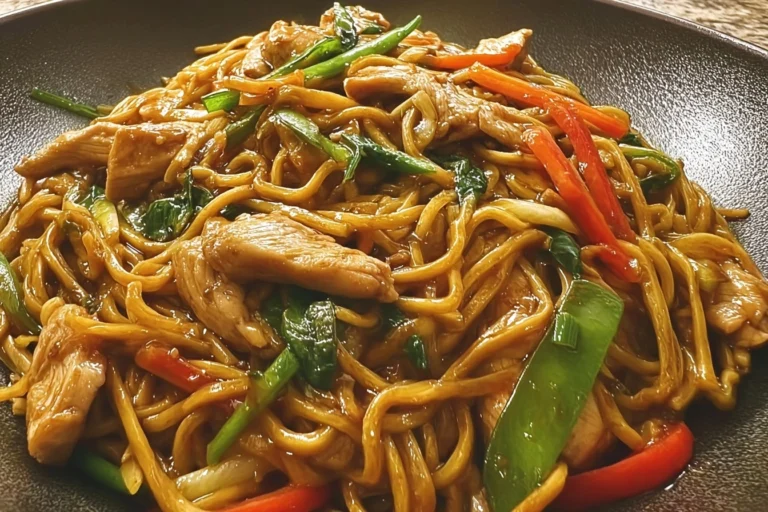
Chicken Noodle Stir Fry
🐔🍜 Crispy chicken strips with vibrant veggies and chewy noodles in umami-packed sauce—high protein, fiber-rich for a nutritious, flavorful stir-fry!
🔥 Ready in 25 minutes, this easy one-wok wonder delivers takeout taste with fresh ingredients and customizable heat.
- Total Time: 25 minutes
- Yield: 3 servings
Ingredients
– 250g / 9oz Chicken Breast
– Salt, as needed
– 1-2 tbsp Vegetable Oil
– 1 Red Chilli
– 1 tsp Ginger
– 1 large clove Garlic
– 2 tbsp Dark Soy Sauce
– 1 tbsp Oyster Sauce
– 1/2 Fresh Lime, juice only
– 1 tsp Brown Sugar
– 1/8 – 1/4 tsp White Pepper
– 150g / 5oz Dried Noodles
– Approx 1 tbsp Toasted Sesame Oil
– 2 small or 1 large Carrots
– 1 Red Pepper
– 3-4 Spring Onions
– 4-6 Chestnut Mushrooms
– 75g / 2.6oz Mangetout
– Crushed Toasted Peanuts
– Sesame Seeds
Instructions
1-Step 1: Make the Sauce Start by whisking together all your sauce ingredients in a small bowl. Combine the dark soy sauce (2 tbsp), oyster sauce (1 tbsp), fresh lime juice from half a lime, brown sugar (1 tsp), and white pepper (1/8 to 1/4 tsp). Mix until the sugar dissolves completely, then set this aside. Having your sauce ready means you can pour it in at exactly the right moment without fumbling with bottles and spoons.
2-Step 2: Prep Your Vegetables Organization makes all the difference here. Arrange your vegetables in three separate groups based on cooking time:* First group: carrots and red pepper (they need the most time).* Second group: mushrooms and white parts of spring onions.* Third group: mangetout and green parts of spring onions (these cook fastest).* This staging ensures each vegetable cooks perfectly without turning mushy or staying too raw.
3-Step 3: Cook the Noodles Bring a pot of water to a boil and cook your dried noodles (150g/5oz) according to the package directions. Most medium egg noodles take about 4-6 minutes to reach al dente. Drain them well, then immediately toss with approximately 1 tablespoon of toasted sesame oil. This step is crucial because it prevents the noodles from sticking together and adds a lovely nutty flavor. Set them aside while you tackle the stir fry.
4-Step 4: Cook the Chicken Heat 1 tablespoon of vegetable oil in your wok or large pan over high heat. You want that oil shimmering hot. Season your sliced chicken breast (250g/9oz) with a pinch of salt, then add it to the wok in a single layer. Let it sear without moving it too much, this helps develop that golden color. Fry until the chicken is sealed and almost cooked through, about 2-3 minutes depending on thickness. Now add the aromatics: your diced red chilli (1), minced garlic (approximately 1 large clove), and grated ginger (1 tsp). Stir these into the chicken and cook briefly until the chicken is fully cooked and the aromatics have taken on some color. That smell wafting up is exactly what you want. Remove everything from the wok and set aside on a plate.
5-Step 5: Stir-Fry the Vegetables Add a little more vegetable oil to your wok if needed, keeping the heat high. Toss in your carrots and red pepper strips, stir-frying until they just begin to soften. These dense vegetables need a head start. Next, add your sliced mushrooms (4-6) and the white parts of your spring onions. Cook these for 1-2 minutes, letting the mushrooms release their moisture and brown slightly. Finally, add the mangetout (75g/2.6oz) and the green parts of the spring onions. These delicate vegetables only need about a minute. They should stay bright green and crisp, not limp and sad.
6-Step 6: Bring It All Together Time for the magic moment. Return your chicken and aromatics to the wok. Add your sesame-coated noodles. Pour that beautiful sauce over everything. Now toss, flip, and stir like you mean it. The sauce should bubble and reduce slightly, coating every noodle and piece of chicken. Keep everything moving so nothing sticks and all ingredients are well distributed.
7-Step 7: Serve and Garnish Transfer your chicken noodle stir fry to plates or bowls immediately. Top with crushed toasted peanuts and a sprinkle of sesame seeds for that extra crunch and visual appeal. These finishing touches add texture and a subtle nutty flavor that elevates the entire dish.
Last Step:
Please leave a rating and comment letting us know how you liked this recipe! This helps our business to thrive and continue providing free, high-quality recipes for you.Notes
🔥 Maintain high wok heat for crisp veggies—don’t overcrowd to avoid steaming.
🥩 Slice chicken thin, cook to 80-90% first for tender results.
🥡 Toss cooked noodles in sesame oil to prevent sticking and boost flavor.
- Prep Time: 15 minutes
- Cook Time: 10 minutes
- Category: Main Dishes
- Method: Stir-Fry
- Cuisine: Asian
- Diet: High Protein
Nutrition
- Serving Size: 1/3 recipe
- Calories: 253 kcal
- Sugar: 4 g
- Sodium: 390 mg
- Fat: 14 g
- Saturated Fat: 6 g
- Unsaturated Fat: 6 g
- Trans Fat: 0 g
- Carbohydrates: 17 g
- Fiber: 1 g
- Protein: 16 g
- Cholesterol: 40 mg