
Why You’ll Love This French Toast Casserole
By Stella Romano
French Toast Casserole is a cozy, crowd-pleasing breakfast that feels special without asking for a lot of effort. This recipe combines familiar pantry ingredients into a rich, custardy bake that feeds a family or a group of friends with minimal hands-on time.
- Ease of preparation: This recipe comes together in about 10 minutes of prep and bakes in roughly 25 to 30 minutes. Simple steps and few bowls make it perfect for busy mornings and last-minute guests.
- Health benefits: With eggs and milk as core ingredients, each serving provides quality protein and calcium. For more on the nutritional benefits of eggs, see eggs health benefits.
- Versatility: Swap breads and dairy to match dietary needs gluten-free or dairy-free options work well. You can also prepare it the night before for a stress-free morning.
- Distinctive flavor: A buttery brown sugar base caramelizes under the bread, adding a warm, caramel-like note that pairs beautifully with cinnamon and vanilla.
Essential Ingredients for French Toast Casserole
Below is a clear, structured ingredients list with precise measurements and short explanations for each item.
- Half a loaf of French bread (about 8 oz), cut into cubes – provides the sturdy base that soaks up custard without falling apart.
- 1/2 cup butter – melts with brown sugar to form a caramel-like layer under the bread.
- 1 cup packed brown sugar – sweetens the base and caramelizes during baking.
- 6 eggs – create the custard that binds and enriches the casserole.
- 2 cups milk – thins the eggs into a custard; use dairy or a 1:1 plant-based swap.
- 2 teaspoons vanilla extract – adds warm aromatic flavor to the custard.
- 2 teaspoons cinnamon, divided – one teaspoon in the custard and one teaspoon sprinkled on top for aroma and spice.
- 1 tablespoon brown sugar for topping – a final touch that caramelizes during bake for a lightly crisp surface.
- Powdered sugar for topping, optional – for dusting before serving.
Special Dietary Options
- Vegan: Use a plant-based butter, 2 cups unsweetened almond or oat milk, and a chia or flax egg substitute (1 tablespoon ground flaxseed mixed with 3 tablespoons water per egg). Keep in mind texture will be slightly different.
- Gluten-free: Replace French bread with gluten-free French or sourdough-style bread in the same amount about 8 ounces.
- Low-calorie: Use low-fat milk, reduce butter slightly, and swap some or all of the brown sugar for a granulated sugar substitute that measures cup-for-cup.
How to Prepare the Perfect French Toast Casserole: Step-by-Step Guide
This step-by-step guide follows the original recipe while adding helpful tips for consistent results. Read through once, then follow the steps in order.
Before you start
Preheat your oven and prepare your baking dish to avoid last-minute scrambling. Gather ingredients and measure everything so the assembly goes quickly.
First Step: Prep and preheat
Preheat oven to 425 degrees. Butter a 13×9 inch baking pan and set it aside so it’s ready when you need it. Cut half a loaf of French bread (about 8 oz) into 1-inch cubes if you haven’t already.
Second Step: Make the brown sugar-butter base
Melt 1/2 cup butter in a small saucepan over medium heat. Stir in 1 cup packed brown sugar until dissolved and smooth. Take the pan off heat briefly and pour this mixture into the bottom of the buttered 13×9 inch baking pan, spreading it evenly so the caramel layer covers the whole base.
Third Step: Layer the bread
Place the cubed French bread evenly over the brown sugar and butter mixture. Press lightly so the cubes make good contact with the caramel base this helps the bread soak up flavor from below as it bakes.
Fourth Step: Whisk the custard
In a medium bowl, whisk together 6 eggs, 2 cups milk, 2 teaspoons vanilla extract, and 1 teaspoon cinnamon until smooth and blended. Taste the custard and adjust if you’d like a touch more sweetness or spice.
Fifth Step: Combine and top
Pour the egg and milk mixture evenly over the bread cubes, making sure all pieces are saturated. Sprinkle the remaining 1 teaspoon cinnamon and 1 tablespoon brown sugar across the top for extra color and crunch.
Baking
Bake the casserole at 425 degrees for 25 to 30 minutes until the top turns golden brown and the center is set. Oven times vary; the top should be puffed and lightly crisped. Allow the dish to rest for a few minutes after removing it from the oven so it firms up slightly for cleaner slices.
Final Step: Serve and garnish
Dust with powdered sugar if you like, slice into squares, and serve warm. Maple syrup, fresh berries, or a dollop of yogurt are lovely accompaniments. A simple green side dressed with the balsamic vinaigrette works well for a savory contrast.
Tip: If your bread seems too soft, lay the cubes in a single layer on a cookie sheet and let them dry at room temperature for a few hours or overnight for a firmer texture.
Timing summary
- Prep time: 10 minutes
- Cook time: 25 to 30 minutes
- Total time: 35 to 40 minutes (including a short resting period)
Protein and Main Component Alternatives
This section helps you tailor the main protein and base to dietary needs or what you have in the pantry.
Protein swaps (eggs and egg alternatives)
Eggs provide structure, protein, and richness. If you need to change them, here are options:
- Flax or chia eggs: Mix 1 tablespoon ground flaxseed or chia seeds with 3 tablespoons water per egg and let sit for 5 minutes. These add binding but give a denser texture.
- Silken tofu: Blend 1/4 cup silken tofu plus a splash of milk to replace each egg for a smoother, custardy base with plant-based protein.
- Egg whites: For lower cholesterol, use part whole eggs and part egg whites try 3 whole eggs plus 3 egg whites in place of 6 whole eggs.
Main bread alternatives
The bread defines texture and flavor. Options include:
- Brioche: Rich and buttery, gives a custard-like interior and decadent mouthfeel.
- Sourdough: Adds a pleasant tang to cut the sweetness.
- Italian loaf: A reliable substitute with good soakability.
- Gluten-free loaf: Use a gluten-free French-style bread in the same quantity to keep the soaking ratio consistent.
Notes on results
Richer breads like brioche yield a more indulgent result while sturdier loaves hold shape better for layered casseroles. If you change the bread, watch the bake time as dense loaves may take a few minutes longer to set.
Vegetable, Sauce, and Seasoning Modifications
Although French toast casserole is typically sweet, you can add savory or seasonal touches to adapt it to your taste.
Vegetables that pair well
- Roasted apples or pears: Toss fruit slices with a little cinnamon and place over the bread before pouring custard for an autumnal twist.
- Fresh berries: Scatter blueberries or raspberries into the top layer before baking for bursts of freshness.
- Caramelized onions: For a savory brunch version, layer thinly sliced caramelized onions under the bread and reduce the sugar.
Sauces and toppings
- Maple syrup: Classic and simple serve on the side so guests can drizzle to taste.
- Fruit compote: Warm a mixture of berries and a spoon of brown sugar until jammy and serve spooned over slices.
- Yogurt or crème fraîche: A tangy dollop helps balance the sugar.
Seasoning blends
- Warm spice mix: Mix cinnamon with a pinch of nutmeg and ground cloves for a cozy flavor profile.
- Orange zest: Add a teaspoon of zest to the custard for bright citrus notes.
- Vanilla variations: Use a splash of rum or almond extract for different aromatic profiles.
Mastering French Toast Casserole: Advanced Tips and Variations
These techniques and twists help you take the basic recipe to the next level while keeping things approachable.
Pro cooking techniques
- Caramel foundation: Make sure the brown sugar and butter mixture is smooth before pouring it into the pan; any undissolved sugar can cause uneven caramelization.
- Even soaking: After pouring the custard over the bread, press the bread gently to help the liquid reach lower cubes; this yields even custard throughout.
- Browning control: If the top browns too fast, cover loosely with foil for the last 10 minutes of baking and then remove it to crisp before serving.
Flavor variations
- Pecan or walnut crunch: Sprinkle chopped nuts on top with the final tablespoon of brown sugar for a toasty finish.
- Chocolate touch: Scatter mini chocolate chips between layers for a dessert-like treat.
- Spiced citrus: Add orange or lemon zest to the custard and a drizzle of honey at serving.
Presentation tips
- Serve slices on warmed plates to keep the casserole cozy longer.
- Top with a sprinkle of powdered sugar and a few fresh berries for color contrast.
- Offer maple syrup and a bowl of yogurt for guests who want extra topping choices.
For a balanced brunch plate, pair the casserole with a light soup such as potato leek soup or a simple green salad with a bright dressing.
Make-ahead options
- Assemble overnight: Prepare everything up to the baking step, cover tightly, and refrigerate for up to 24 hours. Bake directly from the fridge when ready.
- Freeze baked portions: Bake fully, cool, and wrap as directed in the storage section for up to three months. Reheat in a 350 degree oven until warmed through.
How to Store French Toast Casserole: Best Practices
Refrigeration
Store leftover slices in an airtight container in the refrigerator for up to 4 days. Reheat in a 350 degree oven for 10 to 15 minutes or in the microwave for a minute or two per serving.
Freezing
Bake in a freezer-safe dish, cool completely, wrap tightly in plastic wrap and heavy-duty foil, and freeze up to three months. Defrost in the refrigerator for about 24 hours before reheating uncovered at 350 degrees for 30 minutes.
Reheating
To keep the top from getting soggy, reheat uncovered in the oven at 350 degrees until warmed through and the edges regain some crispness. Microwaving works for single servings but can soften the crust.
Meal prep considerations
Portion the casserole into individual containers after baking for grab-and-go breakfasts. Wrap single portions well before freezing and label with dates for easy rotation.

FAQs: Frequently Asked Questions About French Toast Casserole
What bread is best for French toast casserole?
French bread works best for French toast casserole because it’s sturdy and dry, allowing it to soak up the custard mixture without becoming mushy. Opt for day-old or slightly stale French bread, cut into 1-inch cubes, for optimal texture and flavor. Sourdough adds a tangy twist, brioche brings richness, and Italian bread is a solid alternative. Avoid fresh, soft breads like sandwich loaves, as they turn soggy. Prep tip: Cube the bread and let it sit out overnight to dry further. This simple choice ensures a crisp top and custardy center every time. For 12 servings, you’ll need about 1 pound of bread. Experiment with what you have on hand, but French bread delivers classic results that hold up during baking at 350°F.
Can you make French toast casserole ahead of time?
Yes, French toast casserole is perfect for making ahead, saving time on busy mornings like holidays. Assemble everything—bread cubes, egg-milk mixture, cinnamon, and vanilla—up to 24 hours in advance. Layer in a greased 9×13-inch dish, pour the custard over the bread, cover tightly with plastic wrap or foil, and refrigerate. In the morning, let it sit at room temperature for 30 minutes, then bake uncovered at 350°F for 45-50 minutes until golden and set. No need to adjust baking time much. This method lets flavors meld overnight for better taste. Pro tip: Press the bread down gently before refrigerating to ensure even soaking. Serves 8-12 easily.
Can French toast casserole be frozen?
Absolutely, French toast casserole freezes well for up to 3 months, making it ideal for meal prep. Bake it fully as directed, cool completely on a wire rack (about 1 hour), then portion into individual servings or keep whole. Wrap tightly in plastic wrap, followed by heavy-duty aluminum foil or a freezer bag to prevent freezer burn. Label with the date. To use, thaw overnight in the fridge (24 hours for a full casserole). Reheat uncovered in a 350°F oven for 25-30 minutes, or microwave individual pieces for 1-2 minutes. Add fresh toppings like powdered sugar or berries after reheating. This keeps the texture intact without sogginess. Freezing baked vs. unbaked works; baked holds shape better.
Are there gluten-free or dairy-free options for French toast casserole?
Yes, adapt French toast casserole easily for gluten-free or dairy-free diets without sacrificing flavor. For gluten-free, swap in gluten-free French or sourdough bread (like Udi’s or Canyon Bakehouse brands)—use 1 pound cubed, and it soaks up just as well. For dairy-free, replace butter with coconut oil or vegan butter, and use almond, oat, or coconut milk in a 1:1 ratio for the 2 cups needed. Keep eggs if not vegan, or try a flax egg substitute (1 tbsp flax + 3 tbsp water per egg). Bake as usual at 350°F for 45 minutes. Taste-test the custard before pouring to adjust sweetness. These swaps serve 8-12 and maintain the custardy texture. Always check labels for cross-contamination.
How long do you bake French toast casserole?
Bake French toast casserole at 350°F for 45-55 minutes, depending on your oven and dish size. Use a 9×13-inch greased baking dish with 8-10 cups of bread cubes soaked in a 6-egg custard (milk, cream, sugar, vanilla, cinnamon). It’s done when the top is golden brown, puffed, and the center jiggles slightly like custard—internal temp reaches 160°F. Cover with foil for the first 30 minutes if browning too fast, then uncover to crisp up. Let rest 10 minutes post-bake for clean slices. For make-ahead versions, add 5-10 minutes. This timing yields 12 servings with a perfect contrast of crunchy top and soft interior. Test doneness by inserting a knife; it should come out clean. Pair with maple syrup.
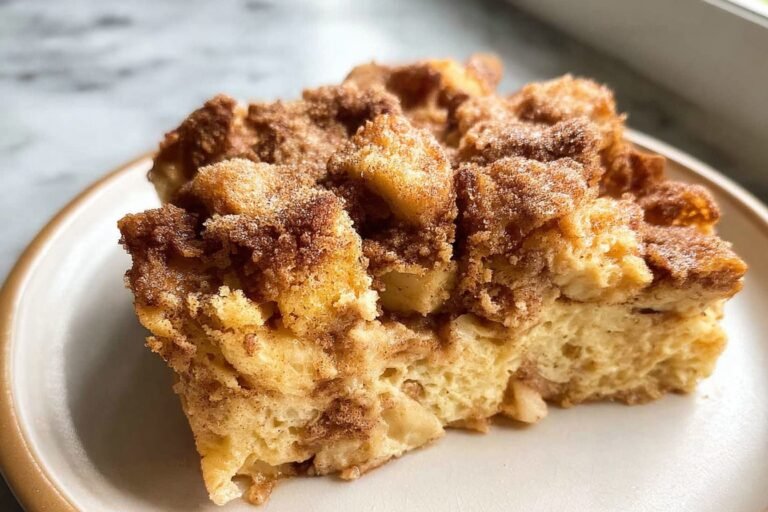
French Toast Casserole
🍞 Delicious make-ahead breakfast casserole with a caramelized brown sugar crust that’s perfect for busy mornings
- Total Time: 40 minutes (plus overnight chilling)
- Yield: 6-8 servings
Ingredients
– Half a loaf of French bread (about 8 oz)
– 1/2 cup butter for caramel
– 1 cup packed brown sugar for sweetening
– 6 eggs for custard
– 2 cups milk for thinning
– 2 teaspoons vanilla extract for flavor
– 2 teaspoons cinnamon for spice
– 1 tablespoon brown sugar for topping
– Powdered sugar for dusting
Instructions
1-Before you start: Preheat your oven and prepare your baking dish to avoid last-minute scrambling. Gather ingredients and measure everything so the assembly goes quickly.
2-First Step: Prep and preheat
Preheat oven to 425 degrees. Butter a 13×9 inch baking pan and set it aside so it’s ready when you need it. Cut half a loaf of French bread (about 8 oz) into 1-inch cubes if you haven’t already.
3-Second Step: Make the brown sugar-butter base
Melt 1/2 cup butter in a small saucepan over medium heat. Stir in 1 cup packed brown sugar until dissolved and smooth. Take the pan off heat briefly and pour this mixture into the bottom of the buttered 13×9 inch baking pan, spreading it evenly so the caramel layer covers the whole base.
4-Third Step: Layer the bread
Place the cubed French bread evenly over the brown sugar and butter mixture. Press lightly so the cubes make good contact with the caramel base this helps the bread soak up flavor from below as it bakes.
5-Fourth Step: Whisk the custard
In a medium bowl, whisk together 6 eggs, 2 cups milk, 2 teaspoons vanilla extract, and 1 teaspoon cinnamon until smooth and blended. Taste the custard and adjust if you’d like a touch more sweetness or spice.
6-Fifth Step: Combine and top
Pour the egg and milk mixture evenly over the bread cubes, making sure all pieces are saturated. Sprinkle the remaining 1 teaspoon cinnamon and 1 tablespoon brown sugar across the top for extra color and crunch.
7-Baking:
Bake the casserole at 425 degrees for 25 to 30 minutes until the top turns golden brown and the center is set. Oven times vary; the top should be puffed and lightly crisped. Allow the dish to rest for a few minutes after removing it from the oven so it firms up slightly for cleaner slices.
8-Final Step: Serve and garnish
Dust with powdered sugar if you like, slice into squares, and serve warm. Maple syrup, fresh berries, or a dollop of yogurt are lovely accompaniments. A simple green side dressed with the balsamic vinaigrette works well for a savory contrast.
Last Step:
Please leave a rating and comment letting us know how you liked this recipe! This helps our business to thrive and continue providing free, high-quality recipes for you.Notes
🍞 Use French bread for ideal flavor and texture – it should be dry and not too soft to soak up the sauce well
- Prep Time: 10 minutes
- Overnight refrigeration: 8 hours or overnight
- Cook Time: 30 minutes
- Category: Breakfast
- Method: Baked
- Cuisine: American
- Diet: Non-vegetarian
Nutrition
- Serving Size: 1 serving
- Calories: 382
- Sugar: 32g
- Sodium: 328mg
- Fat: 17g
- Saturated Fat: 9g
- Unsaturated Fat: 8g
- Trans Fat: 0g
- Carbohydrates: 48g
- Fiber: 2g
- Protein: 9g
- Cholesterol: 159mg