

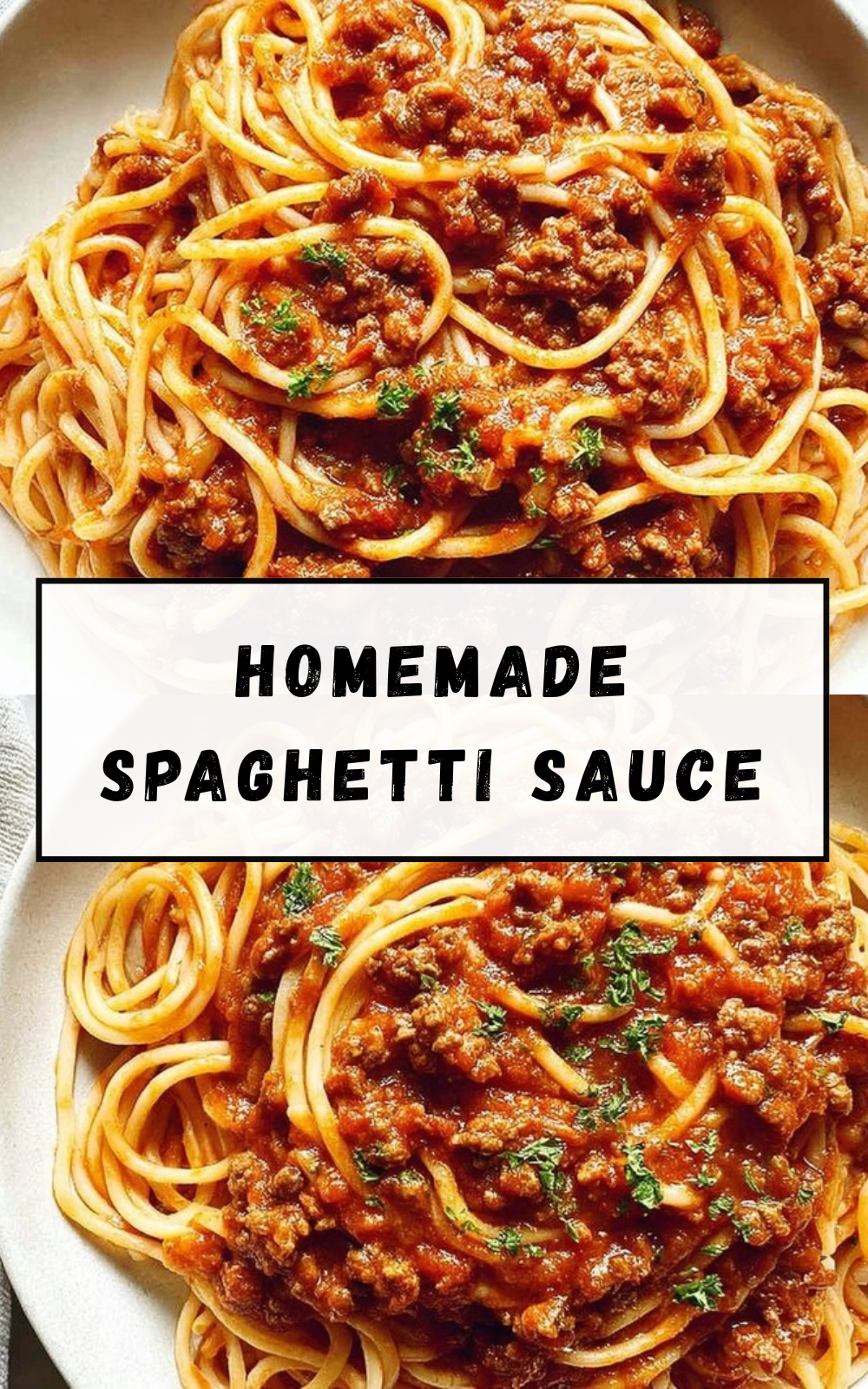
Why You’ll Love This Homemade Spaghetti Sauce
Author: Stella Romano
Blog: My blog shares my passion for cooking by offering a variety of recipes that are simple and accessible to everyone. My ambition is to inspire readers to explore new flavors, cook with joy, and create memorable moments around the table.
- Ease of preparation: This Homemade Spaghetti Sauce comes together in about 40 minutes with just a few pantry staples and minimal hands-on time. Brown the meat, stir in the tomato sauce and paste, and simmer. It is ideal for busy weeknights when you need a reliable, quick pasta sauce from scratch.
- Health benefits: Making your own spaghetti sauce means you control the salt, sugar, and fat. A serving of this homemade pasta sauce provides about 18 g of protein and 3 g of fiber, and you can easily make lighter versions for calories-conscious eaters by swapping lean ground beef or omitting meat.
- Versatility: The recipe adapts to many uses. This spaghetti sauce works on pasta, in lasagna, stuffed peppers, and meatball subs. It also adjusts easily for vegetarian, gluten-free, and low-calorie diets.
- Distinctive flavor: Combining tomato sauce and tomato paste with Worcestershire, parsley, Italian seasoning, and optional fresh basil creates a well-rounded, classic flavor profile that tastes like homemade comfort.
Make once, serve many ways: a pot of this Homemade Spaghetti Sauce is a weeknight lifesaver and a tasty base for many meals.
Essential Ingredients for Homemade Spaghetti Sauce
Main Ingredients
Below is a clear, structured list of every ingredient with the exact measurements used in this recipe. Each ingredient is shown on its own line so you can shop and prep quickly.
- 1 pound ground beef or 1/2 pound ground Italian sausage and 1/2 pound ground beef – provides the savory, meaty base and richness for the sauce
- Salt and pepper to taste – to season the meat and the finished sauce
- 1 medium onion, chopped – adds sweetness and aromatic depth when browned
- 15 ounces tomato sauce – the main tomato body of the sauce
- 6 ounces tomato paste – thickens and concentrates tomato flavor
- 1/2 teaspoon Italian seasoning – a balanced mix of dried herbs for classic Italian flavor
- 1 tablespoon parsley – adds an herbaceous note and color
- 1 teaspoon garlic powder – boosts savory flavor; use fresh garlic if preferred
- Crushed red pepper to taste – for optional heat and brightness
- 1 tablespoon Worcestershire sauce – deepens umami and adds complexity
- 1 tablespoon sugar – balances the tomatoes’ acidity
- 1 cup water – adjusts consistency and prevents sticking while simmering
- 1/4 cup chopped fresh basil (optional) – bright, fresh finish added just before serving
Special Dietary Options
- Vegan: Replace meat with 1 to 2 cups of chopped mushrooms and 1 cup cooked lentils or a plant-based ground substitute. Use a vegan Worcestershire or tamari.
- Gluten-free: Use gluten-free Worcestershire sauce and serve over gluten-free pasta. All other ingredients listed are naturally gluten-free.
- Low-calorie: Use 93% lean ground beef or omit the meat and increase vegetables. Skip the sugar or use a small amount of grated carrot to add natural sweetness.
How to Prepare the Perfect Homemade Spaghetti Sauce: Step-by-Step Guide
Mise en place
First Step: Gather and measure all ingredients before you start. Chop 1 medium onion and, if using, chop 1/4 cup fresh basil. If you choose the meat option, decide whether you will use 1 pound ground beef or the mix of 1/2 pound ground Italian sausage and 1/2 pound ground beef. Pre-measure 15 ounces tomato sauce, 6 ounces tomato paste, 1 cup water, and the seasonings.
Cooking the meat and aromatics
Second Step: Season the ground beef with salt and pepper. Heat a large skillet over medium-high heat. Add the seasoned ground beef (or sausage/beef mix) and the chopped onion. Brown, breaking the meat into smaller pieces as it cooks, until the meat is no longer pink and the onions are softened, about 6 to 8 minutes. Drain excess grease to keep the sauce from becoming greasy and to control fat content.
Building the sauce
Third Step: Return the skillet to medium heat. Add 15 ounces tomato sauce and 6 ounces tomato paste straight to the pan. Stir to combine so the paste dissolves into the sauce. Sprinkle in 1/2 teaspoon Italian seasoning, 1 tablespoon parsley, 1 teaspoon garlic powder, and crushed red pepper to taste. Add 1 tablespoon Worcestershire sauce and 1 tablespoon sugar. Stir well to mix all the flavors together, and bring to a gentle boil. This is the point to taste and adjust salt and pepper.
Adjusting consistency and simmering
Fourth Step: Add 1 cup water and stir again. Reduce the heat to low so the sauce maintains a gentle simmer. Cover partially or leave the lid slightly ajar to allow steam to escape and the sauce to thicken. Simmer for 30 minutes as directed in the original recipe; for a richer flavor, simmer longer up to 1 hour or more stirring occasionally. If the sauce becomes too thick, add a few tablespoons of water while simmering.
Finishing touches
Final Step: Remove from heat and stir in 1/4 cup chopped fresh basil if desired. Taste one more time and adjust with salt, pepper, or a pinch more sugar if the tomatoes taste too acidic. Serve hot over cooked spaghetti or your pasta of choice.
Timing, temperature, and handiness tips
- Prep time: 10 minutes. Cook time: 30 minutes. Total time: 40 minutes.
- Simmer on low heat; you want small bubbles, not a rolling boil. This prevents burning and yields a more even flavor.
- If you want a smoother sauce, finely chop the cooked meat or pulse it in a food processor before adding tomato ingredients.
Adapting steps for dietary needs
If you are making a vegetarian or vegan version, skip the meat browning steps and sauté extra vegetables (mushrooms, bell peppers, zucchini) until softened, then proceed with sauce building. For a gluten-free adaptation, simply use gluten-free Worcestershire sauce as noted.

Dietary Substitutions to Customize Your Homemade Spaghetti Sauce
Protein and Main Component Alternatives
Swap ground beef with these options depending on taste and dietary needs:
- Ground turkey or chicken for a leaner, lower-fat sauce.
- ½ pound ground Italian sausage and ½ pound ground beef for a more flavorful, slightly spicier version.
- Plant-based ground crumbles or cooked lentils for vegetarian or vegan protein that hold up well in the sauce.
- Bulk up with cooked mushrooms or eggplant if you want meaty texture without meat.
Vegetable, Sauce, and Seasoning Modifications
Easy swaps to change texture and flavor:
- Add diced bell peppers, sliced mushrooms, or shredded carrots to increase vegetables and natural sweetness.
- Use San Marzano tomatoes or canned crushed tomatoes instead of tomato sauce; if you do, you may want to blend for smoothness and add a bit more water.
- Replace 1 cup water with red wine or low-sodium beef broth for deeper flavor. Add wine early and let it reduce for a few minutes before adding tomatoes.
- Fresh garlic can replace garlic powder for a brighter flavor; add when you brown the onions to avoid burning.
Mastering Homemade Spaghetti Sauce: Advanced Tips and Variations
Pro cooking techniques
To reach restaurant-quality depth in your Homemade Spaghetti Sauce, try these techniques:
- Brown the meat in batches to avoid steaming; better browning equals richer flavor.
- Deglaze the pan with a splash of red wine or broth after browning to lift the browned bits and add complexity.
- Cook low and slow if you have time. A longer simmer develops umami and mellows acidity.
Flavor variations
Try these variations to keep the sauce interesting:
- Spicy sausage and fennel: Use Italian sausage with fennel seeds and add extra crushed red pepper for heat.
- Mushroom and wine: Add sautéed creminis and 1/2 cup red wine for an earthy, savory profile.
- Fresh tomato summer sauce: Use ripe tomatoes, peel and seed them, simmer longer to concentrate flavor, and finish with lots of fresh basil.
Presentation tips
Small touches make the dish feel special:
- Serve over just-cooked spaghetti with a sprinkle of grated Parmesan and torn basil leaves.
- For family-style serving, keep sauce warm in a covered pot on the lowest heat setting or in a slow cooker on warm.
Make-ahead options
Plan ahead with these strategies:
- Refrigerate sauce in an airtight container for 3 to 4 days.
- Freeze in labeled freezer bags laid flat for 4 to 6 months; thaw overnight in the fridge before reheating.
- Prepare the sauce a day ahead; flavors meld and often taste better the next day.
Serving idea: Pair this hearty sauce with a light dessert for a complete meal. Try a summer berry trifle for a refreshing finish (berry trifle recipe) or a fun fruit pizza for a family-friendly dessert (fruit pizza recipe).
How to Store Homemade Spaghetti Sauce: Best Practices
Refrigeration
Short-term storage: Cool the sauce to room temperature for no more than 2 hours, transfer to airtight containers, and store in the refrigerator for 3 to 4 days. Reheat on the stove until warmed through.
Freezing
Long-term storage: This Homemade Spaghetti Sauce freezes very well for up to 4 to 6 months. Cool completely, portion into freezer-safe bags or containers, remove excess air, flatten bags for quick thawing, and label with the date. To thaw, move to the refrigerator overnight or submerge sealed bags in cold water for faster thawing.
Reheating
Best practice: Reheat frozen or refrigerated sauce in a saucepan over medium heat until bubbling and steaming, stirring occasionally. Heat to an internal temperature of 165°F for food safety. Avoid microwave reheating for large batches; the stovetop gives more consistent results.
Meal prep considerations
For batch cooking, portion into family-sized and single-serving containers so you can thaw only what you need. This saves time and reduces food waste.
For related nutrition details, see this reference: ‘+ $(‘AI Agent’).item.json.output.Anchor2 +’ , External link 2: https://www.nutritionvalue.org/Spaghetti_sauce_74404010_nutritional_value.html
FAQs: Frequently Asked Questions About Homemade Spaghetti Sauce
What’s the difference between spaghetti sauce, marinara sauce, and pizza sauce?
Spaghetti sauce, marinara sauce, and pizza sauce all start with tomatoes but differ in preparation and use. Marinara is a simple, meatless sauce simmered with tomatoes, garlic, onions, and herbs like basil and oregano—ready in 30-45 minutes. Spaghetti sauce builds on marinara by adding ground meat (like beef or Italian sausage), vegetables (bell peppers, mushrooms), wine, or cheese for richer flavor, often simmering 1-2 hours. Pizza sauce is uncooked or lightly cooked, thinner, with minimal seasoning to avoid sogginess during baking; it’s spread raw on dough and bakes in 10-15 minutes. Use marinara for quick pasta, hearty spaghetti sauce for family meals, and pizza sauce for pies. Swap them based on time and taste—test small batches to match your recipe. (98 words)
Can you freeze homemade spaghetti sauce and how long does it last?
Yes, homemade spaghetti sauce freezes well for up to 4-6 months, saving time for weeknight dinners. Cool the sauce completely to room temperature (about 2 hours) to prevent condensation and ice crystals. Portion into freezer-safe bags or containers, squeeze out air, flatten bags for quick thawing, and label with the date. Freeze flat in the freezer. To thaw, place in the fridge overnight or submerge in cold water for 1-2 hours; reheat on the stovetop over medium heat, stirring until bubbling (165°F internal temp). In the fridge, it lasts 3-5 days in an airtight container. Avoid refreezing thawed sauce to maintain texture and safety. This method keeps flavor fresh—perfect for batch cooking. (112 words)
How do you make homemade spaghetti sauce smooth?
For ultra-smooth homemade spaghetti sauce, blend after cooking. Brown 1 lb ground beef or sausage with onions and garlic, drain fat, then add 28 oz crushed tomatoes, tomato paste, herbs, and simmer 1-2 hours. Cool slightly, then use an immersion blender directly in the pot for 30-60 seconds until velvety—no chunks. Or transfer to a standard blender in batches (vent lid to avoid splatters), pulse 2-3 times. For meaty sauce, finely chop cooked meat first or blend separately. Strain through a fine mesh sieve for restaurant-quality silkiness, discarding solids. Skip if you like texture. This takes 5 minutes extra but elevates pasta dishes. Adjust salt after blending to avoid over-seasoning. Yields 4-6 cups. (118 words)
What ingredients do I need for easy homemade spaghetti sauce?
Basic homemade spaghetti sauce uses pantry staples: 1 lb ground beef or Italian sausage, 1 chopped onion, 3 minced garlic cloves, 28 oz crushed tomatoes, 6 oz tomato paste, 1/2 cup water or red wine, 2 tsp each dried oregano and basil, 1 tsp sugar (to balance acidity), salt, pepper, and optional red pepper flakes. Brown meat with onion and garlic (5-7 minutes), add rest, simmer covered 45-60 minutes, stirring occasionally. Fresh basil or grated Parmesan at end boosts flavor. For meatless, skip meat and add mushrooms or zucchini. Use San Marzano tomatoes for best taste. Scales to 4-6 servings; doubles easily. Simmer low for depth—total time 1 hour. (104 words)
How long should you simmer homemade spaghetti sauce?
Simmer homemade spaghetti sauce 45 minutes to 2 hours for best flavor melding and thickness. Start after browning meat and veggies: medium-low heat, partially covered, stirring every 15 minutes. At 45 minutes, it’s ready for quick meals; 1-2 hours develops deeper umami as tomatoes break down. Add water or broth if too thick. Test doneness by tasting—adjust sugar, salt, or herbs. Longer simmers (up to 4 hours on low) suit meaty versions; use a slow cooker for hands-off. Fresh tomatoes need 1.5-2 hours extra to reduce wateriness. This builds natural sweetness without burning. Cool before storing; reheats perfectly. Pro tip: wine or balsamic vinegar in first 10 minutes adds complexity. (112 words)
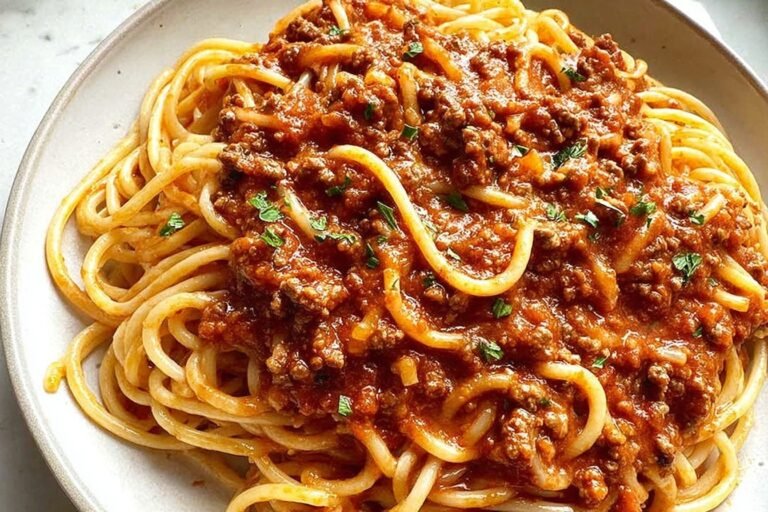
Homemade Spaghetti Sauce
🍝 Rich, homemade spaghetti sauce that’s far superior to jarred versions and ready in under an hour
🍅 Easy from-scratch recipe with perfectly balanced Italian herbs and seasonings the whole family will love
- Total Time: 40 minutes
- Yield: 6 servings 1x
Ingredients
1 pound ground beef or 1/2 pound ground Italian sausage and 1/2 pound ground beef for savory, meaty base and richness
Salt and pepper to taste for seasoning
1 medium onion, chopped for sweetness and aromatic depth
15 ounces tomato sauce for main tomato body
6 ounces tomato paste for thickening and concentrating tomato flavor
1/2 teaspoon Italian seasoning for classic Italian flavor
1 tablespoon parsley for herbaceous note and color
1 teaspoon garlic powder for boosting savory flavor
Crushed red pepper to taste for optional heat and brightness
1 tablespoon Worcestershire sauce for deepening umami and adding complexity
1 tablespoon sugar for balancing acidity
1 cup water for adjusting consistency
1/4 cup chopped fresh basil for bright, fresh finish
Instructions
1-First Step: Gather and measure all ingredients before you start. Chop 1 medium onion and, if using, chop 1/4 cup fresh basil. If you choose the meat option, decide whether you will use 1 pound ground beef or the mix of 1/2 pound ground Italian sausage and 1/2 pound ground beef. Pre-measure 15 ounces tomato sauce, 6 ounces tomato paste, 1 cup water, and the seasonings.
2-Second Step: Season the ground beef with salt and pepper. Heat a large skillet over medium-high heat. Add the seasoned ground beef (or sausage/beef mix) and the chopped onion. Brown, breaking the meat into smaller pieces as it cooks, until the meat is no longer pink and the onions are softened, about 6 to 8 minutes. Drain excess grease to keep the sauce from becoming greasy and to control fat content.
3-Third Step: Return the skillet to medium heat. Add 15 ounces tomato sauce and 6 ounces tomato paste straight to the pan. Stir to combine so the paste dissolves into the sauce. Sprinkle in 1/2 teaspoon Italian seasoning, 1 tablespoon parsley, 1 teaspoon garlic powder, and crushed red pepper to taste. Add 1 tablespoon Worcestershire sauce and 1 tablespoon sugar. Stir well to mix all the flavors together, and bring to a gentle boil. This is the point to taste and adjust salt and pepper.
4-Fourth Step: Add 1 cup water and stir again. Reduce the heat to low so the sauce maintains a gentle simmer. Cover partially or leave the lid slightly ajar to allow steam to escape and the sauce to thicken. Simmer for 30 minutes as directed in the original recipe; for a richer flavor, simmer longer up to 1 hour or more stirring occasionally. If the sauce becomes too thick, add a few tablespoons of water while simmering.
5-Final Step: Remove from heat and stir in 1/4 cup chopped fresh basil if desired. Taste one more time and adjust with salt, pepper, or a pinch more sugar if the tomatoes taste too acidic. Serve hot over cooked spaghetti or your pasta of choice.
Last Step:
Please leave a rating and comment letting us know how you liked this recipe! This helps our business to thrive and continue providing free, high-quality recipes for you.Notes
⏰ The longer the sauce simmers, the more the flavors meld together for richer taste
🧊 Store sauce in the fridge for 3 to 4 days or freeze for up to 4 to 6 months
🥄 For a smooth texture, finely chop the cooked ground beef or pulse briefly in a food processor
- Prep Time: 10 minutes
- Cook Time: 30 minutes
- Category: Sauce
- Method: Stovetop
- Cuisine: Italian
- Diet: Non-Vegetarian
Nutrition
- Serving Size: 1 cup
- Calories: 303
- Sugar: 11g
- Sodium: 814mg
- Fat: 18g
- Saturated Fat: 7g
- Unsaturated Fat: 11g
- Trans Fat: 0g
- Carbohydrates: 16g
- Fiber: 3g
- Protein: 18g
- Cholesterol: 64mg