
Why You’ll Love This Orange Julius
Author: Stella Romano
My blog shares my passion for cooking by offering a variety of recipes that are simple and accessible to everyone. My ambition is to inspire readers to explore new flavors, cook with joy, and create memorable moments around the table.
The Orange Julius is a classic American fruit drink known for its frothy, creamy texture. The signature beverage is made from a mixture of ice, orange juice, sweetener, milk, powdered egg whites, and flavoring. The original recipe was created in 1929 to reduce the acidity of orange juice and make it gentler on the stomach while adding a unique creamy froth. This section summarizes the primary reasons home cooks return to this recipe.
- Ease of preparation: Ready in under 5 minutes, the Orange Julius requires only a blender and simple pantry ingredients. Quick mise en place and a single blending step make it suitable for busy mornings, quick snacks, or impromptu entertaining.
- Health benefits: The drink supplies vitamin C from orange juice and protein from milk and powdered egg whites. Natural sugars in the juice provide quick energy; the overall calorie level depends on milk and sweetener choices, allowing moderate-calorie customization.
- Versatility: The base formula adapts to dietary needs: swap dairy for plant milk, powdered egg whites for aquafaba for vegan versions, or reduce sweetener for lower-calorie variants. It pairs with breakfast or stands alone as a refreshing treat.
- Distinctive flavor: The mix of orange juice with a creamy, frothy body and subtle flavoring creates a balanced beverage that is lighter and airier than a milkshake, making it a nostalgic mall staple and a modern homemade favorite.
For a science-backed look at orange juice benefits, see this external resource: + $(‘AI Agent’).item.json.output.Anchor1 +’.
Essential Ingredients for Orange Julius
This section lists the ingredients identified in historical and popular Orange Julius recipes. Each ingredient below is shown with quantities pulled from the recipe variations noted in source material and common home versions. The list is presented in structured form for clarity.
Main Ingredients
- 1 cup orange juice – Provides the signature citrus base and vitamin C.
- 1 cup ice – Chills the drink and contributes to the frothy texture when blended.
- 1/2 cup milk – Adds creaminess and body; can be substituted (see special dietary options).
- 1/4 cup powdered sugar – Acts as the sweetener in one common home variation.
- 1 egg white (or substitute) – Contributes to natural froth and light texture in some home recipes.
- 1 tablespoon powdered egg whites (reconstituted to equal 1 egg white) – Traditional commercial recipes often use powdered egg whites for stable froth; reconstitute according to package instructions.
- 6 oz frozen orange juice concentrate – Used in the copycat mall-style variant to intensify orange flavor.
- 1/2 cup water – Dilutes frozen concentrate to balanced sweetness and acidity in some copycat recipes.
- 1/4 cup sugar – Alternative sweetener measurement used with orange concentrate recipes.
- 1/4 cup powdered sugar – Alternative wording for sweetener; powdered form dissolves quickly in cold blends.
- 1/2 teaspoon vanilla extract (flavoring) – Common flavoring to round out citrus notes; optional.
Special Dietary Options
- Vegan: Replace 1 cup milk with 1 cup almond milk or oat milk; substitute 1 tablespoon powdered egg whites with 2 tablespoons aquafaba (chickpea liquid) or 1 tablespoon plant-based egg replacer reconstituted as directed.
- Gluten-free: All core ingredients listed are naturally gluten-free; confirm powdered flavorings and powdered egg whites are certified gluten-free if sensitivity is a concern.
- Low-calorie: Use water or unsweetened almond milk in place of dairy milk, and replace sugar with 2 tablespoons of a non-caloric sweetener like stevia or erythritol, adjusting to taste.
How to Prepare the Perfect Orange Julius: Step-by-Step Guide
Preparation is quick, typically under 5 minutes when blending ingredients together. Below are two practical recipe variants and detailed steps for each to ensure a consistent, frothy result.
Quick Home Version (Single-serve)
First Step: Gather and measure ingredients.
- 1 cup orange juice
- 1/2 cup milk
- 1/4 cup powdered sugar
- 1 egg white (or reconstituted 1 tablespoon powdered egg whites)
- 1 cup ice
Second Step: Prepare the blender and ingredients.
- Place the blender on a stable surface and ensure the blade assembly is secure.
- If using powdered egg whites, reconstitute according to package directions; if using an egg white, separate carefully and ensure freshness.
Third Step: Blend for texture and temperature.
- Add the orange juice, milk, powdered sugar, egg white or reconstituted powdered egg, and ice to the blender pitcher.
- Blend on high for 30 to 60 seconds until the mixture is smooth and frothy. Pause to scrape down sides if necessary.
Fourth Step: Check consistency and adjust.
- Assess sweetness and texture. Add more powdered sugar or sweetener by teaspoons if desired; blend briefly after any addition.
- If the drink is too thick, add 1 to 2 tablespoons of water or additional orange juice and blend again for 10 seconds.
Final Step: Serve immediately.
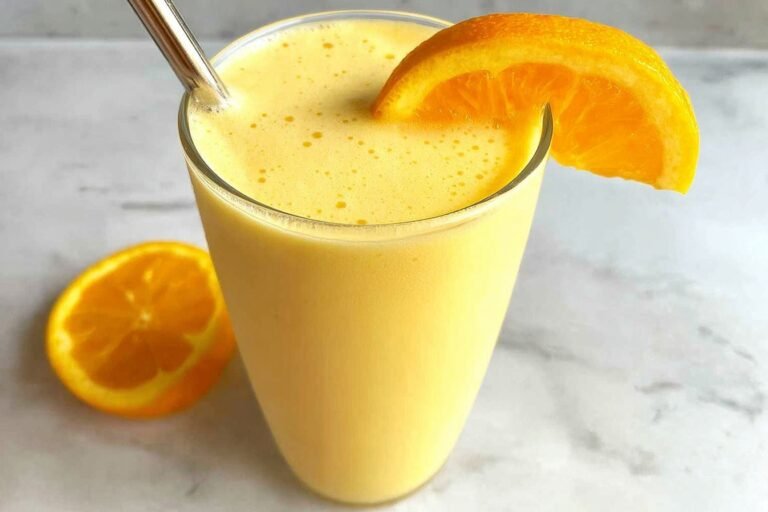
- Pour into a chilled glass and garnish with a thin orange wheel or a dusting of powdered sugar. Serve cold for best froth and flavor.
Authentic Mall Copycat Version (Serves 2)
First Step: Gather measured ingredients.
- 6 oz frozen orange juice concentrate
- 1 cup milk
- 1/2 cup water
- 1/4 cup sugar
- 1 to 1 1/2 cups ice, depending on desired thickness
- 1 tablespoon powdered egg whites (reconstituted) for froth
Second Step: Combine base liquids.
- Place the frozen concentrate, milk, and water in the blender. If using reconstituted powdered egg whites, add them now.
Third Step: Sweeten and chill.
- Add the sugar and then top with ice. For maximum froth, use a high-speed blender and add ice last so blades can shear air into the mix.
Fourth Step: Blend methodically.
- Start on low speed to break up ice, then ramp to high for 30 to 90 seconds until the mixture is smooth and thick with a mousse-like froth.
- Use short pulses to incorporate more air if needed, but avoid over-blending which can warm the drink.
Final Step: Taste and present.
- Taste and adjust sweetness or dilution. Serve immediately in tall glasses. For a signature look, present with a paper straw and a small orange wedge on the rim.
Technique Notes and Timing
- Blending time is the key variable: most home blenders produce the ideal froth in under 90 seconds.
- Keep ingredients cold to preserve froth; pre-chill glassware when possible.
- Powdered egg whites produce a more stable, longer-lasting foam than raw egg whites and are the historic commercial choice.
Protein and Main Component Alternatives
This section presents substitutions for the main protein and core ingredients for dietary preferences and availability. Two subsections organize options for proteins and main liquid components.
Protein Substitutions
Milk proteins and powdered egg whites supply structure and a creamy mouthfeel. Consider these alternatives:
- Powdered egg whites: If unavailable, a fresh egg white is a direct substitute in home recipes; for vegan diets use 2 tablespoons aquafaba in place of 1 egg white to approximate foam and body.
- Dairy milk: Replace with unsweetened almond milk, soy milk, or oat milk for lactose-free or plant-based variations. Soy milk provides a protein profile closer to dairy for a fuller mouthfeel.
- Protein-enriched options: For extra protein, add 1 scoop of neutral-flavored whey or plant protein powder; blend with 1 to 2 tablespoons additional liquid to avoid thickening too much.
Main Component Alternatives
Adjust the primary citrus and sweetening agents to modify flavor and nutrition.
- Orange juice concentrate: Use fresh-squeezed orange juice for a brighter, fresher taste; use 1 cup fresh juice in place of 6 oz concentrate plus water, but expect a thinner texture.
- Sweeteners: Swap cane sugar or powdered sugar for honey, maple syrup, or a zero-calorie sweetener. If using liquid sweeteners, reduce the added water or milk slightly to maintain texture.
- Flavorings: Vanilla extract, a pinch of ground ginger, or a tiny amount of almond extract can round the citrus and work as subtle variations without compromising the classic profile.
Vegetable, Sauce, and Seasoning Modifications
Although the Orange Julius is a fruit-based beverage, seasonal produce and creative additions can broaden its flavor range. The following subsections outline vegetable pairings, sauce-like add-ins, and seasoning choices to suit taste or occasion.
Vegetable Pairings and Additions
Vegetables are not typical in the classic formula, but mild, sweet vegetables can be incorporated sparingly for nutrition:
- Carrot: Add 1/4 cup lightly steamed and cooled carrot for an orange-hued boost of beta-carotene; blends well with orange without altering sweetness markedly.
- Sweet potato: Use 2 tablespoons of cooked, mashed sweet potato for a thicker, autumnal variation; increase milk slightly to maintain blendability.
- Beet: A very small amount (1 tablespoon cooked beet) adds color and earthiness but will change the citrus profile; use cautiously.
Sauces and Syrups
Sauces can add complexity or themed flavor profiles:
- Caramel sauce: 1 tablespoon for a creamsicle-meets-candy note; increases sweetness and richness.
- Honey or maple syrup: Use 1 tablespoon as a natural sweetener and flavor layer; warm slightly if using real honey to thin it for faster blending.
- Fruit purees: Strawberry or pineapple purees (2 tablespoons) can produce flavored variants commonly offered at treat centers.
Seasoning Choices
Seasonings should be subtle to preserve the drink’s clean citrus profile.
- Pinch of cinnamon for warmth in fall variations.
- Small pinch of salt to round out flavors and enhance perceived sweetness.
- Touch of grated fresh ginger for a spicy lift that contrasts citrus.
Mastering Orange Julius: Advanced Tips and Variations
Below are pro techniques and creative ideas to refine texture, expand flavors, and prepare ahead for busy schedules. This section is divided to help readers adopt specific methods and experiment with new versions safely.
Pro cooking techniques
- Layered blending: Start by blending liquid, powdered egg whites, and sweetener first, then add ice in batches. This prevents ice chunks and yields a silkier froth.
- Cold blades and cold pitcher: Chill your blender pitcher and blades briefly in the freezer; colder equipment helps maintain froth and prevents premature melting.
- High-shear blending: Use a high-speed blender or an immersion blender in a deep beaker to entrain more air for a denser foam.
Flavor variations
- Strawberry-Orange Julius: Add 2 tablespoons strawberry puree for a fruit-forward variant commonly offered in mall chains.
- Pineapple-Orange Julius: Replace 2 to 3 tablespoons of orange juice with pineapple juice for a tropical twist.
- Vanilla creamsicle: Increase vanilla to 3/4 teaspoon and reduce sugar by 1 tablespoon for a creamsicle-like profile.
Presentation tips
- Serve in tall chilled glasses to showcase foam height and texture.
- Garnish with a thin orange wheel or twist to highlight the citrus base.
- Use clear glasses for visual appeal; layered fruit purees create attractive color bands.
Make-ahead options
- Pre-measure dry mixes (sugar and powdered egg whites) into single-serve packets; combine with fresh liquid and ice when ready to blend.
- Do not pre-blend the full recipe for long storage; froth dissipates quickly. Prepare components and blend at service time for optimal texture.
Tip: Using powdered egg whites is key to achieving the iconic frothy and creamy texture; it creates a stable foam that lasts longer than fresh egg whites.
How to Store Orange Julius: Best Practices
Because the Orange Julius is best served fresh, storage recommendations focus on short-term retention of texture and safe handling. Below are clear methods for refrigeration, freezing, reheating, and meal prep.
Refrigeration
- Store leftover blended Orange Julius in an airtight container in the refrigerator for up to 24 hours. Expect loss of froth and some separation; stir vigorously or re-blend briefly before serving.
- If dairy and egg components are present, consume within 24 hours for food safety reasons.
Freezing
- Freeze components separately: concentrate, water, and sugar in a sealed container, and store milk alternatives separately. Blended finished drinks do not freeze well because ice crystals alter texture and foam structure.
- For longer storage, freeze orange segments or puree in ice cube trays, then combine with milk and powdered egg whites and blend at service time.
Reheating and recovery
- Do not reheat a fruit-based, dairy-and-egg drink. If chilled leftovers have separated, re-blend briefly to recover texture; do not heat.
Meal prep considerations
- Prep dry mixes (sugar and powdered egg whites) and measure liquids in labeled containers for quick assembly. Store dairy or plant-based milks cold until blending.

FAQs: Frequently Asked Questions About Orange Julius
What is Orange Julius and what is it known for?
Orange Julius is a chain famous for its signature frothy fruit drink, simply called an Orange Julius. The drink blends ice, sweetener, milk, powdered egg whites, and orange flavoring into a creamy, smoothie-like beverage that’s lighter and frothier than typical shakes. Created in the 1920s, it became a mall staple in the U.S. Today, you can find it at Dairy Queen locations or standalone stands. For a quick home version, mix 1 cup orange juice, 1/2 cup milk, 1/4 cup powdered sugar, 1 egg white (or substitute), and 1 cup ice in a blender until frothy. It’s a refreshing, nostalgic treat with about 280 calories per 16-oz serving, offering vitamin C from the juice. (92 words)
When and where was the first Orange Julius stand opened?
The first Orange Julius stand opened in 1926 on South Broadway in Downtown Los Angeles, California, by entrepreneur Julius Freed and his partner Bill Hamlin. Freed ran a small orange drink stand but struggled with low sales due to the acidity of fresh orange juice upsetting customers’ stomachs. Hamlin experimented in his lab to create a smoother version, leading to the iconic frothy drink. This innovation skyrocketed popularity, with lines forming daily. The stand’s success paved the way for franchising in the 1930s. Visit historical sites in LA or check Dairy Queen menus to experience the legacy today. (98 words)
How did the Orange Julius drink become so popular?
The Orange Julius drink gained massive popularity after Bill Hamlin refined Julius Freed’s original acidic orange juice stand drink in 1926. Hamlin’s key tweak was a special mixture of ice, milk, sweetener, powdered egg whites, and flavoring that neutralized stomach irritation while creating a thick, frothy, creamy texture. Sales exploded from a few cups daily to hundreds, drawing long lines. This formula turned it into a mall favorite by the 1960s-80s. Pro tip: Blend your own with 6 oz frozen orange juice concentrate, 1 cup milk, 1/2 cup water, 1/4 cup sugar, and ice for that authentic foam. (102 words)
Who owns Orange Julius today and where are its stores located?
Orange Julius is now a wholly owned subsidiary of Dairy Queen, acquired in 1987 and fully integrated by 2019. Most original standalone stores were in U.S. shopping malls, peaking at over 500 locations in the 1980s. Today, find Orange Julius drinks primarily at Dairy Queen restaurants nationwide and in select malls. Use the Dairy Queen app or website locator for nearby spots—many offer drive-thru. Internationally, stores remain in Asia like Hong Kong (since 1977), Singapore, South Korea, Philippines, and Japan. Check for seasonal returns or menu add-ons like strawberry or pineapple variants. (96 words)
Has Orange Julius expanded outside the US and what’s its history with mascots?
Yes, Orange Julius expanded internationally starting with Hong Kong in 1977, followed by Singapore, South Korea, the Philippines, and Japan. It briefly entered the UK and Netherlands in the early 1970s but focused on Asia long-term. Early marketing featured a devil mascot with a pitchfork and the slogan “A Devilish Good Drink,” which captured its fun vibe but was dropped after legal threats from a university alumni group. Now under Dairy Queen, it emphasizes family-friendly appeal. For fans abroad, search local Dairy Queen affiliates; stateside, pair with a Blizzard for a combo meal under 500 calories total. (98 words)
Orange Julius
Refreshing frothy orange drink with creamy texture that’s perfect for cooling down on hot days
- Total Time: 5 minutes
- Yield: 2 servings
Ingredients
– 1 cup orange juice for citrus base
– 1 cup ice for frothy texture
– 1/2 cup milk for creaminess and body
– 1/4 cup powdered sugar for sweetening
– 1 egg white for froth and texture
– 1 tablespoon powdered egg whites for stable froth
– 6 oz frozen orange juice concentrate for flavor
– 1/2 cup water for diluting concentrate
– 1/4 cup sugar for sweetening
– 1/4 cup powdered sugar for sweetening
– 1/2 teaspoon vanilla extract for flavoring
Instructions
1-First Step: Gather and measure ingredients.* 1 cup orange juice* 1/2 cup milk* 1/4 cup powdered sugar* 1 egg white (or reconstituted 1 tablespoon powdered egg whites)* 1 cup ice
2-Second Step: Prepare the blender and ingredients.* Place the blender on a stable surface and ensure the blade assembly is secure.* If using powdered egg whites, reconstitute according to package directions; if using an egg white, separate carefully and ensure freshness.
3-Third Step: Blend for texture and temperature.* Add the orange juice, milk, powdered sugar, egg white or reconstituted powdered egg, and ice to the blender pitcher.* Blend on high for 30 to 60 seconds until the mixture is smooth and frothy. Pause to scrape down sides if necessary.
4-Fourth Step: Check consistency and adjust.* Assess sweetness and texture. Add more powdered sugar or sweetener by teaspoons if desired; blend briefly after any addition.* If the drink is too thick, add 1 to 2 tablespoons of water or additional orange juice and blend again for 10 seconds.
5-Final Step: Serve immediately.* Pour into a chilled glass and garnish with a thin orange wheel or a dusting of powdered sugar. Serve cold for best froth and flavor.
6-First Step: Gather measured ingredients.* 6 oz frozen orange juice concentrate* 1 cup milk* 1/2 cup water* 1/4 cup sugar* 1 to 1 1/2 cups ice, depending on desired thickness* 1 tablespoon powdered egg whites (reconstituted) for froth
7-Second Step: Combine base liquids.* Place the frozen concentrate, milk, and water in the blender. If using reconstituted powdered egg whites, add them now.
8-Third Step: Sweeten and chill.* Add the sugar and then top with ice. For maximum froth, use a high-speed blender and add ice last so blades can shear air into the mix.
9-Fourth Step: Blend methodically.* Start on low speed to break up ice, then ramp to high for 30 to 90 seconds until the mixture is smooth and thick with a mousse-like froth.* Use short pulses to incorporate more air if needed, but avoid over-blending which can warm the drink.
10-Final Step: Taste and present.* Taste and adjust sweetness or dilution. Serve immediately in tall glasses. For a signature look, present with a paper straw and a small orange wedge on the rim.
Last Step:
Please leave a rating and comment letting us know how you liked this recipe! This helps our business to thrive and continue providing free, high-quality recipes for you.Notes
🥚 Using powdered egg whites is essential for achieving the signature frothy and creamy texture that makes this drink unique
- Prep Time: 5 minutes
- Cook Time: 0 minutes
- Category: Beverage
- Method: Blending
- Cuisine: American
- Diet: Vegetarian
Nutrition
- Serving Size: 1 cup
- Calories: 190
- Sugar: 28g
- Sodium: 50mg
- Fat: 1.5g
- Saturated Fat: 0.75g
- Unsaturated Fat: 0.75g
- Trans Fat: 0g
- Carbohydrates: 27g
- Fiber: 0.5g
- Protein: 3g
- Cholesterol: 5mg