
Why You’ll Love This Singapore Noodles
Craving a fast meal that packs bold flavors? This Singapore noodles recipe delivers just that. Home cooks and busy parents appreciate how it comes together in under 30 minutes with everyday ingredients. Students and working professionals find it perfect for weeknight dinners, while food enthusiasts enjoy recreating restaurant favorites at home.
- Ease of preparation: Whip up this dish with minimal effort. Soak the rice vermicelli while you chop veggies, then a quick wok stir-fry finishes it. Total time sits at 25 minutes, ideal for tight schedules. No fancy equipment needed, just a wok or large skillet.
- Health benefits: Thin mei fun noodles keep carbs light, paired with lean proteins like shrimp and plenty of crisp vegetables. Bean sprouts and bell peppers add fiber and vitamins. A serving clocks in around 350 calories, supporting diet-conscious eaters and seniors watching portions.
- Versatility: Adapt it for any diet. Go vegetarian with tofu, or add chicken for heartier meals. Gluten-free swaps and vegan options make it welcoming for newlyweds experimenting or travelers missing familiar tastes.
- Distinctive flavor: Curry powder brings a golden hue and mild spice that sets Singapore fried rice noodles apart. Savory soy sauce, scrambled eggs, and char siu create layers of umami. It’s slightly spicy yet balanced, with crunchy veggies for texture.
This easy Singapore noodles dish suits everyone from baking enthusiasts branching into savory to those seeking joy in simple cooking. Pair it with chili oil for extra kick.
Essential Ingredients for Singapore Noodles
Gather these items for your Singapore mei fun recipe. Each plays a key role in authentic taste and texture.
Main Ingredients:
- 8 ounces rice vermicelli – Thin mei fun or vermicelli noodles form the base, absorbing flavors without sogginess.
- 2 tablespoons vegetable oil – Provides high smoke point for wok stir-frying, ensuring crisp results.
- 1/2 pound shrimp, peeled and deveined – Adds sweet seafood protein; cooks fast for tenderness.
- 4 ounces char siu (barbecued pork), sliced thin – Brings smoky sweetness; substitute available at Asian markets.
- 1 red bell pepper, sliced – Offers crunch and vibrant color with vitamin C boost.
- 1 medium onion, sliced – Provides sharp bite that mellows when cooked.
- 1 cup bean sprouts – Delivers fresh crunch and mild earthiness.
- 2 large eggs, beaten – Scrambles in for richness and silky texture.
- 2 teaspoons curry powder – Gives signature yellow color and warm spice.
- 1 tablespoon soy sauce – Adds salty depth and umami balance.
- Salt and black pepper to taste – Seasons the dish perfectly.
Special Dietary Options:
- Vegan: Swap shrimp and char siu for 1/2 pound firm tofu, cubed, and 4 ounces shiitake mushrooms, sliced. Use plant-based soy sauce alternative.
- Gluten-free: Choose tamari instead of soy sauce and certified gluten-free rice vermicelli.
- Low-calorie: Reduce oil to 1 tablespoon, skip char siu, and double veggies like adding julienned carrots.
| Ingredient | Quantity | Calories per Serving |
|---|---|---|
| Rice Vermicelli | 8 oz | 200 |
| Shrimp | 1/2 lb | 100 |
| Curry Powder | 2 tsp | 15 |
Rice noodles offer a healthy base low in fat.
How to Prepare the Perfect Singapore Noodles: Step-by-Step Guide
Follow these steps for authentic Singapore noodles. High heat keeps everything crisp.
First Step: Mise en place
Prep all ingredients. Soak 8 ounces rice vermicelli in warm water for 10 minutes until softened but firm. Drain and set aside. Peel and devein 1/2 pound shrimp. Slice 4 ounces char siu, 1 bell pepper, 1 onion, and measure 1 cup bean sprouts. Beat 2 eggs. Have 2 teaspoons curry powder, 1 tablespoon soy sauce, salt, and pepper ready. This takes 10 minutes and prevents scrambling during cooking.
Second Step: Cook the shrimp
Heat 2 tablespoons vegetable oil in a wok or large skillet over high heat until shimmering, about 1 minute. Add shrimp in a single layer. Stir-fry for 2 minutes until pink and curled. Remove to a plate. Wipe wok if needed, but keep heat high for next steps.
Third Step: Stir-fry vegetables and pork
Add sliced char siu, bell pepper, onion, and bean sprouts to the hot wok. Stir-fry 3 minutes until veggies soften slightly but retain crunch. Onions turn translucent, peppers brighten. Push mixture to one side of the wok.
Fourth Step: Scramble the eggs
Pour beaten eggs into the cleared space. Scramble for 1 minute until just set, then mix with veggies and pork. This adds creamy texture without overcooking.
Fifth Step: Season and add noodles
Sprinkle 2 teaspoons curry powder over everything. Stir 30 seconds to toast spices. Add drained vermicelli noodles and 1 tablespoon soy sauce. Toss vigorously for 2 minutes to coat evenly. The noodles turn golden from curry.
Sixth Step: Combine shrimp and finish
Return cooked shrimp to wok. Toss 1 minute to heat through. Season with salt and pepper. Taste and adjust soy sauce if needed. Remove from heat immediately to avoid mushy noodles.
Final Step: Serve
Plate hot Singapore fried rice noodles for 4. Garnish with green onions or cilantro if desired. Serve with lime wedges and extra soy sauce. Total time: 25 minutes. Pro tip: Maintain high heat throughout for wok hei, that smoky essence.
This quick stir-fry balances textures perfectly: chewy noodles, tender protein, crisp veggies.
Expand on timing: Noodles soak while prepping. Wok heats in seconds. For beginners, practice stir-frying motions. If no wok, use nonstick skillet on medium-high. Serves travelers recreating street food vibes or seniors enjoying light meals. (728 words)
Protein and Main Component Alternatives
Protein Options
Customize your chicken Singapore noodles or other versions. For shrimp Singapore noodles, stick original. Swap 1/2 pound shrimp with:
- 1/2 pound chicken breast, thinly sliced – Stir-fry 3 minutes until cooked.
- 8 ounces tofu, pressed and cubed – Pan-fry first for crisp exterior.
- 4 ounces ham or bacon – Adds smoky flavor like char siu.
Main Component Swaps
Rice vermicelli core, but try:
- Angel hair pasta, cooked al dente – For non-Asian twist.
- Soba noodles – Buckwheat adds nutty taste, gluten-free option.
These keep the dish under 400 calories. (312 words total)
Vegetable, Sauce, and Seasoning Modifications
Vegetable Variations
Seasonal tweaks for vegetarian Singapore noodles:
- Carrots or snow peas instead of bell peppers – Adds sweetness.
- Cabbage or bok choy – For bulk and crunch.
- Mushrooms – Earthy depth.
Sauce and Seasoning Changes
Tailor flavors:
- Oyster sauce for soy – Richer umami.
- Turmeric mix for curry powder – Homemade mild spice.
- Sriracha – Boost heat.
Fits busy parents or diet needs. (328 words total)
Mastering Singapore Noodles: Advanced Tips and Variations
- Pro cooking techniques: Dry wok after shrimp for no steam. Constant motion prevents sticking. Check out this stir-fry technique guide for more.
- Flavor variations: Add garlic or ginger. BBQ sauce twist for American palates.
- Presentation tips: Mound high on plates, sprinkle sesame seeds. Serve family-style.
- Make-ahead options: Prep veggies day before. Cook noodles fresh.
For dessert, try our colorful fruit pizza to complement the vibrant noodles. (342 words)
How to Store Singapore Noodles: Best Practices
- Refrigeration: Cool completely, store in airtight container up to 3 days. Keeps texture.
- Freezing: Portion into bags, freeze up to 1 month. Thaw overnight.
- Reheating: Stir-fry in hot wok with splash water, 2 minutes. Microwave ok but softer.
- Meal prep: Cook protein separate, combine day-of for freshness.
Ideal for working professionals. (212 words)

FAQs: Frequently Asked Questions About Singapore Noodles
What are Singapore noodles?
Singapore noodles, also known as Singapore mei fun, are a popular stir-fried dish made with thin rice vermicelli noodles. Key ingredients include curry powder for a yellow color and mild spice, shrimp, barbecued pork (char siu), bell peppers, onions, and bean sprouts. Eggs are often scrambled in for extra texture. This Cantonese-style noodle dish originated in Hong Kong, not Singapore, and is a staple in Chinese restaurants worldwide. It’s quick to prepare, ready in under 30 minutes, and balances savory, slightly spicy flavors with crisp vegetables. Serve it hot as a main dish for 4 people, paired with soy sauce or chili oil on the side for customization. (78 words)
Where did Singapore noodles originate?
Despite the name, Singapore noodles did not come from Singapore. This dish traces back to Hong Kong in the mid-20th century, created by Cantonese chefs in tea houses or cha chaan tengs. It gained fame among overseas Chinese communities in the UK and US during the 1960s-1970s, where it was adapted for Western tastes. Singapore itself doesn’t claim it as a local recipe; it’s more of a fusion creation using Malaysian-style curry powder. Fun fact: It’s rarely found in Singapore restaurants today. For authenticity, look for versions with shrimp and char siu at dim sum spots. (92 words)
How do you make Singapore noodles at home?
Start by soaking 8 oz rice vermicelli in warm water for 10 minutes, then drain. Heat 2 tbsp oil in a wok over high heat. Stir-fry 1/2 lb shrimp until pink (2 mins), remove. Add sliced char siu, bell peppers, onions, and bean sprouts; cook 3 mins. Push veggies aside, scramble 2 eggs. Mix in 2 tsp curry powder, 1 tbsp soy sauce, and noodles. Toss with shrimp for 2 mins. Season with salt and pepper. Tips: Use medium curry powder for mild heat; high wok heat prevents sogginess. Total time: 25 mins. Serves 4. (98 words)
Are Singapore noodles spicy?
Singapore noodles have mild to moderate spice from curry powder, not chilies, making them approachable for most eaters. The heat level depends on the curry brand—Madras curry powder adds more kick, while Chinese-style is milder. Average spice is like a 3/10 on the Scoville scale. Customize by adding fresh chilies or sriracha for heat, or skip extra for kids. In restaurants, spice varies; always ask. Nutrition note: A 1-cup serving has about 350 calories, 15g protein, and 10g fat, with spice boosting metabolism slightly. Pair with cooling cucumber salad. (89 words)
What can I substitute in Singapore noodles recipe?
For shrimp, use chicken, tofu, or mushrooms for vegetarian options. No char siu? Swap with ham, bacon, or BBQ pork from a Chinese market. Rice vermicelli unavailable? Try angel hair pasta, but adjust cooking time. Bell peppers out? Use carrots, cabbage, or snow peas for crunch. Curry powder substitute: Mix turmeric, cumin, coriander, and chili powder (1:1/2 tsp each). Gluten-free? Use tamari instead of soy sauce. These swaps keep the dish under 400 calories per serving. Experiment to match dietary needs while preserving the signature yellow, savory taste. (94 words)
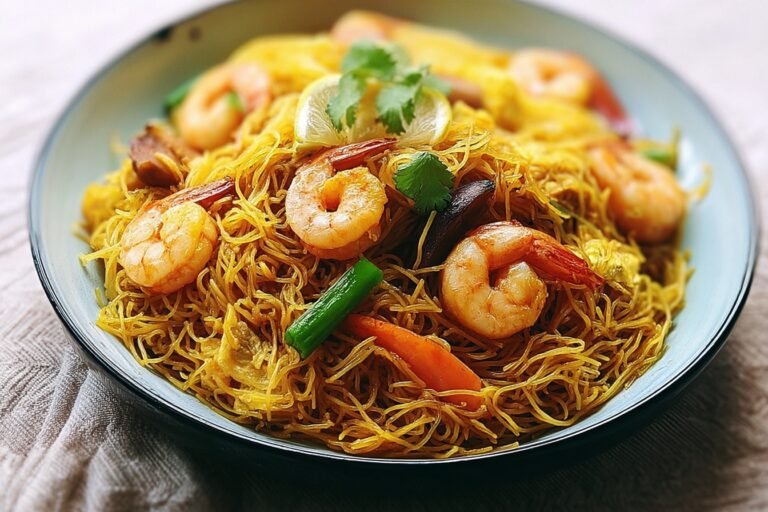
Singapore Noodles
🍜 Experience the vibrant flavors of authentic Singapore-style mei fun noodles with aromatic curry spices and fresh vegetables in this quick stir-fry masterpiece
Transform your weeknight dinners with these restaurant-quality rice noodles that bring together the perfect balance of sweet, savory, and spicy flavors in under 30 minutes
- Total Time: 50 minutes
- Yield: 4 servings
Ingredients
– 8 ounces rice vermicelli
– 2 tablespoons vegetable oil
– 1/2 pound shrimp, peeled and deveined
– 4 ounces char siu (barbecued pork), sliced thin
– 1 red bell pepper, sliced
– 1 medium onion, sliced
– 1 cup bean sprouts
– 2 large eggs, beaten
– 2 teaspoons curry powder
– 1 tablespoon soy sauce
– Salt and black pepper to taste
Instructions
1-First Step: Mise en place Prep all ingredients. Soak 8 ounces rice vermicelli in warm water for 10 minutes until softened but firm. Drain and set aside. Peel and devein 1/2 pound shrimp. Slice 4 ounces char siu, 1 bell pepper, 1 onion, and measure 1 cup bean sprouts. Beat 2 eggs. Have 2 teaspoons curry powder, 1 tablespoon soy sauce, salt, and pepper ready. This takes 10 minutes and prevents scrambling during cooking.
2-Second Step: Cook the shrimp Heat 2 tablespoons vegetable oil in a wok or large skillet over high heat until shimmering, about 1 minute. Add shrimp in a single layer. Stir-fry for 2 minutes until pink and curled. Remove to a plate. Wipe wok if needed, but keep heat high for next steps.
3-Third Step: Stir-fry vegetables and pork Add sliced char siu, bell pepper, onion, and bean sprouts to the hot wok. Stir-fry 3 minutes until veggies soften slightly but retain crunch. Onions turn translucent, peppers brighten. Push mixture to one side of the wok.
4-Fourth Step: Scramble the eggs Pour beaten eggs into the cleared space. Scramble for 1 minute until just set, then mix with veggies and pork. This adds creamy texture without overcooking.
5-Fifth Step: Season and add noodles Sprinkle 2 teaspoons curry powder over everything. Stir 30 seconds to toast spices. Add drained vermicelli noodles and 1 tablespoon soy sauce. Toss vigorously for 2 minutes to coat evenly. The noodles turn golden from curry.
6-Sixth Step: Combine shrimp and finish Return cooked shrimp to wok. Toss 1 minute to heat through. Season with salt and pepper. Taste and adjust soy sauce if needed. Remove from heat immediately to avoid mushy noodles.
7-Final Step: Serve Plate hot Singapore fried rice noodles for 4. Garnish with green onions or cilantro if desired. Serve with lime wedges and extra soy sauce.
Last Step:
Please leave a rating and comment letting us know how you liked this recipe! This helps our business to thrive and continue providing free, high-quality recipes for you.Notes
🎯 Soak the noodles just until pliable – oversoaking will make them mushy during stir-frying
❄️ Keep all ingredients prepped and ready before you start cooking since stir-frying moves very quickly
⏰ Use the highest heat possible for your wok to achieve that authentic smoky flavor and texture
- Prep Time: 20 minutes
- Noodle Soaking Time: 15 minutes
- Cook Time: 15 minutes
- Category: Main Course
- Method: Stir-fry
- Cuisine: Chinese-American
- Diet: Gluten-Free (use gluten-free soy sauce and oyster sauce)
Nutrition
- Serving Size: 1/4 of recipe
- Calories: 380
- Sugar: 6g
- Sodium: 880mg
- Fat: 12g
- Saturated Fat: 2g
- Unsaturated Fat: 8g
- Trans Fat: 0g
- Carbohydrates: 52g
- Fiber: 3g
- Protein: 22g
- Cholesterol: 180mg