
Why You’ll Love This Thai Red Curry
There’s something truly magical about a dish that delivers restaurant-quality flavor with minimal effort, and this Thai red curry does exactly that. Whether you’re a seasoned cook or just starting your culinary journey, this recipe brings the vibrant tastes of Thailand right to your kitchen in just 25 minutes.
- Ease of preparation: This easy Thai red curry recipe comes together in only 25 minutes from start to finish. With simple techniques and straightforward ingredients, you’ll have a satisfying meal on the table faster than ordering takeout. The prep time is just 5 minutes, making it perfect for busy weeknights.
- Health benefits: Each serving contains just 530 calories while delivering a satisfying, protein-rich meal. Coconut milk provides healthy fats, while the combination of chicken, pumpkin, and green beans offers a balanced mix of nutrients. According to research on coconut milk benefits, the medium-chain triglycerides found in coconut may support metabolism and provide lasting energy.
- Versatility: This authentic Thai red curry adapts beautifully to whatever ingredients you have on hand. Swap chicken for shrimp, tofu, or even add sweet potatoes. The recipe works with various vegetables, making it easy to customize based on dietary preferences or what’s in your refrigerator.
- Distinctive flavor: The combination of red curry paste, aromatic kaffir lime leaves, and Thai basil creates layers of flavor that are simultaneously rich, creamy, and aromatic. The sauce achieves that perfect balance of sweet, savory, and mildly spicy that keeps you coming back for another bite.
Essential Ingredients for Thai Red Curry
Creating an authentic Thai red curry with chicken requires specific ingredients that build layers of flavor. Here’s everything you’ll need, organized by category for easy shopping and preparation.
Red Curry Paste and Flavor Enhancers
- 5 to 6 tablespoons red curry paste (store-bought) – This forms the flavor foundation of your curry, providing the signature spice blend and vibrant color
- 2 large garlic cloves, minced – Adds pungent depth when sautéed with the curry paste
- 2 teaspoons fresh ginger, finely grated – Brings warm, zesty notes that complement the curry spices
- 1 tablespoon lemongrass paste or finely chopped fresh lemongrass – Provides bright citrus aroma essential to Thai cooking
Thai Red Curry Base
- 3 tablespoons vegetable oil (canola or peanut oil also fine) – Used for sautéing the curry paste and creating the flavor base
- 1 cup (250 ml) chicken broth or stock (low sodium) – Adds depth and helps dissolve the curry paste while reducing to concentrate flavors
- 400 ml (14 oz) full fat coconut milk – Creates the signature creamy, rich sauce; full-fat is essential for proper texture
- 6 kaffir lime leaves – Imparts distinctive citrusy aroma; fresh preferred but dried works as substitute
- 1 tablespoon sugar (white, brown or palm) – Balances the savory and spicy elements
- 2 teaspoons fish sauce plus more to taste – Provides umami depth and authentic Thai saltiness
Protein and Vegetables
- 350 grams (12 oz) boneless, skinless chicken thighs cut into slices about 3/4 inch thick – Thighs remain juicy and tender during simmering
- 150 grams (5 oz) pumpkin or butternut squash cut into cubes about 1.5 cm – Absorbs the sauce beautifully and adds natural sweetness
- 120 grams (4 oz) green beans trimmed and cut into 5 cm pieces – Adds fresh crunch and vibrant color
- 12 Thai basil leaves – Stirred in at the end for fresh, aniseed-like flavor
Optional Garnishes
- Fresh red chili slices (small for spicy, large for less spicy) – For those who enjoy extra heat
- Fresh coriander or cilantro leaves – Adds bright, fresh finish to the completed dish
| Ingredient Category | Key Items | Purpose |
|---|---|---|
| Base | Red curry paste, coconut milk | Creates signature flavor and creamy texture |
| Aromatics | Garlic, ginger, lemongrass, kaffir lime leaves | Builds aromatic complexity |
| Protein | Chicken thighs | Main component, absorbs flavors |
| Vegetables | Pumpkin, green beans | Add texture, nutrition, and visual appeal |
| Seasoning | Fish sauce, sugar | Balance of salty and sweet |
Special Dietary Options
For those with dietary restrictions, this Thai chicken curry can be easily modified:
- Vegan adaptation: Replace chicken with firm tofu or tempeh, substitute vegetable broth for chicken broth, and use soy sauce or mushroom seasoning instead of fish sauce
- Gluten-free: This recipe is naturally gluten-free when using certified gluten-free fish sauce and curry paste
- Lower calorie: Use light coconut milk instead of full-fat, though the sauce will be less creamy
How to Prepare the Perfect Thai Red Curry: Step-by-Step Guide
Creating a delicious homemade Thai red curry is simpler than you might think. Follow these detailed steps to achieve restaurant-quality results in your own kitchen.
Step 1: Prepare Your Ingredients
Before you begin cooking, gather and prepare all your ingredients. This technique, known as mise en place, ensures smooth cooking and prevents any last-minute scrambling. Slice your chicken thighs into 3/4 inch thick pieces, cube the pumpkin or butternut squash into 1.5 cm pieces, trim and cut the green beans into 5 cm lengths, and have your aromatics ready. Mince the garlic, grate the ginger, and prepare your lemongrass if using fresh.
Step 2: Bloom the Curry Paste
Heat 3 tablespoons of vegetable oil in a large heavy-based skillet over medium-high heat. Once the oil is shimmering, add your red curry paste along with the minced garlic, grated ginger, and lemongrass. Cook this mixture for about 2 minutes, stirring constantly.
Pro Tip: Cooking the curry paste until it “dries out” is crucial for developing deep flavor. The paste will become fragrant and slightly darker when properly bloomed.
This step is particularly important when using store-bought curry paste. Sautéing the paste with fresh aromatics helps wake up the flavors and removes any raw, metallic taste that can come from jarred versions.
Step 3: Create the Sauce Base
Pour in 1 cup of chicken broth and stir vigorously to dissolve the curry paste into the liquid. Bring this mixture to a rapid simmer and cook for 3 minutes, allowing the liquid to reduce by approximately half. This reduction concentrates the flavors and creates a more intense base for your Thai red curry chicken.
Step 4: Add Coconut Milk and Seasonings
Add the full-fat coconut milk, kaffir lime leaves, sugar, and fish sauce to the pan. Stir well to combine everything. The coconut milk will transform the concentrated paste into a luscious, creamy sauce. Kaffir lime leaves add their distinctive citrusy aroma that’s essential to authentic Thai flavors.
Step 5: Cook the Chicken
Add your sliced chicken thighs to the pan, spreading them evenly so each piece makes contact with the sauce. Bring the mixture to a simmer, then reduce the heat to medium. Let everything cook for 8 to 10 minutes, or until the sauce has thickened and the chicken is fully cooked through.
Chicken thighs are ideal for this red curry recipe because they remain juicy and tender even after simmering. Unlike breast meat, which can become dry and stringy, thighs actually become more tender as they cook in the coconut sauce.
Step 6: Season and Adjust
Taste your curry and adjust the seasoning as needed. Add more fish sauce if it needs saltiness, or a bit more sugar if it needs sweetness. This is your opportunity to personalize the flavor balance to your preferences.
Step 7: Add Vegetables
Add the cubed pumpkin and trimmed green beans to the curry. Stir everything together and cook for an additional 3 minutes. The pumpkin should be just cooked through but not mushy, and the green beans should retain a slight crunch. The sauce will continue to thicken during this stage.
Step 8: Finish and Serve
Remove the pan from the heat and stir in the Thai basil leaves. The residual heat will wilt the basil and release its aromatic oils without cooking away its fresh flavor. Serve immediately over steamed jasmine rice, garnished with fresh chili slices and coriander leaves if desired.
For a complete Thai-inspired meal, consider pairing this curry with a refreshing dessert. Our berry trifle offers a sweet, cooling contrast to the warm spices of the curry.

Dietary Substitutions to Customize Your Thai Red Curry
Protein and Main Component Alternatives
While chicken thighs create the most succulent Thai red curry, various proteins work beautifully in this recipe. Understanding how to adapt the main component ensures everyone at your table can enjoy this flavorful dish.
Chicken alternatives: Chicken breast or tenderloin can substitute for thighs, though you’ll need to adjust cooking time. Add breast meat during the last 5-7 minutes of cooking to prevent toughness. For seafood lovers, shrimp cooks in just 3-4 minutes and pairs wonderfully with the coconut sauce.
Plant-based options: Firm tofu makes an excellent vegetarian substitute. Press the tofu to remove excess moisture, cut into cubes, and either add directly to the simmering sauce or pan-fry first for extra texture. Tempeh offers a nutty alternative that absorbs the curry flavors beautifully.
Other proteins: Thinly sliced beef cooks quickly in the sauce, or try pork shoulder cut into bite-sized pieces. The National Chicken Council notes that chicken thighs provide excellent protein content while remaining affordable and versatile for home cooking.
Vegetable, Sauce, and Seasoning Modifications
The beauty of an easy Thai red curry recipe lies in its adaptability. Pumpkin and green beans are traditional choices, but seasonal vegetables work just as well.
Vegetable swaps: Sweet potatoes substitute beautifully for pumpkin, offering similar texture and sweetness. Bell peppers add color and crunch, while bamboo shoots contribute a traditional Thai element. Snap peas, baby corn, and zucchini all integrate seamlessly into the curry sauce.
Sauce modifications: For a richer curry, add a tablespoon of peanut butter for creaminess and depth. If you prefer a lighter sauce, use a combination of full-fat and light coconut milk. Vegetarians can substitute mushroom sauce for fish sauce to maintain that essential umami quality.
Spice adjustments: The heat level in this authentic Thai red curry is mild by default. To increase spiciness, add fresh Thai chilies or increase the amount of curry paste. For sensitive palates, start with just 2 tablespoons of paste and build up gradually.
Mastering Thai Red Curry: Advanced Tips and Variations
Once you’ve mastered the basic Thai red curry with chicken, these advanced techniques and creative variations will help you customize the dish and achieve consistently excellent results.
Pro Cooking Techniques
Properly blooming the paste: Taking time to properly sauté your curry paste makes a significant difference in flavor. The paste should become fragrant and slightly darker, indicating that the spices have bloomed and the raw flavors have cooked out.
Sauce consistency: This recipe produces a pourable, gravy-like sauce. If you prefer a thicker consistency, simmer the curry a few minutes longer. For a thinner sauce, add a splash of coconut milk or chicken broth.
Understanding sauce separation: Don’t be alarmed if you notice some oil separation in your curry sauce. This is completely normal and actually indicates that the coconut milk has properly broken down and released its natural oils, creating that authentic restaurant-style appearance.
Flavor Variations
Panang-style: Add 2 tablespoons of roasted peanuts and reduce the coconut milk slightly for a thicker, nuttier curry that leans toward Panang curry flavors.
Extra vegetables: For a more vegetable-forward dish, try adding our seasonal favorites like those featured in our pumpkin recipes for creative ways to incorporate this nutritious ingredient.
Spicy kick: Add fresh Thai bird’s eye chilies for authentic heat levels. Remember that you can always add more heat, but you can’t take it away.
Make-Ahead Options
The curry paste base can be prepared up to 3 days in advance and stored in the refrigerator. In fact, the flavors often improve after sitting overnight. You can also fully prepare the curry without the vegetables and basil, then reheat and add fresh ingredients when ready to serve.
How to Store Thai Red Curry: Best Practices
Proper storage ensures your homemade Thai red curry maintains its quality and flavor for future meals.
Refrigeration Guidelines
Allow your curry to cool completely before transferring to airtight containers. Store in the refrigerator for up to 4 days. The flavors often develop and deepen after a day, making leftovers particularly delicious. Keep rice separate from the curry to prevent it from absorbing too much sauce and becoming mushy.
Freezing Instructions
Thai red curry freezes exceptionally well for up to 3 months. Portion the cooled curry into freezer-safe containers, leaving about an inch of headspace for expansion. Label with the date and contents. For best results, freeze without rice and add freshly cooked rice when serving.
Reheating Best Practices
Thaw frozen curry overnight in the refrigerator. Reheat gently in a saucepan over low to medium heat, stirring occasionally. If the sauce has separated slightly, stirring while heating usually brings it back together. Add a splash of coconut milk or broth if needed to restore creaminess. Avoid microwaving if possible, as it can cause uneven heating and further separation.
Meal Prep Considerations
This recipe is perfect for batch cooking. Double the ingredients and freeze individual portions for quick weeknight dinners. Store garnishes separately and add fresh Thai basil and coriander only when serving for the best flavor and appearance.
FAQs: Frequently Asked Questions About Thai Red Curry
What does Thai red curry taste like?
Thai red curry offers a balanced mix of sweet, savory, and slightly spicy flavors from red chilies, coconut milk, fish sauce, and palm sugar. The umami comes from shrimp paste in the curry paste, while lemongrass, galangal, and kaffir lime leaves add bright citrus and herbal notes. It’s richer and creamier than many Indian curries, with a mild heat level that lets other tastes shine. Expect a velvety texture from full-fat coconut milk simmering with proteins and veggies. To experience it fully, start with 2-3 tablespoons of curry paste per can of coconut milk, taste as you go, and adjust with sugar or fish sauce. This combination makes it comforting yet exotic, perfect over jasmine rice. (92 words)
Is Thai red curry spicy?
Thai red curry is typically mild to medium in heat, not overwhelmingly spicy like some Sichuan dishes. The spiciness depends on the curry paste—brands like Maesri use fewer chilies for authentic mildness, while others pack more punch. To control heat, use 1-2 tablespoons of paste for 4 servings, add it gradually, and taste before more. Dilute with extra coconut milk or skip seeds from fresh chilies if adding them. For kids or spice-averse eaters, pair with cooling yogurt on the side. Authentic versions prioritize flavor harmony over fire, so it’s approachable for most palates. (98 words)
What chicken is best for Thai red curry?
Chicken thighs are ideal for Thai red curry because they remain juicy and tender after simmering in the coconut sauce, absorbing flavors without drying out. Bone-in thighs add extra richness from marrow, but boneless work for quicker cooking. Use 1-1.5 pounds for 4 servings, cut into bite-sized pieces. Chicken breast can substitute but cooks faster (add last, 5-7 minutes) to avoid toughness. Tenderloin is another quick option. Sear the chicken first in oil for better texture and color, then simmer 10-15 minutes until 165°F internal temp. This keeps the dish succulent and restaurant-quality. (102 words)
Can I substitute ingredients in Thai red curry like kaffir lime leaves and Thai basil?
Yes, kaffir lime leaves provide citrusy, earthy aroma—use 4-6 fresh or 2 dried per recipe, torn and simmered in. Substitute with 1-2 teaspoons lime zest plus lemon balm or regular lime leaves if unavailable. Thai basil adds licorice-like punch with purple stems; regular sweet basil works as a milder swap (use 1.5 times more), or holy basil for closer authenticity. For vegan versions, skip fish sauce and shrimp paste, replacing with soy sauce or mushroom seasoning. These tweaks keep the curry vibrant without hunting specialty stores. Always add herbs at the end to preserve freshness. (104 words)
Can you freeze Thai red curry?
Yes, Thai red curry freezes well for up to 3 months, preserving most flavors despite minor texture changes in coconut milk upon thawing. Cool completely, portion into airtight containers or freezer bags (leave headspace for expansion), and label with date. Thaw overnight in the fridge, then gently reheat on stovetop over low heat, stirring in a splash of coconut milk to restore creaminess. Avoid microwaving to prevent separation. It’s great for meal prep—make a double batch. Freezing works best without rice; freeze separately. Pro tip: skim excess oil before freezing for easier reheating. (96 words)
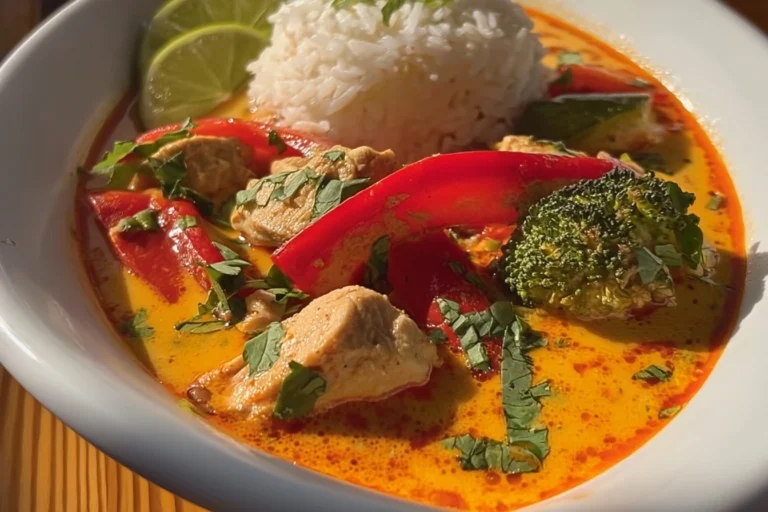
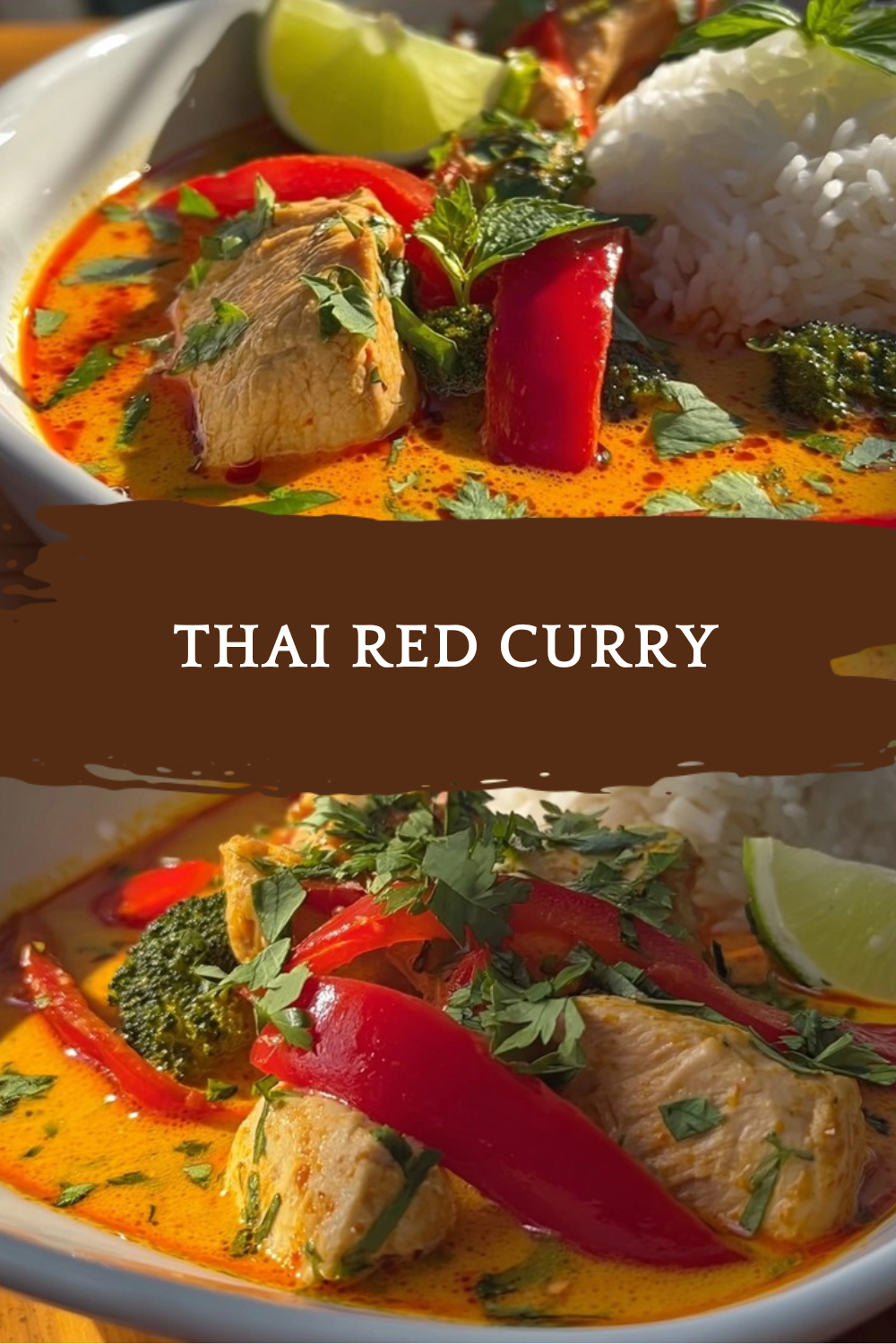
Thai Red Curry
🌶️🍛 Tender chicken thighs simmered in creamy coconut red curry with veggies, delivering bold Thai flavors, high protein, and aromatic spices in one pot!
🍚 Ready in just 25 minutes, this mildly spicy, restaurant-style curry is perfect over rice for easy, healthy weeknight bliss.
- Total Time: 25 minutes
- Yield: 4 servings
Ingredients
– 5 to 6 tablespoons red curry paste
– 2 large garlic cloves, minced
– 2 teaspoons fresh ginger, finely grated
– 1 tablespoon lemongrass paste or finely chopped fresh lemongrass
– 3 tablespoons vegetable oil
– 1 cup (250 ml) chicken broth or stock
– 400 ml (14 oz) full fat coconut milk
– 6 kaffir lime leaves
– 1 tablespoon sugar
– 2 teaspoons fish sauce plus more to taste
– 350 grams (12 oz) boneless, skinless chicken thighs
– 150 grams (5 oz) pumpkin or butternut squash
– 120 grams (4 oz) green beans
– 12 Thai basil leaves
– Fresh red chili slices
– Fresh coriander or cilantro leaves
Instructions
1-Step 1: Prepare Your Ingredients Before you begin cooking, gather and prepare all your ingredients. This technique, known as mise en place, ensures smooth cooking and prevents any last-minute scrambling. Slice your chicken thighs into 3/4 inch thick pieces, cube the pumpkin or butternut squash into 1.5 cm pieces, trim and cut the green beans into 5 cm lengths, and have your aromatics ready. Mince the garlic, grate the ginger, and prepare your lemongrass if using fresh.
2-Step 2: Bloom the Curry Paste Heat 3 tablespoons of vegetable oil in a large heavy-based skillet over medium-high heat. Once the oil is shimmering, add your red curry paste along with the minced garlic, grated ginger, and lemongrass. Cook this mixture for about 2 minutes, stirring constantly.
3-Step 3: Create the Sauce Base Pour in 1 cup of chicken broth and stir vigorously to dissolve the curry paste into the liquid. Bring this mixture to a rapid simmer and cook for 3 minutes, allowing the liquid to reduce by approximately half. This reduction concentrates the flavors and creates a more intense base for your Thai red curry chicken.
4-Step 4: Add Coconut Milk and Seasonings Add the full-fat coconut milk, kaffir lime leaves, sugar, and fish sauce to the pan. Stir well to combine everything. The coconut milk will transform the concentrated paste into a luscious, creamy sauce. Kaffir lime leaves add their distinctive citrusy aroma that’s essential to authentic Thai flavors.
5-Step 5: Cook the Chicken Add your sliced chicken thighs to the pan, spreading them evenly so each piece makes contact with the sauce. Bring the mixture to a simmer, then reduce the heat to medium. Let everything cook for 8 to 10 minutes, or until the sauce has thickened and the chicken is fully cooked through.
6-Step 6: Season and Adjust Taste your curry and adjust the seasoning as needed. Add more fish sauce if it needs saltiness, or a bit more sugar if it needs sweetness. This is your opportunity to personalize the flavor balance to your preferences.
7-Step 7: Add Vegetables Add the cubed pumpkin and trimmed green beans to the curry. Stir everything together and cook for an additional 3 minutes. The pumpkin should be just cooked through but not mushy, and the green beans should retain a slight crunch. The sauce will continue to thicken during this stage.
8-Step 8: Finish and Serve Remove the pan from the heat and stir in the Thai basil leaves. The residual heat will wilt the basil and release its aromatic oils without cooking away its fresh flavor. Serve immediately over steamed jasmine rice, garnished with fresh chili slices and coriander leaves if desired.
Last Step:
Please leave a rating and comment letting us know how you liked this recipe! This helps our business to thrive and continue providing free, high-quality recipes for you.Notes
🧄 Sauté store-bought curry paste with fresh garlic, ginger, lemongrass for enhanced authentic flavor.
🍗 Choose chicken thighs for juicier results; breasts dry out faster.
🍃 Kaffir lime leaves impart unique citrus aroma—use fresh or dried equivalent.
- Prep Time: 5 minutes
- Cook Time: 20 minutes
- Category: Main Dishes
- Method: Stovetop
- Cuisine: Thai
- Diet: Gluten-Free
Nutrition
- Serving Size: 1/4 recipe
- Calories: 530 kcal
- Sugar: 8 g
- Sodium: 800 mg
- Fat: 40 g
- Saturated Fat: 25 g
- Unsaturated Fat: 15 g
- Trans Fat: 0 g
- Carbohydrates: 15 g
- Fiber: 3 g
- Protein: 25 g
- Cholesterol: 80 mg