

Why You’ll Love This Ultimate Italian Sandwich
If you are craving a bold, messy, satisfying lunch, this Ultimate Italian Sandwich hits the spot every time. It has everything people love about a classic Italian Sandwich: salty cured meats, creamy provolone, crisp lettuce, tangy vinegar, and just enough heat from cherry peppers to keep each bite interesting. It feels like something you would order from a great deli, but it is simple enough to make in your own kitchen.
- Easy to make: There is no real cooking here, just slicing, layering, and a quick drizzle of dressing. That makes it perfect for busy parents, students, and working professionals who want something fast without giving up flavor.
- Great for balanced meals: This sandwich brings protein from the meats and cheese, freshness from the vegetables, and a satisfying bite from the bread. If you want a hearty lunch that keeps you full, this is a smart pick.
- Flexible for different diets: You can swap the meats, change the bread, or lighten the dressing based on your needs. It works well for meal prep, casual lunches, and even party platters.
- Big deli flavor: The mix of Genoa salami, capicola, ham, pepperoni, provolone, red wine vinegar, olive oil, and oregano gives you that classic Italian-American taste that feels familiar and special at the same time.
When a sandwich has the right balance of salty, tangy, crunchy, and creamy, you do not need fancy extras. Simple ingredients can taste amazing when they are layered with care.
For readers who love hearty comfort food, this recipe fits right in with other easy favorites like simple grilled chicken dinners and quick lunch ideas. It is the kind of recipe that works whether you are packing school lunches, feeding a crowd, or just treating yourself to a better sandwich at home.
Essential Ingredients for Ultimate Italian Sandwich
The best Italian Sandwich starts with good ingredients and the right balance of textures. Below is the full ingredient list, with every item you need for the recipe.
- 1 large sub roll – A sturdy roll holds the fillings without falling apart and gives the sandwich its classic shape.
- 0.1 pounds thinly sliced capicola – Adds rich, savory flavor and a little spice.
- 0.1 pounds thinly sliced Genoa salami – Brings that classic deli-style saltiness and depth.
- 0.1 pound thinly sliced boiled ham – Softens the meat blend and adds a mild, familiar flavor.
- 0.1 pounds thinly sliced pepperoni – Gives the sandwich a bold, peppery kick.
- 0.2 pound provolone cheese – Creamy and slightly sharp, it ties the meats together.
- 1 medium sliced tomato – Adds freshness and juiciness.
- 1 medium sliced onion – Brings sharp bite and crunch.
- 4 medium cherry peppers, destemmed, seeded, and sliced – Adds tangy heat without overpowering the rest of the sandwich.
- 1.25 cups shredded iceberg lettuce – Provides a cool, crisp texture.
- 4 ounces red wine vinegar – Gives the sandwich its bright, tangy finish.
- 3 ounces olive oil – Adds richness and helps the dressing coat the fillings.
- 0.75 teaspoon dried oregano – Delivers that classic Italian Sandwich aroma and flavor.
Special Dietary Options
- Vegan: Use plant-based deli slices, dairy-free cheese, and add roasted red peppers, marinated artichokes, and cucumbers for extra body.
- Gluten-free: Swap the sub roll for a gluten-free hoagie roll or serve everything in a lettuce wrap or bowl.
- Low-calorie: Use a lighter roll, reduce the cheese, and increase the lettuce and tomato for more volume with fewer calories.
If you want to understand why provolone works so well here, this helpful provolone cheese nutrition guide breaks down its texture and nutrition in a simple way. And if you enjoy building deli-style meals at home, you may also like pairing this sandwich with easy pesto pasta for a fuller meal.
How to Prepare the Perfect Ultimate Italian Sandwich: Step-by-Step Guide
This recipe is all about layering flavor in the right order. You do not need a stove or oven, but you do want to take your time with the assembly so the bread stays sturdy and the fillings stay neat. The final sandwich should be juicy but not soggy, packed but still easy to bite through.
First Step: Prep all the fillings
Start by washing and drying the tomato, lettuce, onion, and cherry peppers. Slice the tomato and onion thinly so they sit neatly in the sandwich. If your cherry peppers are not already cleaned, destem them, remove the seeds, and slice them into thin strips. This simple prep step helps everything layer well and keeps the sandwich from feeling bulky in odd spots.
Second Step: Mix the dressing
In a small bowl or measuring cup, whisk together the 4 ounces of red wine vinegar, 3 ounces of olive oil, and 0.75 teaspoon dried oregano. You can add a little black pepper if you like, but the classic trio is enough to give the sandwich its sharp, herby flavor. Stir until the oil and vinegar look blended, then set it aside.
Third Step: Prep the bread
Slice the large sub roll lengthwise, but do not cut all the way through if you want the sandwich to stay easier to handle. If the roll feels very soft, you can lightly toast the inside for 2 to 3 minutes. That extra step helps the bread stand up to the dressing and keeps the texture better after the sandwich sits for a few minutes.
Fourth Step: Layer the meats and cheese
Place the provolone cheese directly on the bottom half of the roll. This helps protect the bread from the dressing and juices. Next, layer on the capicola, Genoa salami, boiled ham, and pepperoni. Spread the meats evenly so every bite gets a little of everything. If you want a stronger deli flavor, fold the slices instead of laying them flat. That gives the sandwich a fuller, more satisfying bite.
Fifth Step: Add the vegetables
Top the meats with the shredded iceberg lettuce, sliced tomato, sliced onion, and cherry peppers. Keep the lettuce under the wetter ingredients if you want more crunch. If you prefer a cleaner bite, you can place the tomatoes and peppers near the center so the juices stay contained. The onion and cherry peppers add a nice punch, so do not overload the sandwich if you want a balanced flavor.
Sixth Step: Dress the sandwich
Drizzle the vinegar and oil mixture over the vegetables and meats. Use enough to flavor the whole sandwich, but do not soak the bread. A little goes a long way here. Sprinkle a touch more oregano on top if you want that deli-style aroma to come through even more clearly. This is the part where the sandwich really starts to taste like the classic Italian Sandwich people order from their favorite corner shop.
Seventh Step: Press, slice, and serve
Close the sandwich gently and press it down with your hands for a few seconds. If you have time, wrap it in parchment paper and let it sit for 5 to 10 minutes. That short rest helps the flavors come together and makes the sandwich easier to cut. Slice it in half if serving one person, or into smaller pieces for sharing. Serve right away while the bread is still fresh and the lettuce is crisp.
For the best texture, build the sandwich just before serving. If you dress it too early, the roll can soften faster than you want.

Dietary Substitutions to Customize Your Ultimate Italian Sandwich
Protein and Main Component Alternatives
If you want a different protein mix, there are plenty of easy swaps. You can replace the capicola, salami, ham, and pepperoni with turkey, chicken breast, roast beef, or plant-based deli slices. If you prefer a lighter sandwich, choose one meat instead of four and increase the cheese and vegetables for balance.
For a vegetarian version, try marinated roasted mushrooms, grilled eggplant, artichoke hearts, and roasted red peppers. These ingredients bring a savory bite that works well with provolone or a dairy-free cheese. If you are cooking for mixed tastes, setting out a sandwich bar is a smart move because everyone can build their own version.
Vegetable, Sauce, and Seasoning Modifications
You can change the vegetables based on what is in season. Shredded cabbage, arugula, banana peppers, cucumbers, or pickles all fit nicely here. If you like more heat, add hot cherry peppers or crushed red pepper flakes. If you want a milder sandwich, skip the onions and use fewer peppers.
The dressing can also be adjusted. Try adding a little Dijon mustard, lemon juice, or mayonnaise if you want a creamier finish. For a more herb-forward version, add basil or parsley along with the oregano. If you are packing the sandwich for later, keep the dressing separate until just before serving so the bread stays firm.
Mastering Ultimate Italian Sandwich: Advanced Tips and Variations
Once you make this sandwich a few times, it becomes easy to fine-tune it to your taste. A few simple tricks can take it from good to great without adding much work.
Pro cooking techniques
First, always use thinly sliced meats. Thin slices fold better, stack neatly, and give the sandwich a better texture. Second, layer cheese against the bread to create a barrier against moisture. Third, let the sandwich rest after assembly if you want the flavors to mingle. That short wait makes a real difference.
If you like a toasted finish, you can lightly press the sandwich in a panini press for just a minute or two. Keep it gentle so the lettuce and tomato do not wilt too much. Another smart move is to dry the tomatoes lightly with a paper towel before layering. That helps reduce extra moisture.
Flavor variations
You can make this recipe spicier by adding hot peppers or a bit of pepperoncini. For a richer version, add more provolone or a layer of fresh mozzarella. If you prefer a brighter taste, add a splash of lemon juice to the dressing. You can also swap the oregano for Italian seasoning if that is what you have in the pantry.
Presentation tips
For a clean look, wrap the sandwich in parchment before slicing. This helps it hold together and gives it that deli-shop style feel. Serve it with pickle spears, chips, or a simple side salad. If you are making it for guests, cut it into smaller pieces and arrange them on a platter for easy grabbing.
Make-ahead options
You can prep the vegetables and dressing ahead of time, then assemble the sandwich when you are ready to eat. If you need to pack lunch, layer the cheese and meats first, then add the vegetables and dressing later. That keeps the bread from getting too soft and helps the sandwich stay fresh longer. For more hearty meal ideas that work well ahead of time, try something like braised chicken thighs for dinner and save the sandwich for lunch the next day.
How to Store Ultimate Italian Sandwich: Best Practices
Storage matters if you want to keep the bread from turning soggy and the vegetables from losing their crunch. Since this sandwich is best fresh, smart storage makes a big difference.
Refrigeration
If you have leftovers, wrap the sandwich tightly in parchment or foil and place it in the refrigerator. It is best eaten within 24 hours. For the best texture, store the dressing separately and add it right before eating if possible. That keeps the roll from getting too soft.
Freezing
This sandwich does not freeze well once it is fully assembled because the lettuce, tomato, and onion will lose their texture. If you want to plan ahead, freeze only the meats and bread if needed, then add the fresh toppings later. In most cases, making it fresh is the better choice.
Reheating
This sandwich is meant to be served cold or at room temperature, so reheating is usually not needed. If you want a warm version, heat only the bread and meats briefly, then add the lettuce, tomato, and dressing after. That keeps the greens crisp and the sandwich balanced.
Meal prep considerations
For meal prep, pack the bread, meats, cheese, and vegetables in separate containers. Store the dressing in a small jar or cup. When it is time to eat, build the sandwich fast and enjoy it while the bread still has good texture. This method works well for school lunches, office lunches, and quick road trip meals.
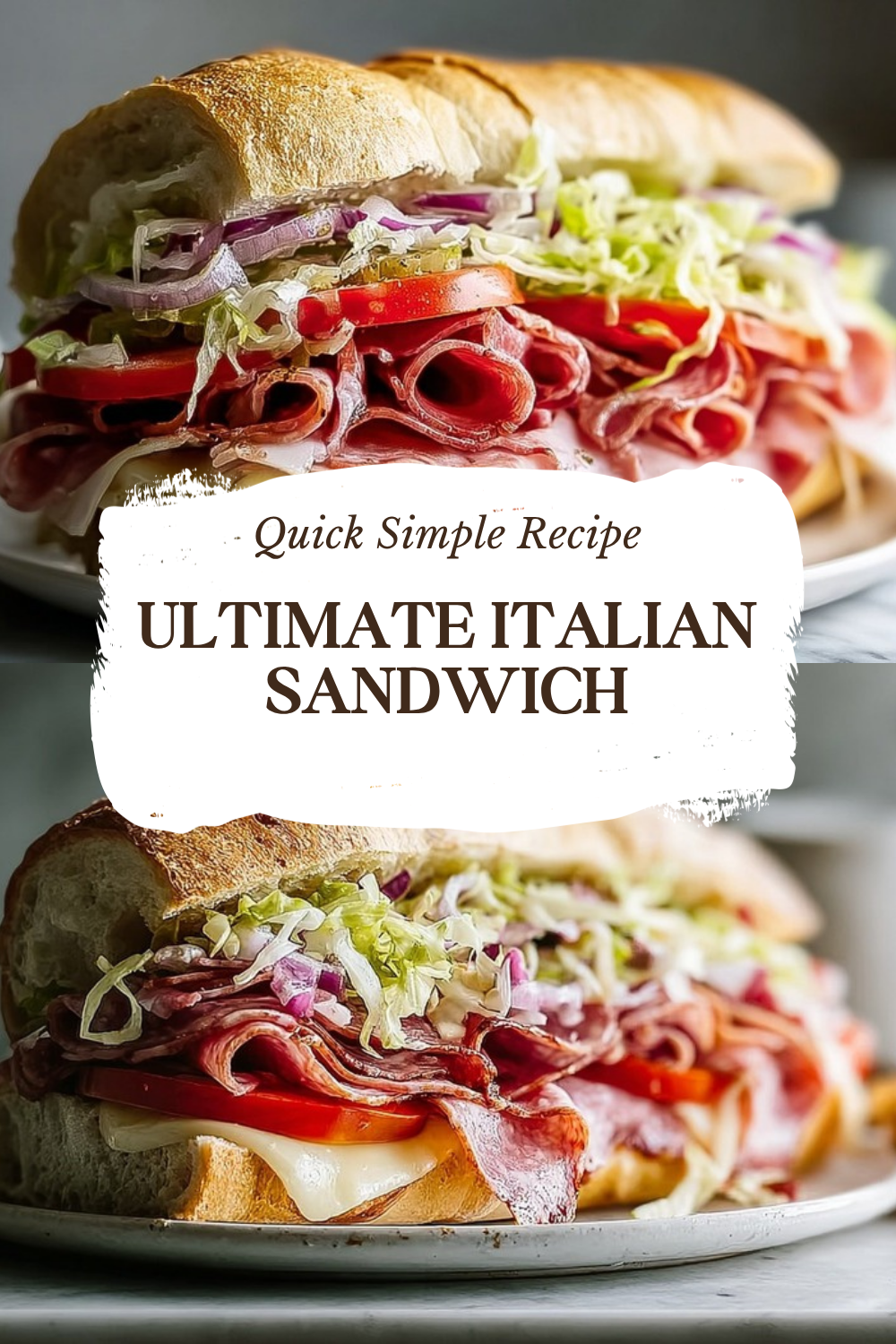
FAQs: Frequently Asked Questions About Ultimate Italian Sandwich
What is an Italian sandwich?
An Italian sandwich, also known as an Italian sub, hoagie, or grinder, is a hearty cold cut sandwich originating from Italian-American communities in the Northeast U.S. It features crusty Italian bread stuffed with cured meats like salami, prosciutto, capicola, and mortadella, layered with provolone cheese, crisp lettuce, tomatoes, onions, and pickles. It’s dressed with red wine vinegar, olive oil, oregano, and sometimes hot peppers or mayo for extra kick. This combo delivers bold, savory flavors in every bite. Typical size serves one generously (8-12 inches), making it perfect for lunch or parties. Pro tip: Use high-quality, thinly sliced meats from a deli for authenticity—freshness is key to that classic taste.
What are the best meats for an Italian sub?
The best meats for an Italian sub are Genoa salami, sweet capicola, prosciutto, and soppressata for a balance of spice, saltiness, and tenderness. Aim for 2-3 ounces each per foot-long sandwich, thinly sliced to avoid toughness. Add mortadella for creaminess or pepperoni for heat if you like it bold. Layer them in this order: capicola first, then salami, prosciutto, and pepperoni on top for even flavor distribution. Source from Italian delis for superior quality—pre-packaged supermarket versions often lack the cure and fat marbling. Pair with sharp provolone (not mild) to cut through the richness. This meat stack keeps the sandwich juicy without sogginess, hitting 500-700 calories per half.
How do you make an Italian sandwich at home?
Start with a fresh 12-inch Italian or hoagie roll, split lengthwise but not all the way. Layer 4-6 oz total meats (salami, capicola, prosciutto), 3-4 slices provolone, shredded iceberg lettuce, thin tomato slices, red onion rings, and banana peppers. Drizzle with 1 tbsp each olive oil and red wine vinegar, sprinkle oregano, salt, and black pepper. Press gently and wrap in parchment for 10 minutes to meld flavors—this “hug” technique prevents sogginess. For crispness, toast the bread lightly first. Total prep: 10 minutes, no cooking needed. Customize with mayo or mustard. Serves 2; scale up for crowds. Stores in fridge up to 24 hours, but best fresh.
What’s the difference between an Italian sub and a hoagie?
An Italian sub and hoagie are regional names for the same style sandwich, but subtle differences exist. Subs (popular in the Mid-Atlantic/Northeast) emphasize Italian meats and vinegar dressing on softer rolls. Hoagies (Philly origin) use longer, denser rolls with more veggies and oil, sometimes adding cheese like American alongside provolone. Both pack 1 lb+ of fillings, but hoagies skew cheesier and greasier. Grinders (New England) are toasted versions. Key: all deliver that meaty, tangy profile. For home, use whatever long roll is local—Amoroso’s bread for Philly authenticity. Nutrition-wise, expect 800-1200 calories full-size due to fats from meats and oil.
How can I make a vegetarian Italian sandwich?
Swap meats for plant-based alternatives: marinated artichoke hearts, roasted red peppers, grilled eggplant slices, and vegan salami or capicola from brands like Yves or Field Roast (4-6 oz total). Layer with fresh mozzarella or provolone, arugula, cherry tomatoes, cucumber, olives, and banana peppers. Dress with balsamic vinaigrette (1 tbsp oil + 1 tbsp vinegar + basil). Use a seeded Italian roll for texture. Grill veggies lightly for smoky depth, mimicking cured meats. This version cuts calories to 400-600 per half while keeping bold flavors. Add hummus for creaminess. Prep in 15 minutes; great for potlucks. Links to our vegan deli meat guide for more swaps.
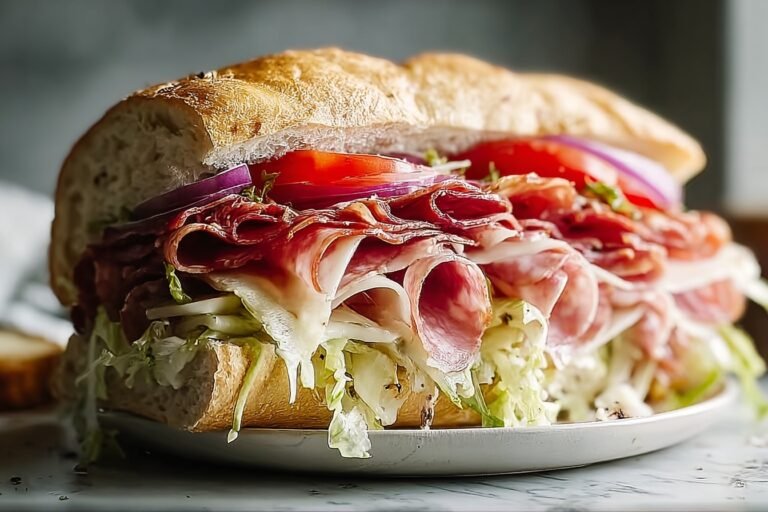
Ultimate Italian Sandwich
🥖🍖 Stack Italian sub hoagie hero recipe – layered capicola salami provolone bursts Italian flavors in crunchy roll, oil-vinegar zing!
🥪🧀 10-minute deli masterpiece feeds crowds, customizable classic beats sandwich shop with fresh cherry pepper kick.
- Total Time: 10 minutes
- Yield: 4 servings
Ingredients
– 1 large sub roll
– 0.1 pounds thinly sliced capicola
– 0.1 pounds thinly sliced Genoa salami
– 0.1 pound thinly sliced boiled ham
– 0.1 pounds thinly sliced pepperoni
– 0.2 pound provolone cheese
– 1 medium sliced tomato
– 1 medium sliced onion
– 4 medium cherry peppers, destemmed, seeded, and sliced
– 1.25 cups shredded iceberg lettuce
– 4 ounces red wine vinegar
– 3 ounces olive oil
– 0.75 teaspoon dried oregano
Instructions
1-First Step: Prep all the fillings Start by washing and drying the tomato, lettuce, onion, and cherry peppers. Slice the tomato and onion thinly so they sit neatly in the sandwich. If your cherry peppers are not already cleaned, destem them, remove the seeds, and slice them into thin strips. This simple prep step helps everything layer well and keeps the sandwich from feeling bulky in odd spots.
2-Second Step: Mix the dressing In a small bowl or measuring cup, whisk together the 4 ounces of red wine vinegar, 3 ounces of olive oil, and 0.75 teaspoon dried oregano. You can add a little black pepper if you like, but the classic trio is enough to give the sandwich its sharp, herby flavor. Stir until the oil and vinegar look blended, then set it aside.
3-Third Step: Prep the bread Slice the large sub roll lengthwise, but do not cut all the way through if you want the sandwich to stay easier to handle. If the roll feels very soft, you can lightly toast the inside for 2 to 3 minutes. That extra step helps the bread stand up to the dressing and keeps the texture better after the sandwich sits for a few minutes.
4-Fourth Step: Layer the meats and cheese Place the provolone cheese directly on the bottom half of the roll. This helps protect the bread from the dressing and juices. Next, layer on the capicola, Genoa salami, boiled ham, and pepperoni. Spread the meats evenly so every bite gets a little of everything. If you want a stronger deli flavor, fold the slices instead of laying them flat. That gives the sandwich a fuller, more satisfying bite.
5-Fifth Step: Add the vegetables Top the meats with the shredded iceberg lettuce, sliced tomato, sliced onion, and cherry peppers. Keep the lettuce under the wetter ingredients if you want more crunch. If you prefer a cleaner bite, you can place the tomatoes and peppers near the center so the juices stay contained. The onion and cherry peppers add a nice punch, so do not overload the sandwich if you want a balanced flavor.
6-Sixth Step: Dress the sandwich Drizzle the vinegar and oil mixture over the vegetables and meats. Use enough to flavor the whole sandwich, but do not soak the bread. A little goes a long way here. Sprinkle a touch more oregano on top if you want that deli-style aroma to come through even more clearly. This is the part where the sandwich really starts to taste like the classic Italian Sandwich people order from their favorite corner shop.
7-Seventh Step: Press, slice, and serve Close the sandwich gently and press it down with your hands for a few seconds. If you have time, wrap it in parchment paper and let it sit for 5 to 10 minutes. That short rest helps the flavors come together and makes the sandwich easier to cut. Slice it in half if serving one person, or into smaller pieces for sharing. Serve right away while the bread is still fresh and the lettuce is crisp.
Last Step:
Please leave a rating and comment letting us know how you liked this recipe! This helps our business to thrive and continue providing free, high-quality recipes for you.Notes
🥒 Thin-slice veggies uniform for even bite balance.
🫒 Mix dressing first; let sit 5 min flavors meld.
🥖 Press sandwich 30 min under weight for compact pro texture.
- Prep Time: 10 minutes
- Category: Sandwiches
- Method: Assembled
- Cuisine: Italian-American
- Diet: Omnivore
Nutrition
- Serving Size: 1/4 sub
- Calories: 650 kcal
- Sugar: 5 g
- Sodium: 1800 mg
- Fat: 45 g
- Saturated Fat: 15 g
- Unsaturated Fat: 30 g
- Trans Fat: 0 g
- Carbohydrates: 40 g
- Fiber: 3 g
- Protein: 25 g
- Cholesterol: 80 mg