
Why You’ll Love This Air Fryer Salmon
Air Fryer Salmon is a quick, low-carb, low-calorie recipe that gives you seared edges and tender, flaky salmon in about 10 minutes total (2 minutes prep, 8 minutes cook). It serves 4 and fits perfectly into busy weeknights, meal prep plans, and healthy eating routines. Below are a few reasons this simple recipe wins dinner night.
- Ease of preparation: Ready in roughly 10 minutes from start to finish. Pat the fish dry, rub with oil, season, and air fry; minimal hands-on time and fast clean up.
- Health benefits: Low in carbs and calories, high in lean protein and heart-healthy fats. For more on salmon’s benefits, read + $(‘AI Agent’).item.json.output.Anchor1 +.
- Versatility: Use skin-on or skinless fillets, swap seasonings for different cuisines, or finish with a glaze in the final minute for sweet or savory options.
- Distinctive flavor: The air fryer gives crisped edges while keeping the center moist and flaky, producing restaurant-style results with very little fuss.
Quick tip: For the crispiest exterior, preheat your air fryer for 3 minutes and use fillets of uniform thickness.
Essential Ingredients for Air Fryer Salmon
Below is a clear, structured list of every ingredient needed for this recipe, with measurements and a short note on why each item matters.
- 4 (6-ounce) salmon fillets (skin-on or skinless) – Main protein, choose even-thickness fillets for consistent cooking.
- 1 tablespoon olive oil – Helps seasonings stick and promotes browning of the surface.
- 1 teaspoon garlic powder – Adds savory depth without extra prep.
- 1/2 teaspoon paprika – Provides mild smoky flavor and color.
- 1/2 teaspoon salt – Brings out natural salmon flavor.
- 1/2 teaspoon black pepper – Adds subtle heat and balance.
- Lemon wedges and tartar sauce, for serving – Bright acid and a creamy dip to finish the dish.
Special Dietary Options
- Vegan: Substitute firm tofu or tempeh steaks, brush with oil, and season similarly. Cook times will vary.
- Gluten-free: The base recipe is gluten-free. If adding glazes, pick gluten-free sauces or tamari.
- Low-calorie: Use a light spray of oil instead of a tablespoon, and skip rich glazes; serve with a salad or steamed greens.
How to Prepare the Perfect Air Fryer Salmon: Step-by-Step Guide
This step-by-step walkthrough follows the simple recipe format: short prep, high heat, and minimal flipping. Timing and temperature details are included to make the process foolproof.
First Step: Prep and preheat
Preheat your air fryer to 400°F (200°C). Pat the salmon fillets dry with paper towels to remove surface moisture. Drying helps the outside crisp quickly for those seared edges everyone likes.
Second Step: Oil and season
Rub each fillet with 1 tablespoon olive oil, distributed across all fillets (about 1/4 tablespoon per fillet). Season evenly with 1 teaspoon garlic powder, 1/2 teaspoon paprika, 1/2 teaspoon salt, and 1/2 teaspoon black pepper. If you like a brighter finish, add a squeeze of lemon over the tops just before cooking.
Third Step: Arrange in the basket
Place the fillets skin-side down in a single layer in the air fryer basket. Do not overcrowd the basket; air needs to circulate around each piece. If your air fryer is small, cook in two batches.
Fourth Step: Cook at high heat
Air fry at 400°F (200°C) for 7-9 minutes, depending on fillet thickness. For typical 6-ounce fillets about 1 inch thick, start checking at 7 minutes. The recipe yields seared edges and tender, flaky salmon in about 10 minutes total: 2 minutes prep and roughly 8 minutes cook time.
Fifth Step: Check for doneness
Salmon is done when it flakes easily with a fork and an internal temperature reaches 145°F (63°C) at the thickest part. If you prefer a slightly less cooked center, remove at a lower temp but be mindful of food safety guidelines.
Final Step: Rest, serve, and finish
Let the fillets rest for 1-2 minutes so juices settle. Serve with lemon wedges and tartar sauce on the side. For glazes like maple Dijon, teriyaki, BBQ, or spicy honey, either brush them on during the final 1-2 minutes at 400°F or start cooking at 350°F (175°C) to avoid burning. Drizzling glaze after cooking is another great option for even coverage and glossy presentation.
Timing table and cooking notes
| Fillet thickness | Temp | Approx. time | Notes |
|---|---|---|---|
| About 1 inch (typical 6-oz) | 400°F / 200°C | 7-9 minutes | Check at 7 minutes for flakiness |
| Thicker (1.5 inches) | 400°F / 200°C | 9-12 minutes | Add 1-2 minutes as needed |
| Frozen fillets | 380°F / 193°C | 12-15 minutes | Better to thaw first for even results |
Simple presentation tip: cook skin-side down to protect flesh and crisp the skin. If using skinless fillets, the same timing applies. Place the finished salmon over salads, couscous, rice, or alongside air-fried green beans for a quick dinner.
Protein and Main Component Alternatives
Not in the mood for salmon or need options for different diets? Here are swaps that keep the same technique but adapt to what you have on hand or who you are cooking for.
Fish and seafood alternatives
- Cod: Mild flavor and flaky texture. Cook at 400°F for 8-10 minutes depending on thickness. Use the same seasoning or try lemon-herb.
- Halibut: Meatier and firmer; takes slightly longer at 400°F, around 10-12 minutes for thicker pieces. Good with citrus-based sauces.
- Tuna steaks: Sear for 5-7 minutes for medium-rare, or until desired doneness. Tuna benefits from shorter cooks to stay tender.
Non-seafood alternatives
- Chicken breasts: Pound to even thickness and air fry at 375°F for 10-12 minutes, flipping halfway; use garlic and paprika for familiar flavors.
- Firm tofu: Press, slice into 1/2-inch slabs, marinate, and air fry at 400°F for 10-12 minutes for crispy edges. Great for vegan diets.
- Tempeh: Slice and steam briefly, then air fry for 8-10 minutes to brown. Pair with teriyaki or spicy honey glaze.
When substituting, match cooking times to thickness and density. Thicker or denser proteins will need extra minutes; lighter or more delicate proteins may need less time.
Vegetable, Sauce, and Seasoning Modifications
Pairings and small seasoning swaps let you tailor the dish to seasons, flavor preferences, or dietary needs. Below are ideas to mix and match.
Vegetable sides
- Air-fried green beans: Toss with a teaspoon of oil and a pinch of salt, air fry at 400°F for 6-8 minutes.
- Roasted asparagus: Trim, oil, salt, pepper, air fry at 400°F for 7-9 minutes until tender-crisp.
- Mixed veggies: Bell peppers, zucchini, and red onion work well; cut into uniform pieces and air fry at 400°F for 8-10 minutes.
Sauces and glazes
- Maple Dijon: Mix maple syrup and Dijon mustard for a sweet-tangy glaze; brush in final minute or drizzle after cooking.
- Teriyaki: Use a reduced, lower-sugar teriyaki and add during the last 1-2 minutes to avoid burning.
- Spicy honey: Honey with a dash of sriracha is great added at the end or used as a finishing drizzle.
Seasoning blends
- Lemon pepper: Swap paprika and garlic powder for lemon pepper and a sprinkle of dried dill.
- Cajun: Use a Cajun blend for bold, smoky heat; reduce salt if your blend is salted.
- Garlic herb: Mix garlic powder, dried parsley, and a pinch of onion powder for a simple, classic profile.
Pair the salmon with a light salad or a grain like couscous. For a sweet finish, consider a fruit-based side or dessert such as Berry Trifle or Fruit Pizza for a fresh contrast to savory fish.
Mastering Air Fryer Salmon: Advanced Tips and Variations
Once you have the basic method down, try these extra tips and creative spins to make the recipe your own.
Pro cooking techniques
- Use a digital instant-read thermometer to check the thickest part of the fillet for 145°F (63°C) for fully cooked salmon.
- For consistent results, choose fillets of the same thickness or trim thicker pieces so everything cooks together.
- Pat fillets dry and preheat the air fryer for crisp edges and professional-looking sear marks.
Flavor variations
- Honey soy: Mix low-sodium soy sauce, honey, and a splash of rice vinegar; add in the last minute to avoid burning.
- Herb crust: Press a mixture of panko, parsley, lemon zest, and a touch of olive oil on the top and cook at 375°F for a crunchy topping.
- Spicy glaze: Combine sriracha, honey, and lime juice; brush in the final minute or drizzle right before serving.
Presentation tips
- Plate salmon on a bed of lightly dressed greens, sprinkle microgreens or chopped chives, and add lemon wedges for color.
- Serve fillets over a simple couscous or rice pilaf and place a small ramekin of tartar sauce on the side for a polished look.
Make-ahead options
- Season fillets and store in an airtight container up to 24 hours in the fridge; air fry straight from the fridge, adding a minute or two to the cook time if needed.
- Cooked salmon stores airtight in the fridge up to 3 days or freeze up to 3 months; thaw in the fridge before reheating gently in the air fryer.
How to Store Air Fryer Salmon: Best Practices
Preserving texture and flavor after cooking takes a little care. Follow these storage and reheating tips to keep salmon tasty and safe.
Refrigeration
- Place cooled salmon in an airtight container and refrigerate up to 3 days. Store sauce separately for best texture.
Freezing
- Wrap individual fillets tightly in plastic wrap, then place in a freezer bag for up to 3 months. Thaw in the fridge overnight before reheating.
Reheating
- Reheat in the air fryer at 325°F for 3-5 minutes until warmed through. Low, gentle heat preserves moisture better than the microwave.
Meal prep considerations
- Cook extra fillets and portion over salads or grain bowls for quick lunches. Store dressings separately to keep the salad crisp.

FAQs: Frequently Asked Questions About Air Fryer Salmon
How long and at what temperature do you cook salmon in an air fryer?
Cook salmon fillets in an air fryer at 400°F (200°C) for 7-10 minutes, depending on thickness. For 6-ounce fillets about 1-inch thick, start checking at 7 minutes. Preheat the air fryer for 3 minutes first. Pat the salmon dry, brush with a little oil, season with salt, pepper, and lemon juice, then place skin-side down. Flip halfway if needed for even cooking. Internal temperature should reach 145°F (63°C) for safety and flakiness. Thicker cuts may need 12 minutes; always use a meat thermometer to avoid overcooking. This method yields crispy skin and moist flesh without flipping the oven on. Pair with veggies for a full meal in under 15 minutes total. (92 words)
Can you cook frozen salmon in an air fryer or does it need to thaw first?
Thaw salmon fillets first for best results, as the standard cook time of 7-10 minutes at 400°F is calibrated for thawed fish. Frozen salmon takes 12-15 minutes but risks uneven cooking—outer layers dry out while the center stays cold. To thaw safely, place in the fridge overnight or submerge sealed fillets in cold water for 30 minutes. Pat dry before seasoning with oil, salt, garlic powder, and herbs. If in a rush, air fry frozen from 380°F for 12 minutes, flipping once, but expect slightly less tender texture. Always check internal temp hits 145°F. Thawing ensures juicy, perfectly cooked salmon every time. (98 words)
Should you put salmon skin side up or down in the air fryer?
Place salmon skin-side down in the air fryer basket. This protects the delicate flesh from direct heat, crisps the skin perfectly, and allows fat to render out for better flavor. At 400°F for 7-10 minutes, the skin gets golden and crunchy without sticking. Avoid skin-side up, as it can lead to dry or torn fillets. No need to remove skin beforehand—it peels off easily after cooking. Brush tops with olive oil, add paprika, dill, and a squeeze of lemon for taste. For skinless fillets, treat the same way. This simple orientation gives restaurant-quality results in minutes. (92 words)
Do you need to line the air fryer basket when cooking salmon?
No lining is needed—place salmon directly in the air fryer basket for maximum crispiness and easy cleanup. The non-stick surface handles it fine, and direct air flow cooks evenly without sogginess. If worried about mess, lightly spray the basket with oil first. Avoid parchment paper or foil, as they block circulation and extend cook time. After cooking at 400°F for 7-10 minutes, salmon skin releases naturally. Wipe the basket with a paper towel post-use. This method keeps nutrients intact and simplifies prep. For multiple fillets, arrange in a single layer without overlapping. (87 words)
How do you know when air fryer salmon is done cooking?
Salmon is done when it reaches an internal temperature of 145°F (63°C) measured at the thickest part with a digital thermometer—juiciest at this point. Visually, flesh turns opaque and flakes easily with a fork; it separates into moist sections without resistance. At 400°F, expect 7-10 minutes for 1-inch thick fillets. Undercook slightly if you prefer medium-rare (125°F), but follow FDA guidelines for safety. Rest 2 minutes post-cook for juices to redistribute. Overcooking makes it dry, so check early. Season simply with salt, pepper, and butter for perfection. (89 words)
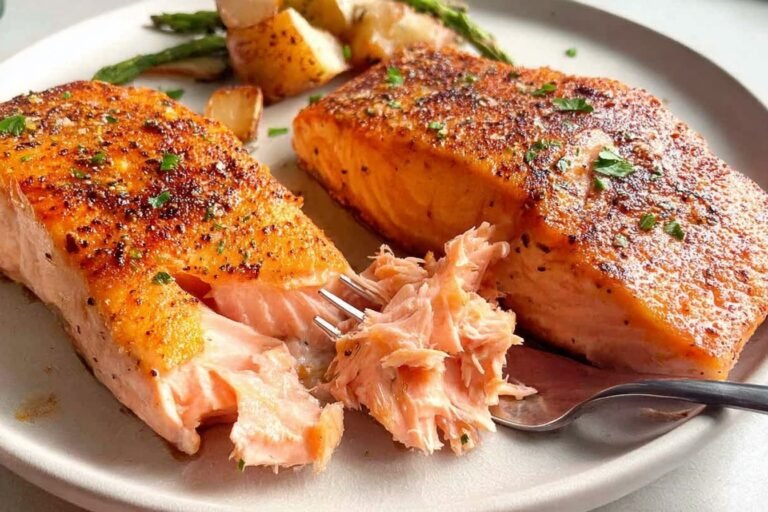
Air Fryer Salmon
🐟 Perfect crispy salmon with tender, flaky interior in just 10 minutes
🍃 Healthy, low-carb meal that’s packed with protein and omega-3s
- Total Time: 10 minutes
- Yield: 4 servings
Ingredients
– 4 (6-ounce) salmon fillets Main protein
– 1 tablespoon olive oil Helps seasonings stick and promotes browning of the surface
– 1 teaspoon garlic powder Adds savory depth without extra prep
– 1/2 teaspoon paprika Provides mild smoky flavor and color
– 1/2 teaspoon salt Brings out natural salmon flavor
– 1/2 teaspoon black pepper Adds subtle heat and balance
– Lemon wedges and tartar sauce Bright acid and a creamy dip to finish the dish
Instructions
1-First Step: Prep and preheat Preheat your air fryer to 400°F (200°C). Pat the salmon fillets dry with paper towels to remove surface moisture. Drying helps the outside crisp quickly for those seared edges everyone likes.
2-Second Step: Oil and season Rub each fillet with 1 tablespoon olive oil, distributed across all fillets (about 1/4 tablespoon per fillet). Season evenly with 1 teaspoon garlic powder, 1/2 teaspoon paprika, 1/2 teaspoon salt, and 1/2 teaspoon black pepper. If you like a brighter finish, add a squeeze of lemon over the tops just before cooking.
3-Third Step: Arrange in the basket Place the fillets skin-side down in a single layer in the air fryer basket. Do not overcrowd the basket; air needs to circulate around each piece. If your air fryer is small, cook in two batches.
4-Fourth Step: Cook at high heat Air fry at 400°F (200°C) for 7-9 minutes, depending on fillet thickness. For typical 6-ounce fillets about 1 inch thick, start checking at 7 minutes. The recipe yields seared edges and tender, flaky salmon in about 10 minutes total: 2 minutes prep and roughly 8 minutes cook time.
5-Fifth Step: Check for doneness Salmon is done when it flakes easily with a fork and an internal temperature reaches 145°F (63°C) at the thickest part. If you prefer a slightly less cooked center, remove at a lower temp but be mindful of food safety guidelines.
6-Final Step: Rest, serve, and finish Let the fillets rest for 1-2 minutes so juices settle. Serve with lemon wedges and tartar sauce on the side. For glazes like maple Dijon, teriyaki, BBQ, or spicy honey, either brush them on during the final 1-2 minutes at 400°F or start cooking at 350°F (175°C) to avoid burning. Drizzling glaze after cooking is another great option for even coverage and glossy presentation.
Last Step:
Please leave a rating and comment letting us know how you liked this recipe! This helps our business to thrive and continue providing free, high-quality recipes for you.Notes
🌡️ Always preheat your air fryer for crisp edges and even cooking
🐟 Use uniform-thickness fillets to ensure consistent results across all pieces
🍯 Add glazes in the last 1-2 minutes to prevent burning, or drizzle after cooking
- Prep Time: 2 minutes
- Cook Time: 8 minutes
- Category: Main Course
- Method: Air Frying
- Cuisine: American
- Diet: Low-Carb, Gluten-Free, Keto-Friendly
Nutrition
- Serving Size: 1 fillet
- Calories: 276
- Sugar: 0g
- Sodium: 677mg
- Fat: 14g
- Saturated Fat: 2g
- Unsaturated Fat: 12g
- Trans Fat: 0g
- Carbohydrates: 1g
- Fiber: 0g
- Protein: 34g
- Cholesterol: 86mg