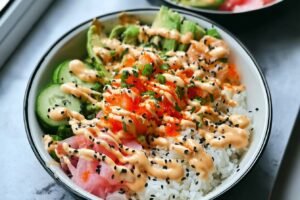

Why You’ll Love This Carrot Cucumber Salad
This refreshing carrot cucumber salad brings the perfect balance of crunch, tang, and subtle sweetness to your table in just minutes. Whether you’re looking for a quick side dish or a light lunch option, this Asian-inspired recipe delivers on every level.
- Ease of preparation: This recipe comes together in about 15 minutes with simple techniques anyone can master. No cooking required just slice, whisk, and toss. The straightforward steps make it perfect for busy weeknights or last-minute gatherings.
- Health benefits: Packed with vitamin A from carrots and hydration from cucumbers, this salad offers real nutritional value without heavy calories. According to health experts at Cleveland Clinic, carrots provide powerful antioxidants that support eye health and immune function. Cucumbers add essential vitamins while keeping the dish light and refreshing.
- Versatility: The recipe adapts easily to various dietary needs. It’s naturally vegan, becomes gluten-free with tamari, and can be made oil-free for those watching their fat intake. You can also adjust the sweetness, saltiness, or heat level to suit your preferences.
- Distinctive flavor: The combination of rice vinegar, sesame oil, maple syrup, and soy sauce creates an Asian-inspired dressing that’s both tangy and slightly sweet. Toasted sesame seeds add a nutty finish that makes every bite satisfying.
Essential Ingredients for Carrot Cucumber Salad
Creating the perfect carrot cucumber salad starts with selecting the right ingredients. Each component plays a vital role in building flavor, texture, and visual appeal.
Main Ingredients
- 2 large cucumbers, julienned Form the refreshing, hydrating base of the salad. Choose crisp varieties like Persian, English, or Japanese cucumbers for the best texture.
- 2 large carrots, julienned Add natural sweetness, vibrant color, and satisfying crunch. Peel them first for the most tender result.
- 1 tablespoon grape seed oil A neutral oil that carries flavors without overpowering. Can be omitted for an oil-free version.
- 2 tablespoons rice vinegar Provides the signature tangy kick. White wine vinegar works as a substitute if needed.
- 1 teaspoon sesame seed oil Delivers rich, nutty aroma that defines Asian-inspired dishes. A little goes a long way.
- 1 tablespoon maple syrup Balances acidity with natural sweetness. Honey works as an alternative if you’re not strictly vegan.
- 2 teaspoons soy sauce or tamari Adds savory umami depth. Use tamari for gluten-free diets.
- ½ tablespoon toasted sesame seeds Bring nutty flavor and pleasant crunch. Mix black and white sesame seeds for visual appeal.
- ½ tablespoon white sesame seeds Additional sesame seeds for garnish and texture.
- ¼ teaspoon salt Enhances all flavors and helps draw out moisture from vegetables.
- ¼ teaspoon ginger powder Adds warm, spicy notes that complement the fresh vegetables beautifully.
- Ground white pepper to taste Provides subtle heat without the visible specks of black pepper.
Special Dietary Options
| Dietary Need | Adjustment |
|---|---|
| Vegan | Recipe is naturally vegan no changes needed |
| Gluten-free | Replace soy sauce with tamari |
| Oil-free | Omit oils and increase soy sauce or tamari for moisture |
| Low-sodium | Reduce soy sauce and salt; add more vinegar for flavor |
How to Prepare the Perfect Carrot Cucumber Salad: Step-by-Step Guide
Follow these detailed instructions to create a crisp, flavorful carrot cucumber salad that rivals any restaurant version. The process is simple, but a few key techniques ensure the best results.
Step One: Prepare the Vegetables
Start with proper preparation of your fresh produce. Wash the carrots thoroughly under cool running water, then peel them completely, removing the outer layer to reveal the bright orange flesh beneath. Trim off both ends of each carrot about ¼ inch from each side should do.
For the cucumbers, wash them well and remove the ends. There’s no need to peel cucumbers if you’re using thin-skinned varieties like Persian, English, or Japanese. However, if you’re using regular garden cucumbers with thick, waxy skin, peeling them will improve the texture significantly.
Pro tip: If your cucumbers seem watery or have large seed cavities, slice them in half lengthwise and use a spoon to scoop out the seeds before julienning. This prevents excess moisture from diluting your dressing.
Step Two: Create Uniform Ribbons
The secret to a professional-looking carrot cucumber salad lies in consistent cuts. Use a julienne peeler, spiralizer, or mandoline with a julienne blade to create long, thin ribbons of both vegetables. Aim for pieces about 1/8 inch thick thin enough to absorb dressing but thick enough to maintain crunch.
If you don’t have specialized equipment, a sharp chef’s knife works too. Slice the vegetables into thin planks first, then cut those planks into thin strips. The goal is even pieces that will mix well and look attractive on the plate.
Place all your julienned vegetables in a medium mixing bowl. A wide bowl gives you room to toss everything together without spilling.
Step Three: Mix the Asian-Inspired Dressing
In a separate small bowl or measuring cup, combine all the dressing ingredients. This approach lets you adjust flavors before adding the dressing to your precious vegetables.
Whisk together the following:
- Grape seed oil (or other neutral oil)
- Rice vinegar (or white wine vinegar)
- Sesame oil
- Maple syrup
- Soy sauce or tamari
- Salt
- Ginger powder
- Ground white pepper
Whisk vigorously until the mixture looks uniform and slightly emulsified. The maple syrup helps bring everything together. Taste your dressing it should be tangy, slightly sweet, and savory all at once. Adjust any ingredient to your preference before moving forward.
Step Four: Combine and Toss
Pour the dressing over your prepared cucumber and carrot ribbons. Use clean hands or tongs to gently toss everything together, ensuring each strand gets coated with the flavorful mixture. Take your time with this step good coverage means better flavor in every bite.
Avoid overmixing, which can break down the delicate vegetable strands. A gentle folding motion works best. The goal is even distribution without mushy results.
Step Five: Add the Finishing Touches
Sprinkle both the toasted sesame seeds and white sesame seeds over the top of your salad. You can mix them in or leave them as a garnish the choice depends on whether you want the seeds throughout or just on top for visual appeal.
For a pop of color and extra flavor, consider adding a few additional toppings:
- Sliced green onions
- Chopped fresh cilantro
- Red pepper flakes for heat
- Thinly sliced red onion
Step Six: Rest and Serve
Let your carrot cucumber salad rest in the refrigerator for at least 10 minutes before serving. This crucial step allows the flavors to meld together and the vegetables to absorb the dressing. The wait is worth it the salad tastes significantly better after resting.
You can let it rest longer if you prefer up to 30 minutes for more intense flavor. Just don’t exceed an hour, or the cucumbers may release too much water and become soggy.
This salad pairs beautifully with many main dishes. Try serving it alongside Korean bulgogi for a complete Asian-inspired meal, or enjoy it with grilled chicken for a lighter option.

Dietary Substitutions to Customize Your Carrot Cucumber Salad
One of the best things about this recipe is how easily it adapts to different dietary needs and preferences. Here are some smart substitutions that keep the dish delicious while meeting various requirements.
Protein and Main Component Alternatives
While this carrot cucumber salad works beautifully as a standalone side dish, you can easily transform it into a more substantial meal by adding protein:
- Edamame: Add ½ cup of shelled edamame for plant-based protein that complements the Asian flavors perfectly.
- Grilled tofu: Cubed and lightly seasoned tofu adds substance without overpowering the fresh vegetables.
- Shredded chicken: Leftover cooked chicken turns this into a satisfying lunch salad.
- Boiled shrimp: Chilled shrimp create an elegant version perfect for summer gatherings.
- Chickpeas: Rinse and drain canned chickpeas for an easy protein boost.
Each addition brings different nutritional benefits and can be mixed in just before serving to maintain the best texture.
Vegetable, Sauce, and Seasoning Modifications
The vegetable base of this salad welcomes creative variations based on season, availability, or personal preference.
Vegetable alternatives:
- Daikon radish: Substitute or add shredded daikon for a peppery kick and classic Asian flavor.
- Red cabbage: Thinly sliced red cabbage adds beautiful color and extra crunch.
- Bell peppers: Julienned red or yellow bell peppers bring sweetness and vibrant color.
- Zucchini: Ribbon-cut zucchini works as a cucumber alternative or addition.
Sauce variations:
- Ponzu sauce: Replace half the soy sauce with ponzu for a citrusy twist.
- Fish sauce: Add a splash of fish sauce for deeper umami flavor (not vegetarian).
- Sriracha: Mix in sriracha for a spicy version that pairs well with grilled meats.
Seasoning adjustments:
- Fresh ginger: Replace ginger powder with 1 teaspoon of freshly grated ginger for brighter flavor.
- Garlic: Add minced garlic for more depth start with ½ clove and adjust to taste.
- Rice seasoning: A sprinkle of furikake adds complexity and visual appeal.
Mastering Carrot Cucumber Salad: Advanced Tips and Variations
Take your carrot cucumber salad from good to great with these professional techniques and creative variations that will keep this dish interesting no matter how often you make it.
Pro Cooking Techniques
The difference between an average salad and an outstanding one often comes down to technique. Here are methods that professionals use:
- Salt and drain: Lightly salt your julienned cucumbers and let them sit in a colander for 10-15 minutes before making the salad. This draws out excess moisture and prevents watery dressing. Pat dry before proceeding with the recipe.
- Toast your own sesame seeds: While pre-toasted sesame seeds work fine, toasting your own in a dry pan for 2-3 minutes releases much more aroma and flavor. Watch closely they burn quickly.
- Match your cuts: Consistent julienne cuts ensure even coating and attractive presentation. If some pieces are thick and others thin, they’ll absorb dressing unevenly.
- Chill your bowl: Serving this salad in a chilled bowl keeps it crisp longer, especially important for outdoor gatherings or warm days.
Flavor Variations
Once you’ve mastered the basic recipe, try these flavor profiles for variety:
Spicy Asian Version:
Add ½ teaspoon of red pepper flakes or a splash of sriracha to the dressing. Top with sliced fresh chili for heat lovers.
Thai-Inspired Variation:
Replace the maple syrup with 1 tablespoon of brown sugar and add 1 tablespoon of fish sauce. Top with chopped peanuts and fresh cilantro.
Japanese-Style:
Add a sheet of crumbled nori (seaweed) and a splash of mirin to the dressing. This creates a flavor profile similar to sunomono.
Korean-Inspired:
Increase the sesame oil to 2 teaspoons and add a minced garlic clove. This version pairs exceptionally well with grilled meats.
Presentation Tips
How you present your carrot cucumber salad matters, especially when serving guests:
- Serve in a shallow, wide bowl rather than a deep one to showcase the colorful ribbons.
- Garnish with a few whole cilantro leaves or microgreens on top for a restaurant-quality finish.
- For individual servings, use small bowls or even glass jars for a modern presentation.
- Layer the dressed vegetables over a bed of mixed greens for added volume and nutrition.
Make-Ahead Options
Busy schedules demand smart prep strategies. Here’s how to stay organized:
- Prep vegetables ahead: Julienne your carrots and cucumbers up to 2 days in advance. Store each separately in airtight containers with a paper towel to absorb moisture.
- Make dressing in advance: The dressing keeps for up to a week in the refrigerator. Whisk it again before using.
- Portion for meal prep: Pack individual servings in containers for grab-and-go lunches throughout the week.
How to Store Carrot Cucumber Salad: Best Practices
Proper storage keeps your carrot cucumber salad fresh and delicious. Follow these guidelines to maximize quality and safety.
Refrigeration Guidelines
Store leftover salad in an airtight container in the refrigerator for 3-5 days. However, the texture changes over time cucumbers gradually release water and soften, while carrots maintain their crunch longer.
For best results:
- Press a paper towel against the surface of the salad before sealing to absorb excess moisture.
- Store in the coldest part of your refrigerator, not the door.
- Consume within the first 2 days for optimal texture.
Freezing Considerations
Freezing this salad is not recommended. The high water content in cucumbers causes ice crystals to form, which ruptures cell walls. When thawed, the vegetables become mushy and lose their appealing crunch. The dressing may also separate after freezing.
Reheating and Serving Leftovers
This salad is designed to be served cold, so reheating isn’t necessary or recommended. Simply remove from the refrigerator and serve. If the salad seems watery after storage, drain off excess liquid and add a splash of fresh dressing to brighten the flavors.
Meal Prep Strategies
For meal prep success, store components separately:
- Day 1: Prepare and store julienned vegetables and dressing in separate containers.
- Day 2-4: Mix portions as needed for fresh-tasting salad each time.
- Day 5: Use any remaining vegetables in cooked dishes like stir-fries where texture matters less.
This approach ensures you always have fresh, crisp salad ready without the quality loss that comes from pre-mixing.
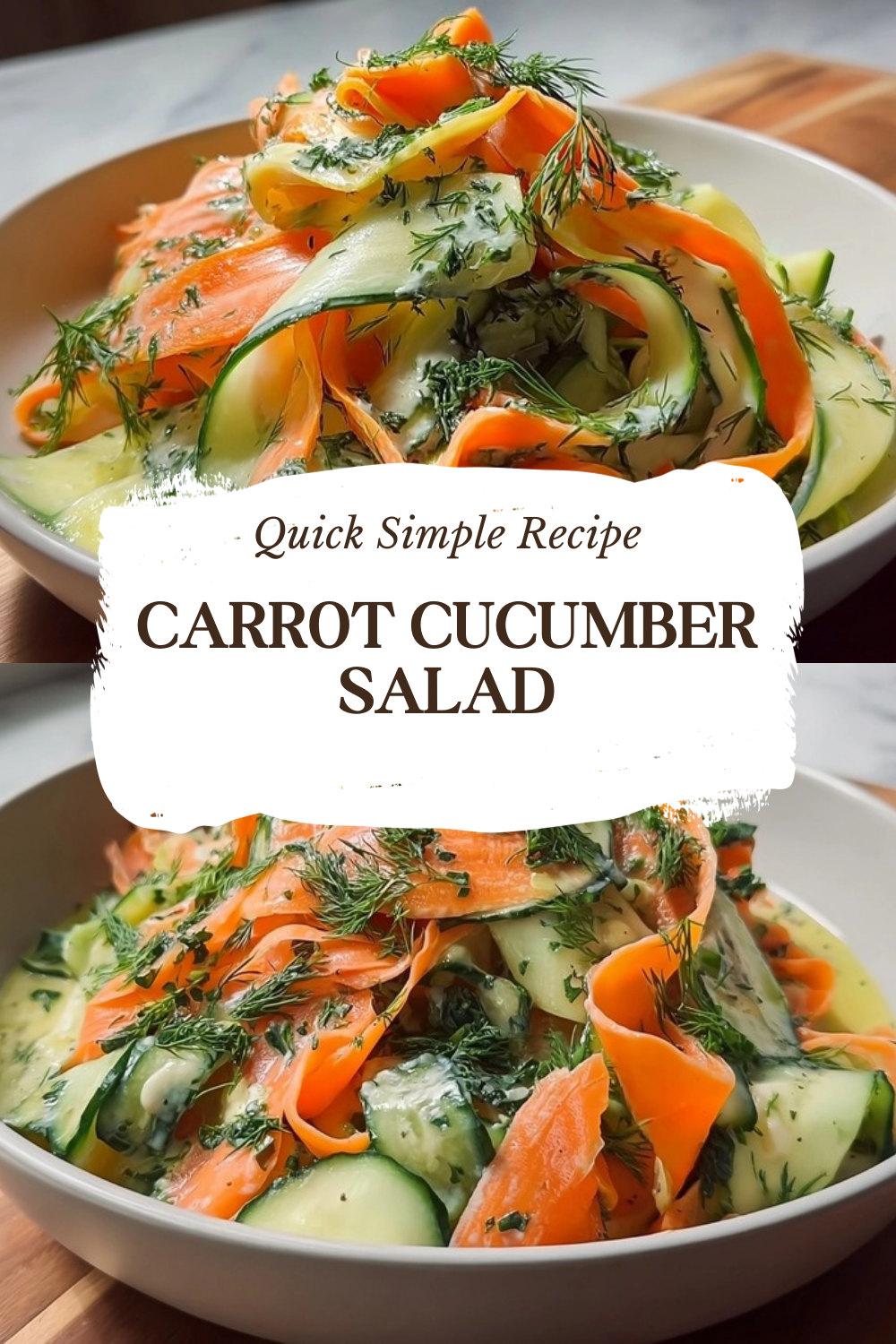
FAQs: Frequently Asked Questions About Carrot Cucumber Salad
What are the best cucumbers for carrot cucumber salad?
For carrot cucumber salad, choose crisp cucumbers with thin skins and minimal seeds to keep the texture fresh and avoid excess water. Persian cucumbers are ideal because they’re small, crunchy, and flavorful. English or hothouse cucumbers work well too—they’re long, seedless, and have a mild taste that pairs perfectly with shredded carrots. Japanese cucumbers are another great pick for their extra snap and subtle sweetness. Avoid thick-skinned garden varieties, as they can make the salad soggy. Slice them thinly using a mandoline for even better results. Prep tip: Salt the slices lightly and let them drain for 10 minutes before mixing to draw out moisture and intensify flavors. This simple step keeps your salad crisp for hours. (92 words)
How do I make carrot cucumber salad gluten-free?
Carrot cucumber salad is easy to adapt for gluten-free diets. Swap regular soy sauce for tamari or coconut aminos, which are naturally gluten-free and deliver the same umami punch without the wheat. Rice vinegar, sesame oil, and fresh ingredients like carrots, cucumbers, garlic, and ginger are already gluten-free. Check labels on store-bought dressings to confirm no hidden gluten. For a full recipe tweak: Use 2 tbsp tamari, 1 tbsp rice vinegar, 1 tsp sesame oil, and a minced garlic clove. Toss with 2 shredded carrots and 2 sliced cucumbers. It’s ready in 15 minutes and serves 4 as a side. This version stays vegan and low-calorie at about 50 calories per serving. Always verify ingredients if allergies are a concern. (118 words)
Can I make carrot cucumber salad without oil?
Yes, skip the oil entirely for an oil-free carrot cucumber salad that’s still flavorful and satisfying. Increase soy sauce or tamari to 3 tbsp for moisture and savoriness, and add 1 tbsp rice vinegar plus a squeeze of lime juice for brightness. A teaspoon of sesame seeds or chili flakes adds texture without fat. Shred 2 medium carrots and slice 2 cucumbers thinly, then toss everything together. Let it marinate 10-15 minutes in the fridge. This cut saves about 80 calories per serving compared to oil versions. It’s perfect for low-fat diets, meal prep, or hot days. Pro tip: Grate a bit of fresh ginger for extra zing. Stores well up to 3 days. Pairs great with grilled tofu or fish. (112 words)
How long does carrot cucumber salad last in the fridge?
Enjoy carrot cucumber salad fresh the same day for peak crunch, but it stores safely in an airtight container in the fridge for 3-5 days. The carrots hold up better than cucumbers, which soften over time due to dressing moisture. To extend freshness, pat veggies dry before dressing and add sesame seeds or herbs right before serving. Signs it’s time to toss: Slimy texture or off smell. Nutrition bonus: One cup provides over 100% daily vitamin A from carrots and hydration from cucumbers (95% water). Make ahead for lunches—prep veggies Sunday, dress portions daily. Freezing isn’t recommended as it ruins the crisp texture. Always use fresh produce for best results. (104 words)
How long should carrot cucumber salad sit before serving?
Let carrot cucumber salad rest 10-30 minutes in the fridge after tossing with dressing. This allows the rice vinegar, soy, and sesame oil to soak into the shredded carrots and cucumber slices, melding flavors without sogginess. For deeper taste, marinate up to 1 hour. Don’t exceed that, or cucumbers release too much water. Quick method: 10 minutes for busy weeknights. Test by tasting—a balanced sweet-tangy crunch means it’s ready. Customize with add-ins like red onion or cilantro during rest. This salad shines as a side for 4; scale up for potlucks. Links well to stir-fry recipes or slaw variations on site for more ideas. Keeps it simple, healthy, and addictive. (109 words)
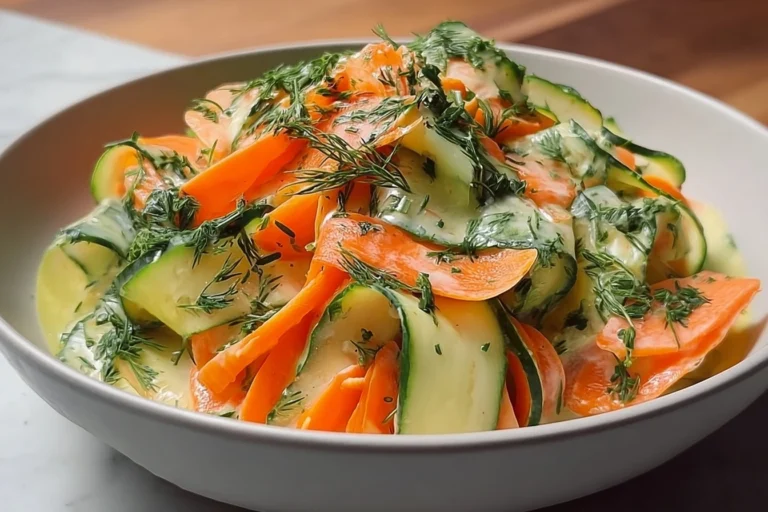
Carrot Cucumber Salad
🥒🥕 Enjoy crisp cucumber and carrot ribbons in a tangy-sweet Asian dressing, bursting with vitamins A & C for a refreshing, low-calorie boost to any meal!
🌿 This quick vegan, gluten-free salad ready in 15 minutes adds crunchy texture and bold flavors, ideal for sides, lunches, or healthy snacking.
- Total Time: 20 minutes
- Yield: 4 servings
Ingredients
– 2 large cucumbers, julienned
– 2 large carrots, julienned
– 1 tablespoon grape seed oil
– 2 tablespoons rice vinegar
– 1 teaspoon sesame seed oil
– 1 tablespoon maple syrup
– 2 teaspoons soy sauce or tamari
– ½ tablespoon toasted sesame seeds
– ½ tablespoon white sesame seeds
– ¼ teaspoon salt
– ¼ teaspoon ginger powder
– Ground white pepper to taste
Instructions
1-Step One: Prepare the Vegetables Start with proper preparation of your fresh produce. Wash the carrots thoroughly under cool running water, then peel them completely, removing the outer layer to reveal the bright orange flesh beneath. Trim off both ends of each carrot about ¼ inch from each side should do. For the cucumbers, wash them well and remove the ends. There’s no need to peel cucumbers if you’re using thin-skinned varieties like Persian, English, or Japanese. However, if you’re using regular garden cucumbers with thick, waxy skin, peeling them will improve the texture significantly.
2-Step Two: Create Uniform Ribbons The secret to a professional-looking carrot cucumber salad lies in consistent cuts. Use a julienne peeler, spiralizer, or mandoline with a julienne blade to create long, thin ribbons of both vegetables. Aim for pieces about 1/8 inch thick thin enough to absorb dressing but thick enough to maintain crunch. If you don’t have specialized equipment, a sharp chef’s knife works too. Slice the vegetables into thin planks first, then cut those planks into thin strips. The goal is even pieces that will mix well and look attractive on the plate. Place all your julienned vegetables in a medium mixing bowl. A wide bowl gives you room to toss everything together without spilling.
3-Step Three: Mix the Asian-Inspired Dressing In a separate small bowl or measuring cup, combine all the dressing ingredients. This approach lets you adjust flavors before adding the dressing to your precious vegetables. Whisk together the following: Whisk vigorously until the mixture looks uniform and slightly emulsified. The maple syrup helps bring everything together. Taste your dressing it should be tangy, slightly sweet, and savory all at once. Adjust any ingredient to your preference before moving forward.
4-Step Four: Combine and Toss Pour the dressing over your prepared cucumber and carrot ribbons. Use clean hands or tongs to gently toss everything together, ensuring each strand gets coated with the flavorful mixture. Take your time with this step good coverage means better flavor in every bite. Avoid overmixing, which can break down the delicate vegetable strands. A gentle folding motion works best. The goal is even distribution without mushy results.
5-Step Five: Add the Finishing Touches Sprinkle both the toasted sesame seeds and white sesame seeds over the top of your salad. You can mix them in or leave them as a garnish the choice depends on whether you want the seeds throughout or just on top for visual appeal. For a pop of color and extra flavor, consider adding a few additional toppings:
6-Step Six: Rest and Serve Let your carrot cucumber salad rest in the refrigerator for at least 10 minutes before serving. This crucial step allows the flavors to meld together and the vegetables to absorb the dressing. The wait is worth it the salad tastes significantly better after resting. You can let it rest longer if you prefer up to 30 minutes for more intense flavor. Just don’t exceed an hour, or the cucumbers may release too much water and become soggy. This salad pairs beautifully with many main dishes. Try serving it alongside Korean bulgogi for a complete Asian-inspired meal, or enjoy it with grilled chicken breasts for a lighter option.
Last Step:
Please leave a rating and comment letting us know how you liked this recipe! This helps our business to thrive and continue providing free, high-quality recipes for you.Notes
🥒 Choose crisp Persian or English cucumbers for the best texture and minimal seeds.
🛒 Use pre-shredded carrots and a julienne tool to speed up prep time.
❄️ Prepare veggies and dressing separately ahead; combine and chill for up to 3 days.
- Prep Time: 10 minutes
- Rest: 10 minutes
- Category: Salads
- Method: No Cook
- Cuisine: Asian
- Diet: Vegan, Gluten-Free
Nutrition
- Serving Size: 1/4 recipe
- Calories: 120 kcal
- Sugar: 5 g
- Sodium: 350 mg
- Fat: 6 g
- Saturated Fat: 1 g
- Unsaturated Fat: 5 g
- Trans Fat: 0 g
- Carbohydrates: 15 g
- Fiber: 3 g
- Protein: 2 g
- Cholesterol: 0 mg